Ure Cathy, Cooper-Ryan Anna Mary, Condie Jenna, Galpin Adam
Directorate of Allied and Public Health, School of Health and Society, University of Salford, Salford, Manchester, United Kingdom.
School of Social Sciences and Psychology, Western Sydney University, Sydney, Australia.
J Med Internet Res. 2020 May 25;22(5):e16902. doi: 10.2196/16902.
As breast cancer survival rates improve and structural health resources are increasingly being stretched, health providers require people living with and beyond breast cancer (LwBBC) to self-manage aspects of their care.
This study aimed to explore how women use and experience social media to self-manage their psychosocial needs and support self-management across the breast cancer continuum.
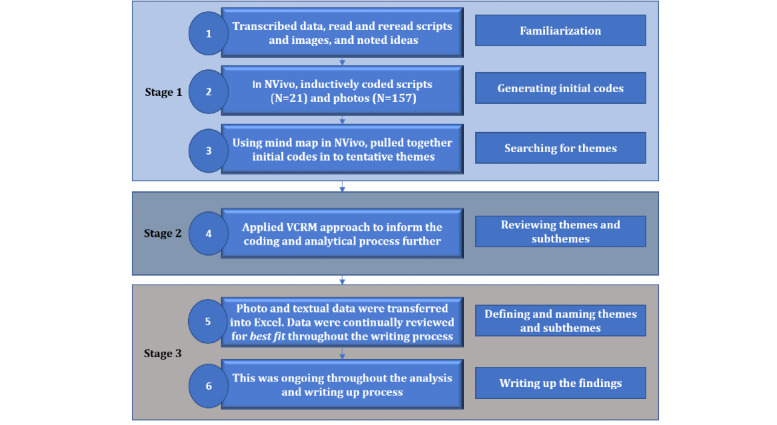
The experiences of 21 women (age range 27-64 years) were explored using an in-depth qualitative approach. The women varied in the duration of their experiences of LwBBC, which facilitated insights into how they evolve and change their self-management strategies over time. Semistructured interviews were analyzed inductively using a thematic analysis, a polytextual analysis, and voice-centered relational methods.
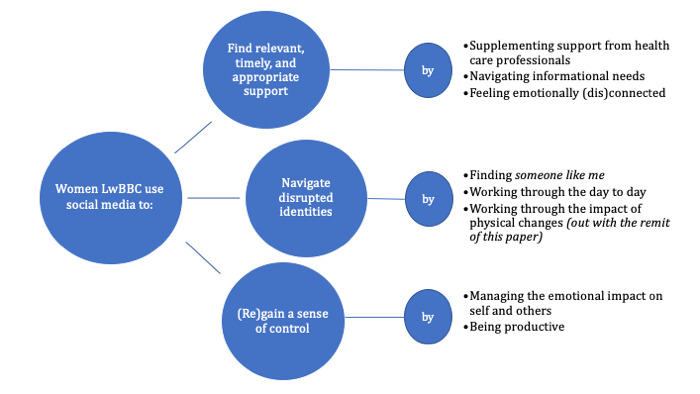
The use of multiple social media platforms, such as YouTube, Facebook, WhatsApp, and Twitter, enabled women to self-manage aspects of their care by satisfying needs for timely, relevant, and appropriate support, by navigating identities disrupted by diagnosis and treatment and by allowing them to (re)gain a sense of control. Women described extending their everyday use of multiple platforms to self-manage their care. However, women experienced social media as both empowering and dislocating, as their engagement was impacted by their everyday experiences of LwBBC.
Health care professionals (HCPs) need to be more aware, and open to the possibilities, of women using multiple social media resources as self-management tools. It is important for HCPs to initiate value-free discussions and create the space necessary for women to share how social media resources support a tailored and timely self-managed approach to their unique psychosocial needs.
随着乳腺癌生存率的提高以及结构性健康资源日益紧张,医疗服务提供者要求乳腺癌患者及其康复者自行管理其护理的各个方面。
本研究旨在探讨女性如何利用社交媒体并体验其在满足心理社会需求以及在乳腺癌整个病程中支持自我管理方面的作用。
采用深入的定性研究方法,对21名女性(年龄在27至64岁之间)的经历进行了探索。这些女性的乳腺癌经历时长各不相同,这有助于深入了解她们如何随着时间的推移演变并改变自我管理策略。采用主题分析、多文本分析和以声音为中心的关系方法对半结构化访谈进行归纳分析。
使用YouTube、Facebook、WhatsApp和Twitter等多种社交媒体平台,使女性能够通过满足对及时、相关和适当支持的需求、应对因诊断和治疗而 disrupted 的身份认同以及让她们重新获得控制感,来自行管理其护理的各个方面。女性描述了将多个平台的日常使用扩展到自我管理其护理。然而,女性体验到社交媒体既赋予力量又令人感到脱节,因为她们的参与受到乳腺癌经历的日常影响。
医疗保健专业人员需要更加了解并接受女性将多种社交媒体资源用作自我管理工具的可能性。医疗保健专业人员发起无价值判断的讨论并为女性创造必要的空间,以分享社交媒体资源如何支持针对其独特心理社会需求的量身定制且及时的自我管理方法,这一点很重要。