Institute of Animal Sciences; State Key Laboratory of Animal Nutrition, Chinese Academy of Agricultural Sciences, Beijing, China.
PLoS Pathog. 2020 May 4;16(5):e1008188. doi: 10.1371/journal.ppat.1008188. eCollection 2020 May.
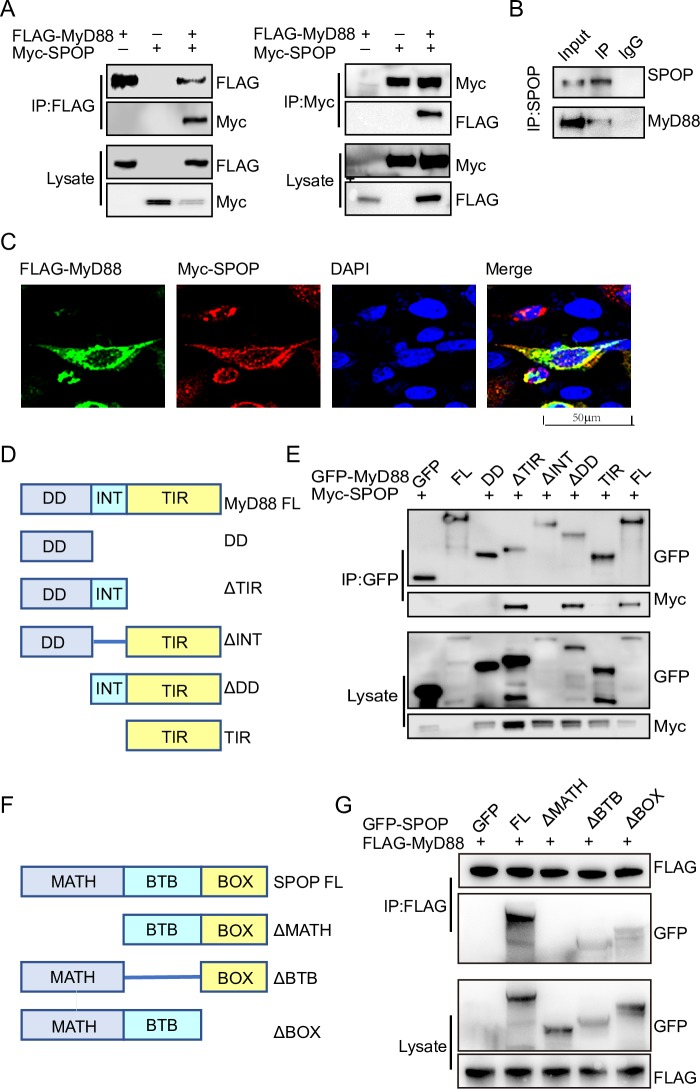
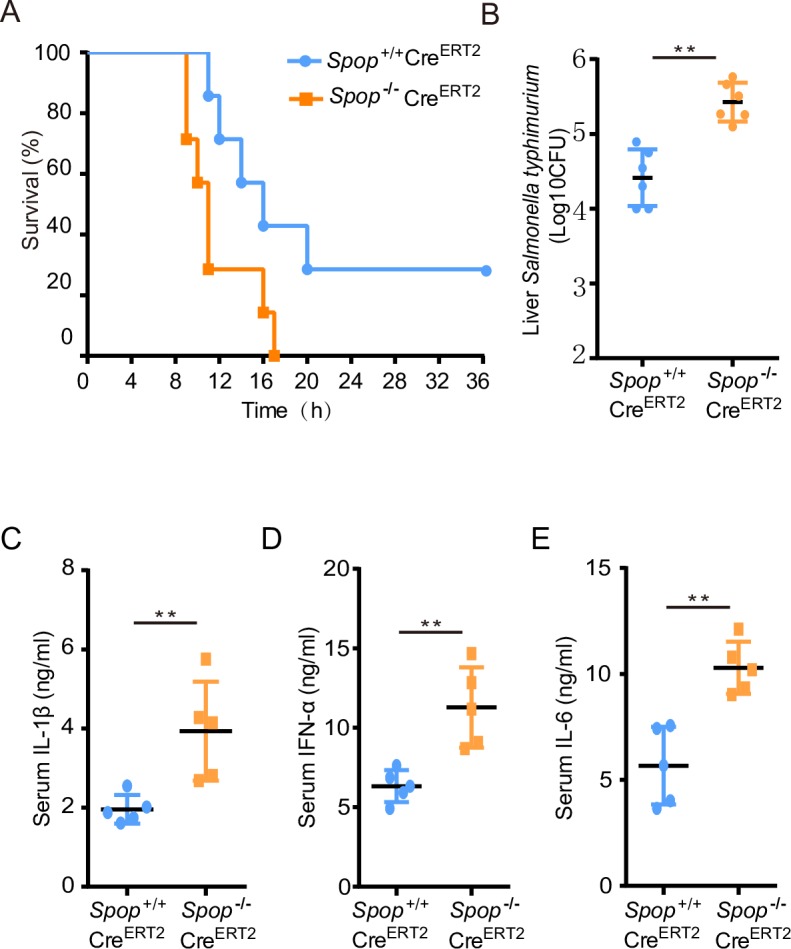
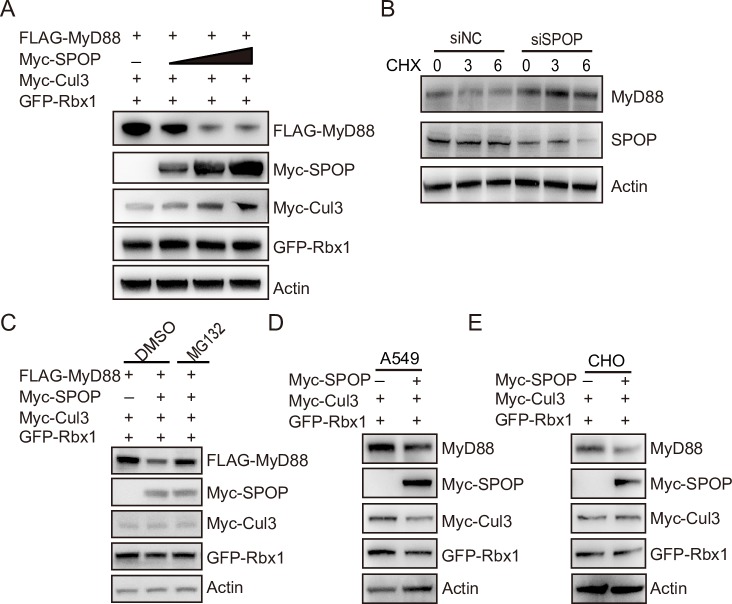
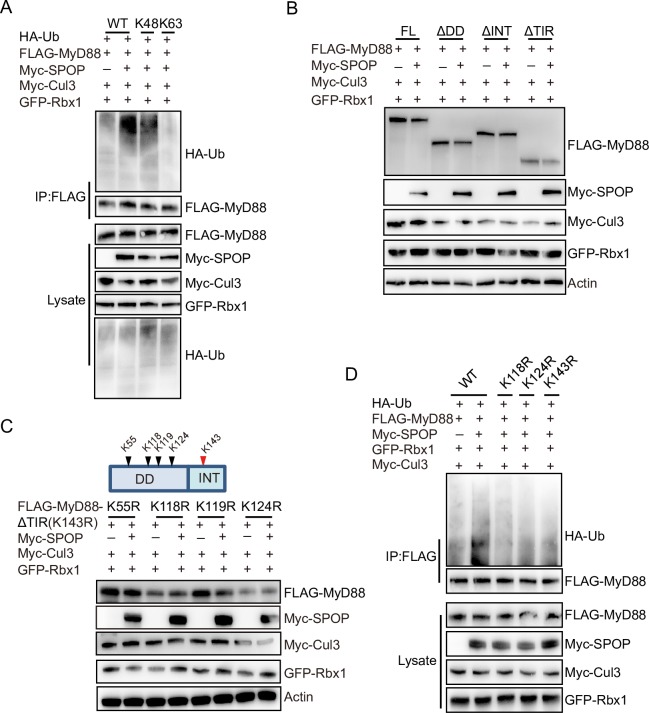
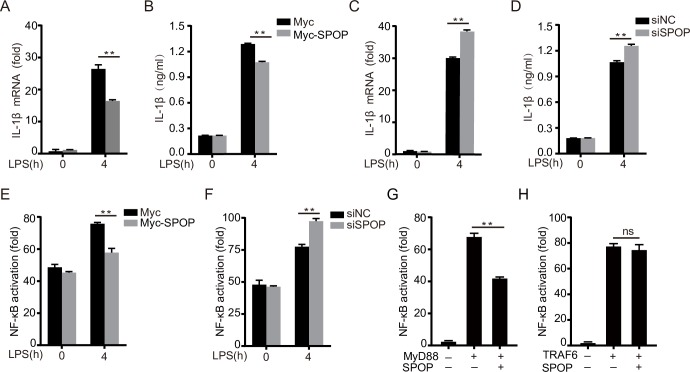
As a canonical adaptor for the Toll-like receptor (TLR) family, myeloid differentiation primary response protein 88 (MyD88) has crucial roles in host defense against infection by microbial pathogens, and its dysregulation might induce autoimmune diseases. Here, we demonstrate that the chicken Cullin 3-based ubiquitin ligase adaptor Speckle-type BTB-POZ protein (chSPOP) recognizes the intermediate domain of chicken MyD88 (chMyD88) and degrades it through the proteasome pathway. Knockdown or genetic ablation of chSPOP leads to aberrant elevation of chMyD88 protein. Through this interaction, chSPOP negatively regulates NF-κB pathway activity and thus the production of IL-1β upon LPS challenge in chicken macrophages. Furthermore, Spop-deficient mice are more susceptible to infection with Salmonella typhimurium. Collectively, these findings demonstrate MyD88 as a bona fide substrate of SPOP and uncover a mechanism by which SPOP regulates MyD88 abundance and disease susceptibility.
作为 Toll 样受体(TLR)家族的规范衔接蛋白,髓样分化初级反应蛋白 88(MyD88)在宿主抵御微生物病原体感染的防御中起着至关重要的作用,其失调可能会引发自身免疫性疾病。在这里,我们证明鸡 Cullin 3 基泛素连接酶衔接子 Speckle-type BTB-POZ 蛋白(chSPOP)识别鸡 MyD88(chMyD88)的中间结构域,并通过蛋白酶体途径降解它。chSPOP 的敲低或基因缺失导致 chMyD88 蛋白的异常升高。通过这种相互作用,chSPOP 负调控 NF-κB 通路的活性,从而抑制 LPS 刺激鸡巨噬细胞中 IL-1β的产生。此外,Spop 缺陷型小鼠更容易感染鼠伤寒沙门氏菌。总的来说,这些发现表明 MyD88 是 SPOP 的一个真正的底物,并揭示了 SPOP 调节 MyD88 丰度和疾病易感性的机制。