Wagner Brooklyn K, Cramer Mary Caitlin, Fowler Heather N, Varnell Hannah L, Dietsch Alia M, Proudfoot Kathryn L, Shearer Jan, Correa Maria, Pairis-Garcia Monique D
Department of Population Health and Pathobiology, College of Veterinary Medicine, North Carolina State University, Raleigh, NC 27606, USA.
Department of Animal Science, College of Agricultural Sciences, Colorado State University, Fort Collins, CO 80523, USA.
Animals (Basel). 2020 Apr 29;10(5):770. doi: 10.3390/ani10050770.
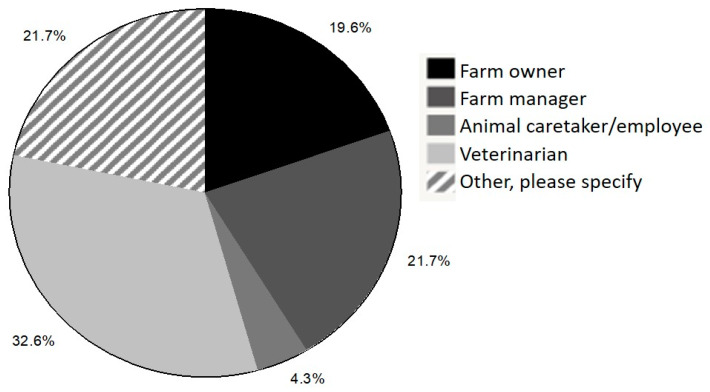
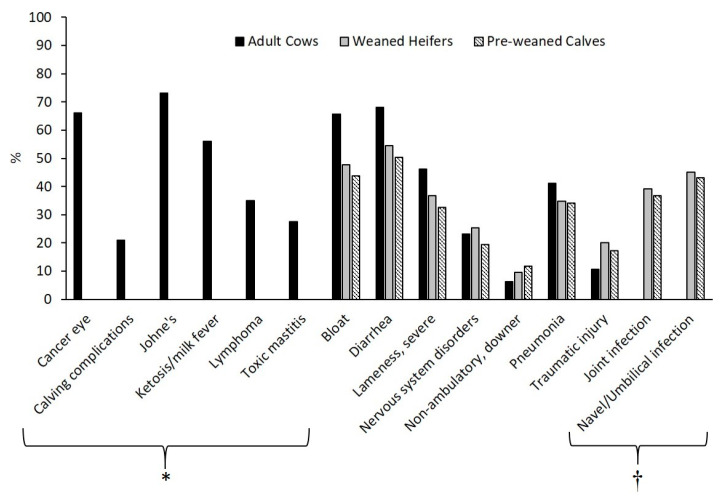
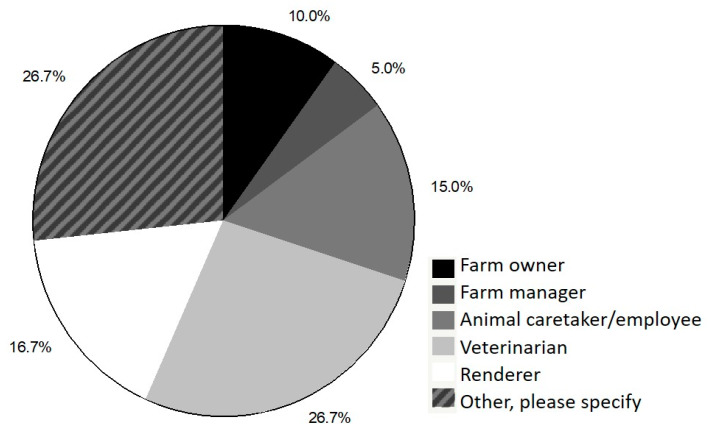
There are currently no clear guidelines in the US and some other countries regarding euthanasia decision making timelines for dairy cattle that become injured or ill to the extent that recovery is unlikely or impossible. Our study aimed to identify decision making criteria and the most common factors considered when making and carrying out euthanasia decisions. Dairy producers were recruited to participate in a mailed survey (Part I, 307 completed surveys were returned) or in one of three focus groups (Part II, 8-10 producers/group, = 24). Part I (survey): Farm owners were most commonly responsible for on-farm euthanasia and most respondents would treat and monitor compromised cattle for a majority of 15 health conditions. Responses were highly variable; for example, 6.3% and 11.7% of respondents would never euthanize a non-ambulatory cow or calf, respectively. Part II (focus groups): Three main themes (animal, human, and farm operation) were identified from discussion which focused primarily on animal welfare (16% of the discussion) and human psychology (16%). Participants expressed a desire to eliminate animal suffering by euthanizing, alongside a wide range of emotional states. Development of specific standards for euthanasia is a critical next step and more research is needed to understand the human emotions surrounding euthanasia decision making.
目前,在美国和其他一些国家,对于受伤或患病至康复可能性不大或无法康复的奶牛,尚无明确的安乐死决策时间指导方针。我们的研究旨在确定安乐死决策标准以及做出和实施安乐死决策时最常考虑的因素。招募奶农参与邮寄调查(第一部分,共收回307份完整调查问卷)或三个焦点小组之一(第二部分,每组8 - 10名奶农,共24人)。第一部分(调查):农场主通常负责农场内的安乐死,大多数受访者会针对15种健康状况对健康受损的奶牛进行治疗和监测。回答差异很大;例如,分别有6.3%和11.7%的受访者表示永远不会对不能行走的母牛或小牛实施安乐死。第二部分(焦点小组):从讨论中确定了三个主要主题(动物、人类和农场运营),讨论主要集中在动物福利(占讨论的16%)和人类心理(占16%)。参与者表示希望通过实施安乐死消除动物的痛苦,同时还表现出广泛的情绪状态。制定具体的安乐死标准是关键的下一步,需要更多研究来了解围绕安乐死决策的人类情感。