Department of Anesthesiology, Columbia University Medical Center, 630 West 168th Street, P&S 12-402, New York, NY 10032, USA.
Department of Biochemistry & Molecular Biology; Robert Wood Johnson Medical School, 675 Hoes Lane, Piscataway, NJ 08854, USA.
Int J Mol Sci. 2020 Apr 29;21(9):3151. doi: 10.3390/ijms21093151.
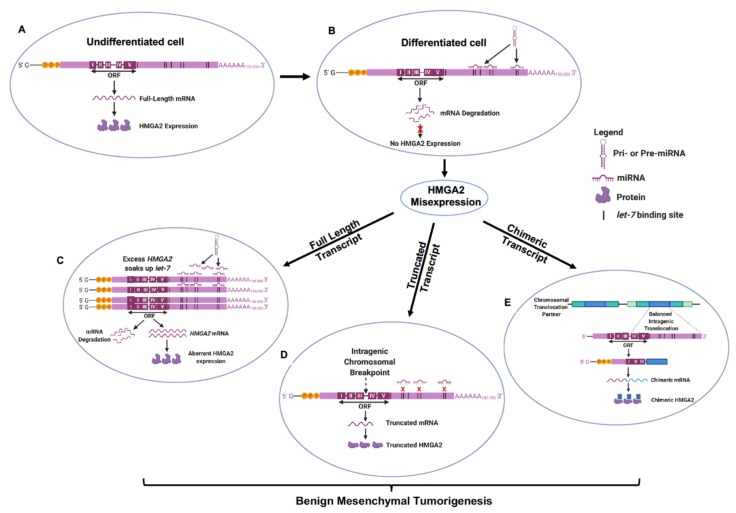
High mobility group AT-hook 2 (HMGA2) has been associated with increased cell proliferation and cell cycle dysregulation, leading to the ontogeny of varied tumor types and their metastatic potentials, a frequently used index of disease prognosis. In this review, we deepen our understanding of HMGA2 pathogenicity by exploring the mechanisms by which HMGA2 misexpression and ectopic expression induces mesenchymal and epithelial tumorigenesis respectively and distinguish the pathogenesis of benign from malignant mesenchymal tumors. Importantly, we highlight the regulatory role of microRNA family of tumor suppressors in determining HMGA2 misexpression events leading to tumor pathogenesis and focused on possible mechanisms by which HMGA2 could propagate lymphangioleiomyomatosis (LAM), benign mesenchymal tumors of the lungs. Lastly, we discuss potential therapeutic strategies for epithelial and mesenchymal tumorigenesis based on targeting the HMGA2 signaling pathway.
高迁移率族蛋白 A2(HMGA2)与细胞增殖增加和细胞周期失调有关,导致多种肿瘤类型及其转移潜能的发生,这是疾病预后的常用指标。在这篇综述中,我们通过探索 HMGA2 错表达和异位表达分别诱导间充质和上皮肿瘤发生的机制,加深对 HMGA2 致病性的理解,并区分良性和恶性间充质肿瘤的发病机制。重要的是,我们强调了肿瘤抑制因子 microRNA 家族在决定导致肿瘤发病机制的 HMGA2 错表达事件中的调节作用,并集中讨论了 HMGA2 如何促进淋巴管平滑肌瘤病(LAM),即肺部良性间充质肿瘤的可能机制。最后,我们讨论了基于靶向 HMGA2 信号通路的上皮和间充质肿瘤发生的潜在治疗策略。