Leung Stephen Wan, Chou Chia-Jung, Huang Tsui-Chin, Yang Pei-Ming
Department of Radiation Oncology, Yuan's General Hospital, Kaohsiung 80249, Taiwan.
Graduate Institute of Cancer Biology and Drug Discovery, College of Medical Science and Technology, Taipei Medical University, Taipei 11031, Taiwan.
Cancers (Basel). 2019 Oct 2;11(10):1482. doi: 10.3390/cancers11101482.
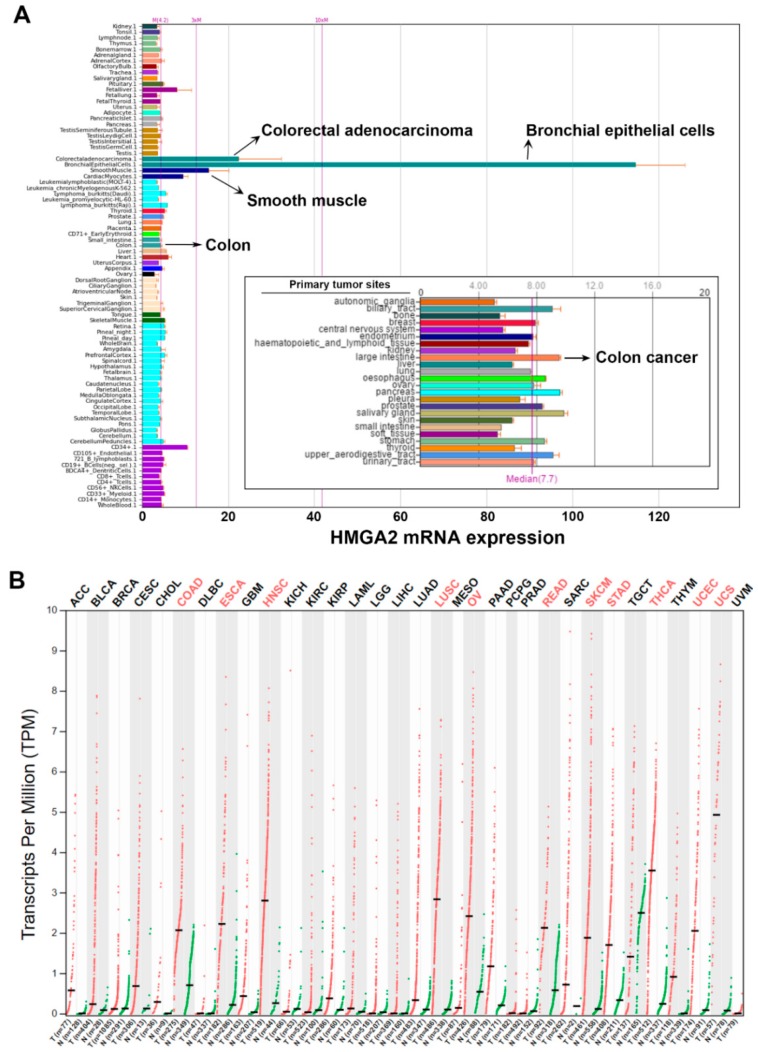
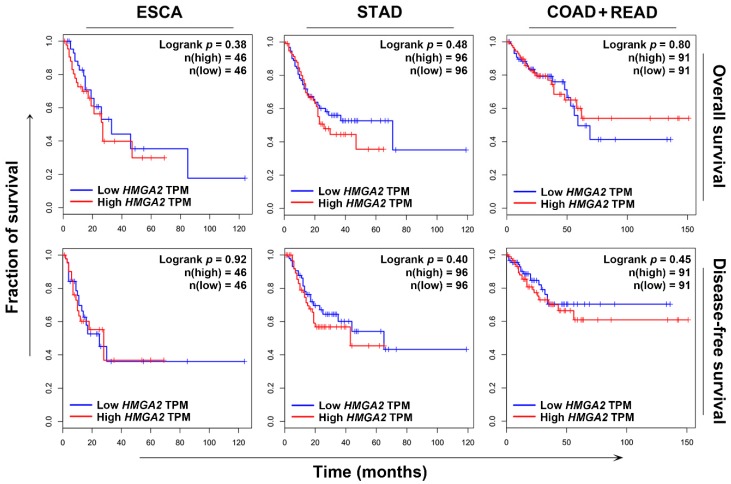
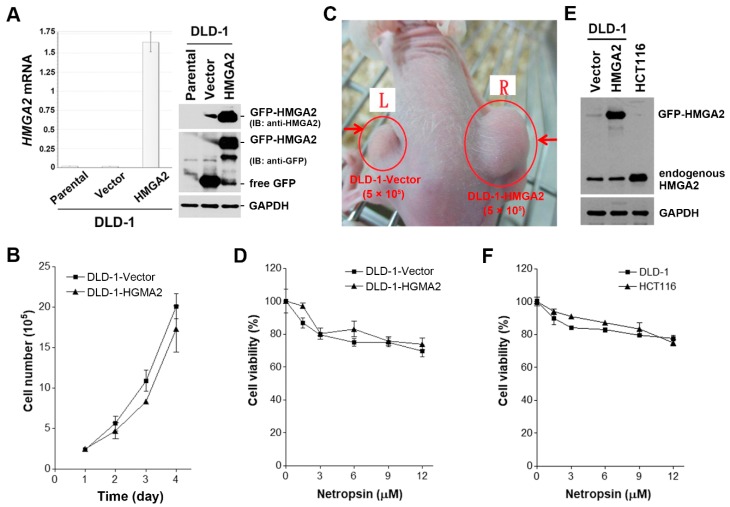
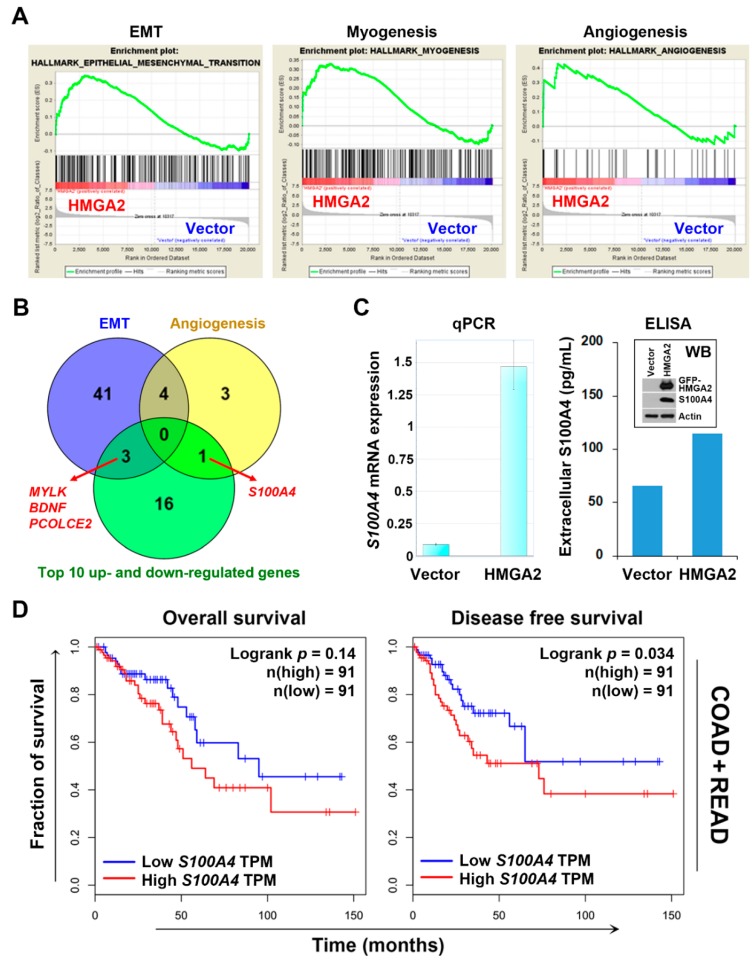
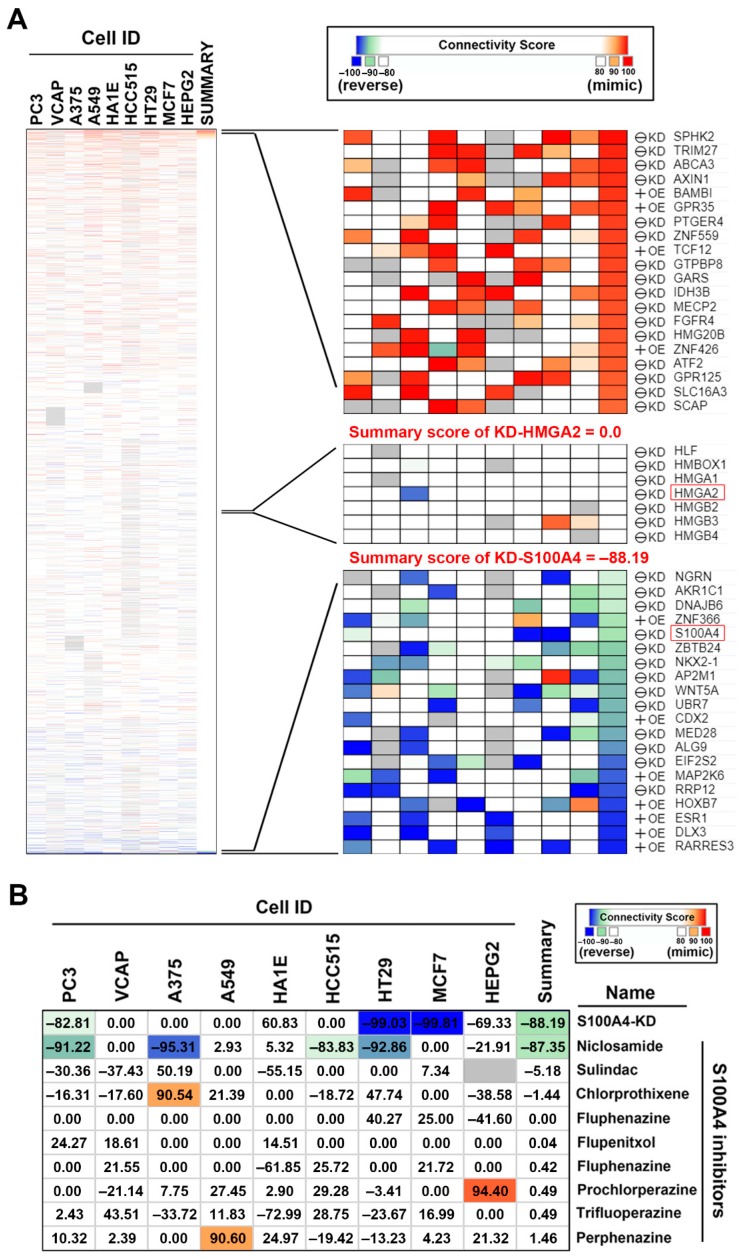
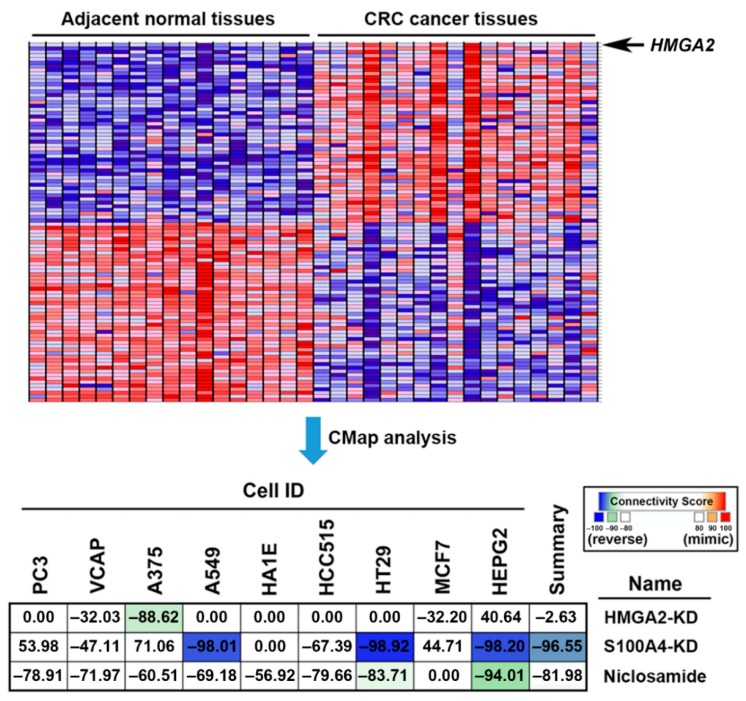
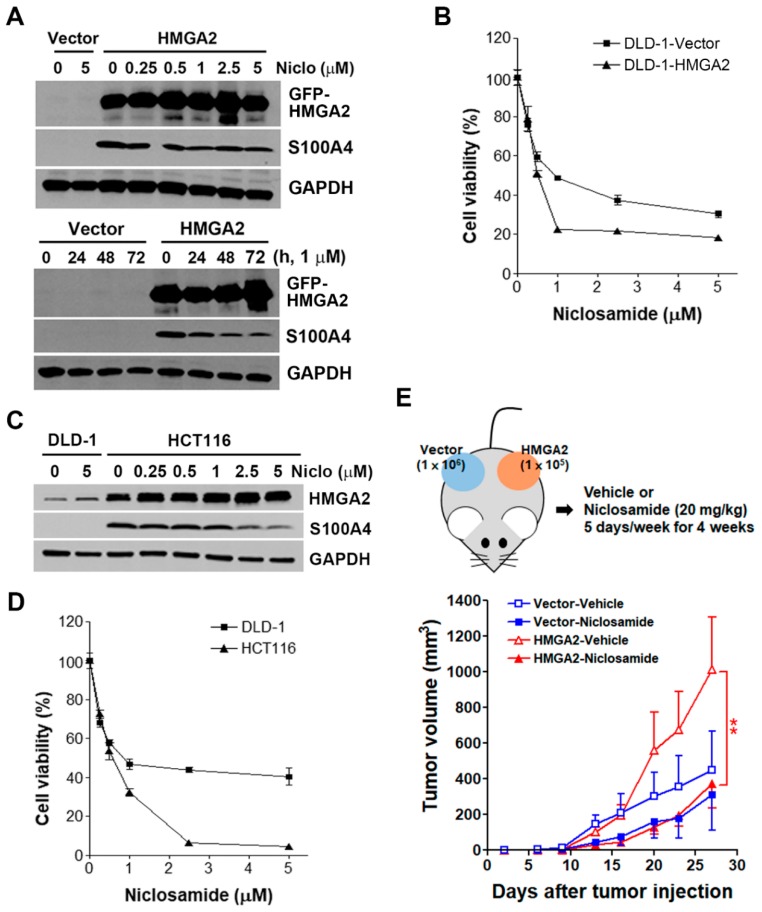
Aberrant overexpression of high mobility group AT-hook 2 (HMGA2) is frequently found in cancers and HMGA2 has been considered an anticancer therapeutic target. In this study, a pan-cancer genomics survey based on Cancer Cell Line Encyclopedia (CCLE) and The Cancer Genome Atlas (TCGA) data indicated that HMGA2 was mainly overexpressed in gastrointestinal cancers including colorectal cancer. Intriguingly, HMGA2 overexpression had no prognostic impacts on cancer patients' overall and disease-free survivals. In addition, HMGA2-overexpressing colorectal cancer cell lines did not display higher susceptibility to a previously identified HMGA2 inhibitor (netroposin). By microarray profiling of HMGA2-driven gene signature and subsequent Connectivity Map (CMap) database mining, we identified that S100 calcium-binding protein A4 (S100A4) may be a druggable vulnerability for HMGA2-overexpressing colorectal cancer. A repurposing S100A4 inhibitor, niclosamide, was found to reverse the HMGA2-driven gene signature both in colorectal cancer cell lines and patients' tissues. In vitro and in vivo experiments validated that HMGA2-overexpressing colorectal cancer cells were more sensitive to niclosamide. However, inhibition of S100A4 by siRNAs and other inhibitors was not sufficient to exert effects like niclosamide. Further RNA sequencing analysis identified that niclosamide inhibited more cell-cycle-related gene expression in HMGA2-overexpressing colorectal cancer cells, which may explain its selective anticancer effect. Together, our study repurposes an anthelminthic drug niclosamide for treating HMGA2-overexpression colorectal cancer.
高迁移率族AT钩蛋白2(HMGA2)的异常过表达在癌症中经常被发现,并且HMGA2已被视为抗癌治疗靶点。在本研究中,基于癌症细胞系百科全书(CCLE)和癌症基因组图谱(TCGA)数据的泛癌基因组学调查表明,HMGA2主要在包括结直肠癌在内的胃肠道癌症中过表达。有趣的是,HMGA2过表达对癌症患者的总生存期和无病生存期没有预后影响。此外,过表达HMGA2的结直肠癌细胞系对先前鉴定的HMGA2抑制剂(netroposin)没有表现出更高的敏感性。通过对HMGA2驱动的基因特征进行微阵列分析以及随后对连接图谱(CMap)数据库的挖掘,我们发现S100钙结合蛋白A4(S100A4)可能是过表达HMGA2的结直肠癌的一个可药物靶向的脆弱点。一种重新利用的S100A4抑制剂,氯硝柳胺,被发现既能在结直肠癌细胞系中也能在患者组织中逆转HMGA2驱动的基因特征。体外和体内实验验证了过表达HMGA2的结直肠癌细胞对氯硝柳胺更敏感。然而,用小干扰RNA和其他抑制剂抑制S100A4不足以产生像氯硝柳胺那样的效果。进一步的RNA测序分析表明,氯硝柳胺在过表达HMGA2的结直肠癌细胞中抑制更多与细胞周期相关的基因表达,这可能解释了其选择性抗癌作用。总之,我们的研究将一种驱虫药氯硝柳胺重新用于治疗过表达HMGA2的结直肠癌。