Experimental immunology, Immunology Frontier Research Center, Osaka University, 3-1 Yamadaoka, Suita, Osaka, 565-0871, Japan.
Cell Res. 2020 Jun;30(6):465-474. doi: 10.1038/s41422-020-0324-7. Epub 2020 May 4.
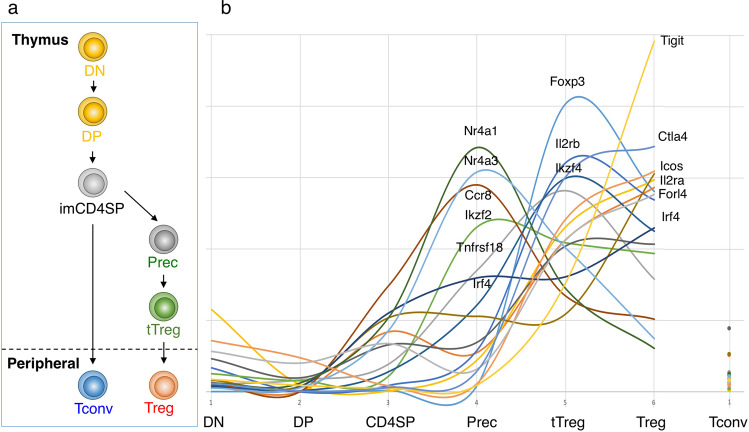
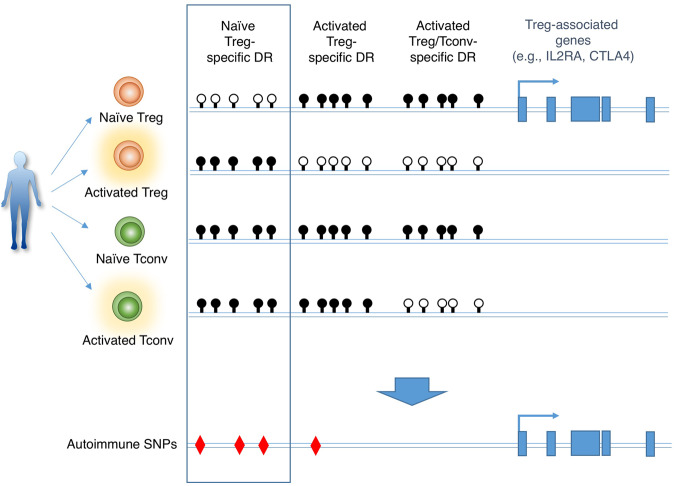
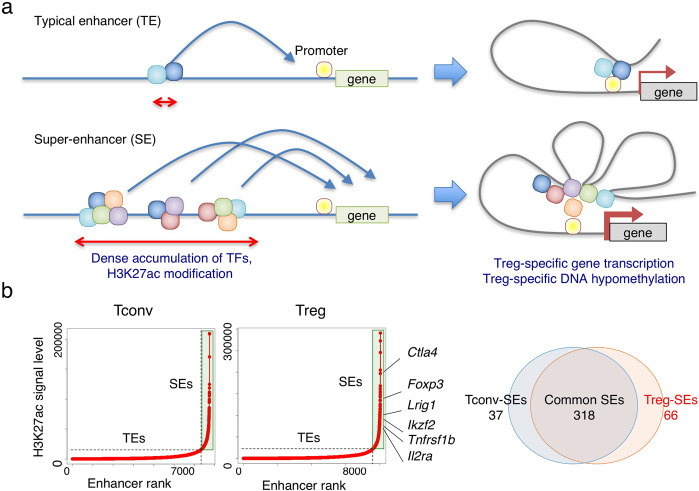
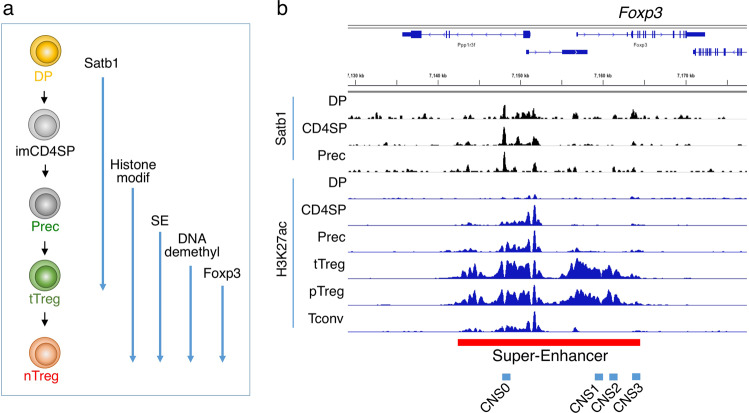
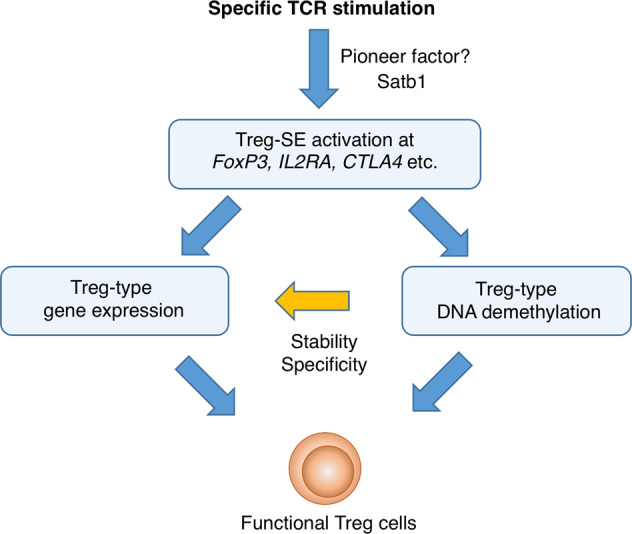
Naturally arising regulatory CD4 T (Treg) cells, which specifically express the transcription factor FoxP3 in the nucleus and CD25 and CTLA-4 on the cell surface, are a T-cell subpopulation specialized for immune suppression, playing a key role in maintaining immunological self-tolerance and homeostasis. FoxP3 is required for Treg function, especially for its suppressive activity. However, FoxP3 expression per se is not necessary for Treg cell lineage commitment in the thymus and insufficient for full Treg-type gene expression in mature Treg cells. It is Treg-specific epigenetic changes such as CpG demethylation and histone modification that can confer a stable and heritable pattern of Treg type gene expression on developing Treg cells in a FoxP3-independent manner. Anomalies in the formation of Treg-specific epigenome, in particular, Treg-specific super-enhancers, which largely include Treg-specific DNA demethylated regions, are indeed able to cause autoimmune diseases in rodents. Furthermore, in humans, single nucleotide polymorphisms in Treg-specific DNA demethylated regions associated with Treg signature genes, such as IL2RA (CD25) and CTLA4, can affect the development and function of naïve Treg cells rather than effector T cells. Such genetic variations are therefore causative of polygenic common autoimmune diseases including type 1 diabetes and rheumatoid arthritis via affecting endogenous natural Treg cells. These findings on the transcription factor network with FoxP3 at a key position as well as Treg-specific epigenetic landscape facilitate our understanding of Treg cell development and function, and can be exploited to prepare functionally stable FoxP3-expressing Treg cells from antigen-specific conventional T cells to treat autoimmune diseases.
天然产生的调节性 CD4 T(Treg)细胞,其在细胞核中特异性表达转录因子 FoxP3,在细胞表面特异性表达 CD25 和 CTLA-4,是一种专门用于免疫抑制的 T 细胞亚群,在维持免疫耐受和体内平衡方面发挥着关键作用。FoxP3 是 Treg 功能所必需的,特别是其抑制活性。然而,FoxP3 表达本身对于胸腺中 Treg 细胞谱系的决定并不是必需的,对于成熟 Treg 细胞中完全的 Treg 型基因表达也是不足的。正是 Treg 特异性的表观遗传变化,如 CpG 去甲基化和组蛋白修饰,可以在 FoxP3 独立的情况下,赋予发育中的 Treg 细胞稳定的、可遗传的 Treg 型基因表达模式。Treg 特异性表观基因组的形成异常,特别是 Treg 特异性超级增强子,其中很大一部分包括 Treg 特异性 DNA 去甲基化区域,实际上能够在啮齿动物中引起自身免疫性疾病。此外,在人类中,与 Treg 特征基因(如 IL2RA(CD25)和 CTLA4)相关的 Treg 特异性 DNA 去甲基化区域的单核苷酸多态性,能够影响初始 Treg 细胞而不是效应 T 细胞的发育和功能。因此,通过影响内源性天然 Treg 细胞,这些遗传变异导致了包括 1 型糖尿病和类风湿关节炎在内的多基因常见自身免疫性疾病。FoxP3 处于关键位置的转录因子网络以及 Treg 特异性表观遗传景观的这些发现,有助于我们理解 Treg 细胞的发育和功能,并可以用来从抗原特异性常规 T 细胞中制备功能稳定的 FoxP3 表达 Treg 细胞,以治疗自身免疫性疾病。