Sadeghi Laia, Arvidsson Gustav, Merrien Magali, M Wasik Agata, Görgens André, Smith C I Edvard, Sander Birgitta, Wright Anthony P
Department of Laboratory Medicine, Division of Biomedical and Cellular Medicine, Karolinska Institutet, 141 57 Stockholm, Sweden.
Department of Laboratory Medicine, Division of Pathology, Karolinska Institutet, 141 52 Stockholm, Sweden.
Cancers (Basel). 2020 May 2;12(5):1143. doi: 10.3390/cancers12051143.
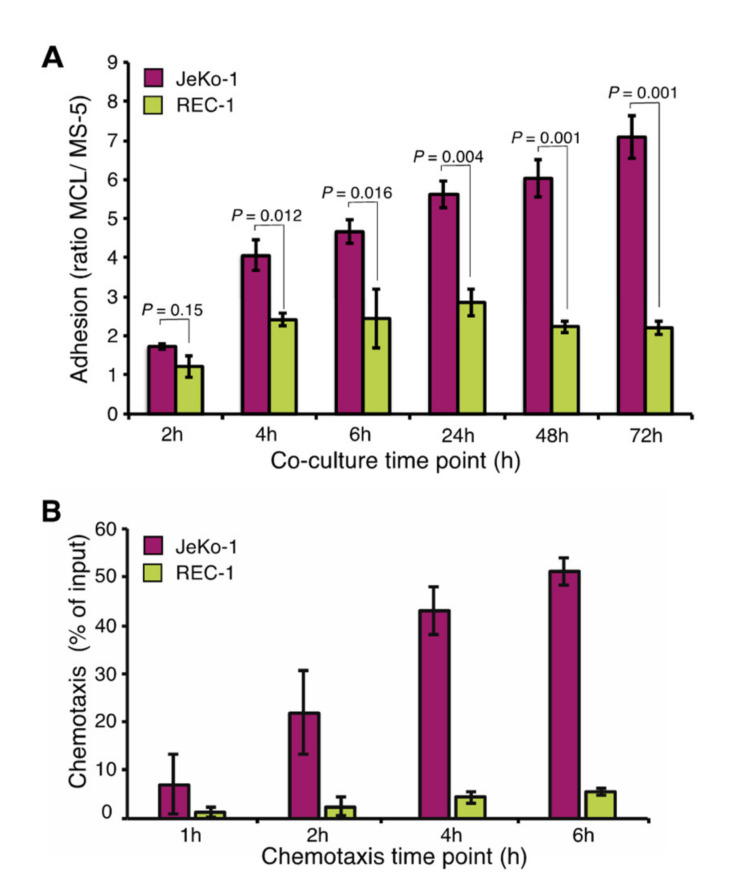
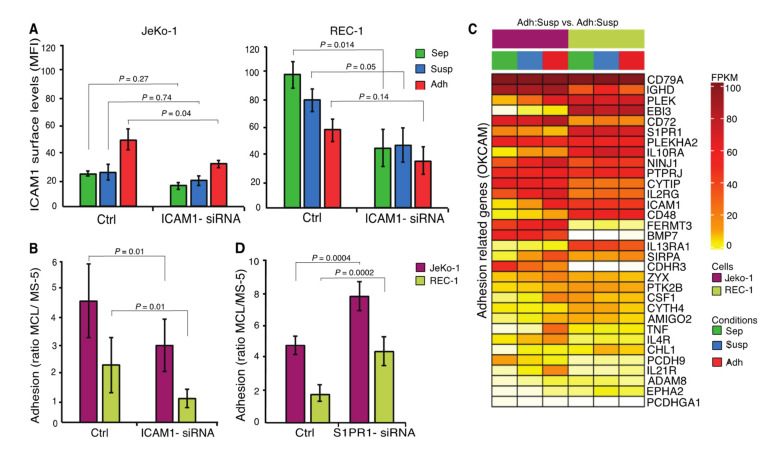
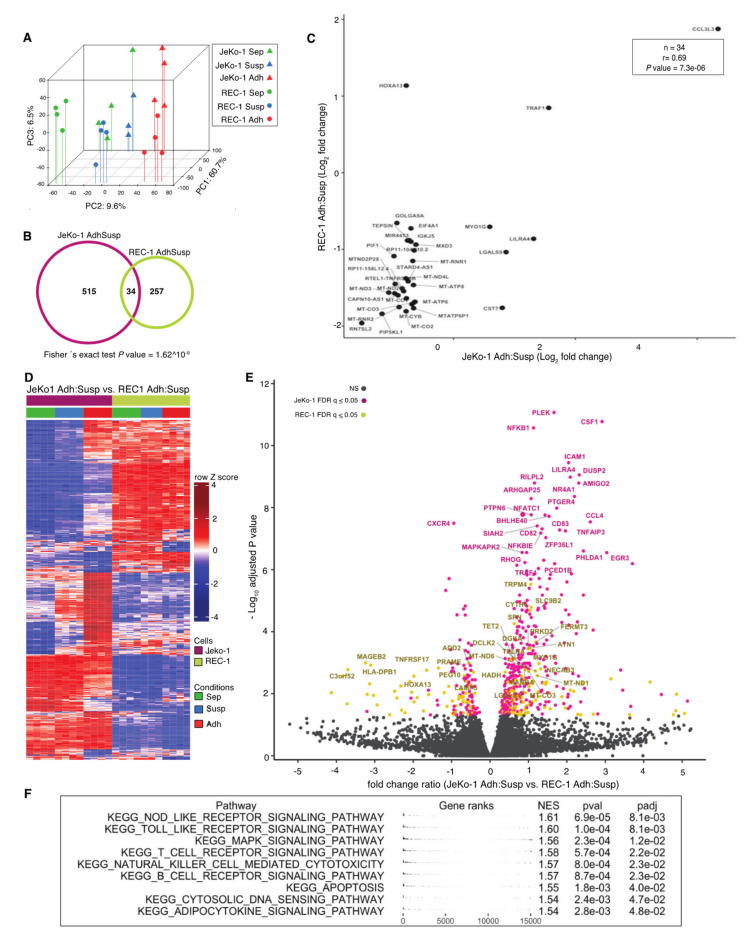
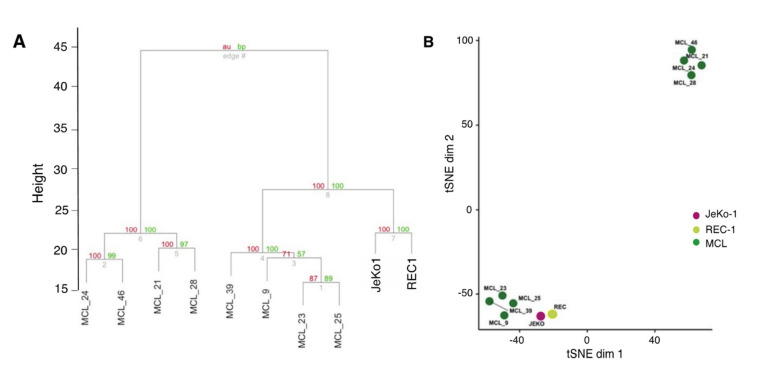
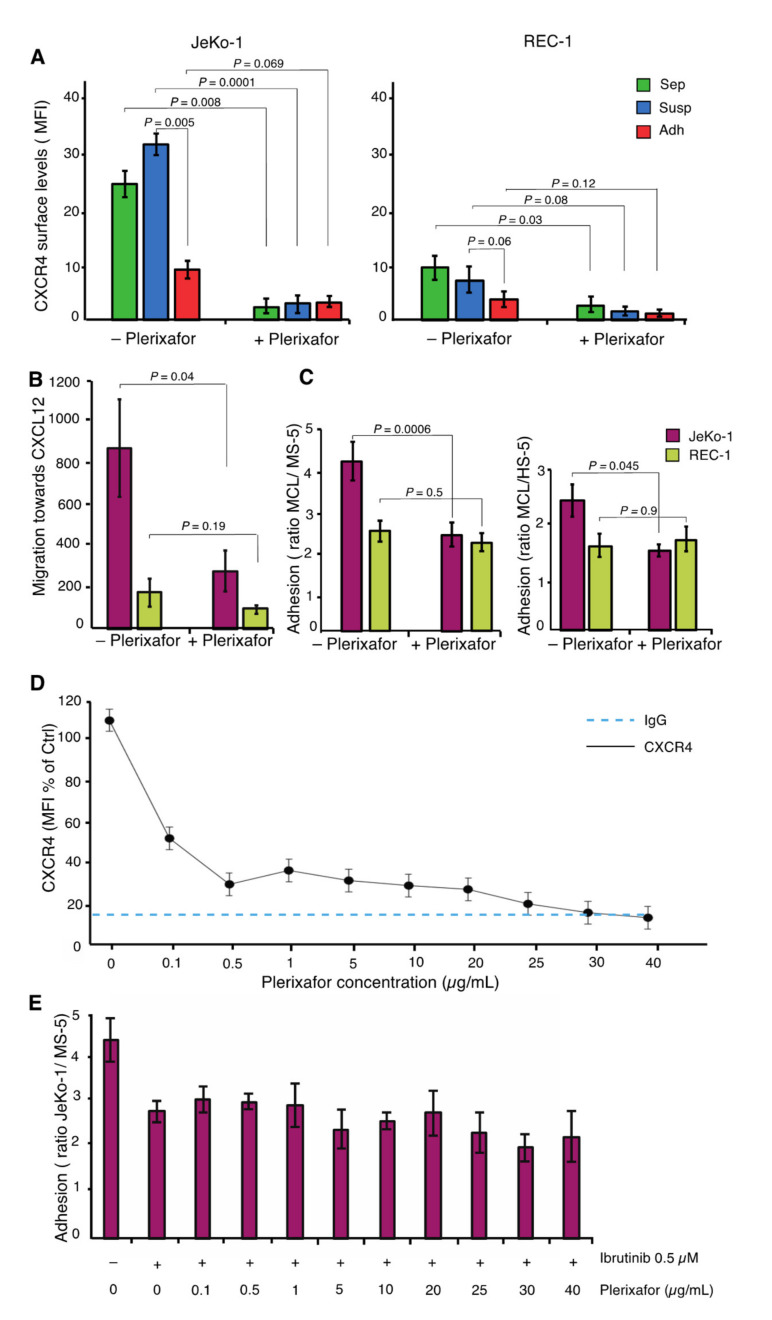
Interactions between lymphoma cells and stromal cells play a key role in promoting tumor survival and development of drug resistance. We identified differences in key signaling pathways between the JeKo-1 and REC-1 mantle cell lymphoma (MCL) cell lines, displaying different patterns of stromal cell adhesion and chemotaxis towards stroma-conditioned medium. The identified adhesion-regulated genes reciprocated important aspects of microenvironment-mediated gene modulation in MCL patients. Five-hundred and ninety genes were differently regulated between the cell lines upon adhesion to stromal cells, while 32 genes were similarly regulated in both cell lines. Regulation of B-cell Receptor (BCR) signature genes in adherent cells was specific for JeKo-1. Inhibition of BCR using siRNA or clinically approved inhibitors, Ibrutinib and Acalabrutinib, decreased adhesion of JeKo-1, but not REC-1 cells. Cell surface levels of chemokine receptor CXCR4 were higher in JeKo-1, facilitating migration and adhesion of JeKo-1 but not REC-1 cells. Surface levels of ICAM1 adhesion protein differ for REC-1 and JeKo-1. While ICAM1 played a positive role in adherence of both cell lines to stromal cells, S1PR1 had an inhibitory effect. Our results provide a model framework for further investigation of mechanistic differences in patient-response to new pathway-specific drugs.
淋巴瘤细胞与基质细胞之间的相互作用在促进肿瘤存活和耐药性发展中起关键作用。我们在JeKo-1和REC-1套细胞淋巴瘤(MCL)细胞系之间的关键信号通路中发现了差异,这两种细胞系表现出不同的基质细胞黏附模式以及对基质条件培养基的趋化性。所鉴定出的黏附调节基因反映了MCL患者中微环境介导的基因调节的重要方面。在黏附于基质细胞后,两种细胞系之间有590个基因受到不同调节,而有32个基因在两种细胞系中受到相似调节。黏附细胞中B细胞受体(BCR)特征基因的调节对JeKo-1具有特异性。使用小干扰RNA(siRNA)或临床批准的抑制剂依鲁替尼和阿卡替尼抑制BCR,可降低JeKo-1细胞的黏附,但不影响REC-1细胞。趋化因子受体CXCR4的细胞表面水平在JeKo-1中更高,这促进了JeKo-1细胞而非REC-1细胞的迁移和黏附。REC-1和JeKo-1的细胞间黏附分子1(ICAM1)黏附蛋白的表面水平不同。虽然ICAM1在两种细胞系黏附于基质细胞的过程中起积极作用,但1-磷酸鞘氨醇受体1(S1PR1)具有抑制作用。我们的结果为进一步研究患者对新的通路特异性药物反应的机制差异提供了一个模型框架。