Mirmosayyeb Omid, Brand Serge, Barzegar Mahdi, Afshari-Safavi Alireza, Nehzat Nasim, Shaygannejad Vahid, Sadeghi Bahmani Dena
Isfahan Neurosciences Research Center, Isfahan University of Medical Sciences, Isfahan 81746-73461, Iran.
Universal Council of Epidemiology (UCE), Universal Scientific Education and Research Network (USERN), Tehran University of Medical Sciences, Tehran 14197-33151, Iran.
J Clin Med. 2020 May 2;9(5):1326. doi: 10.3390/jcm9051326.
Compared to the adult onset of multiple sclerosis (AOMS), both early-onset (EOMS) and late-onset (LOMS) are much less frequent, but are often under- or misdiagnosed. The aims of the present study were: 1. To compare demographic and clinical features of individuals with EOMS, AOMS and LOMS, and 2. To identify predictors for disability progression from relapsing remitting MS (RRMS) to secondary progressive MS (SPMS).
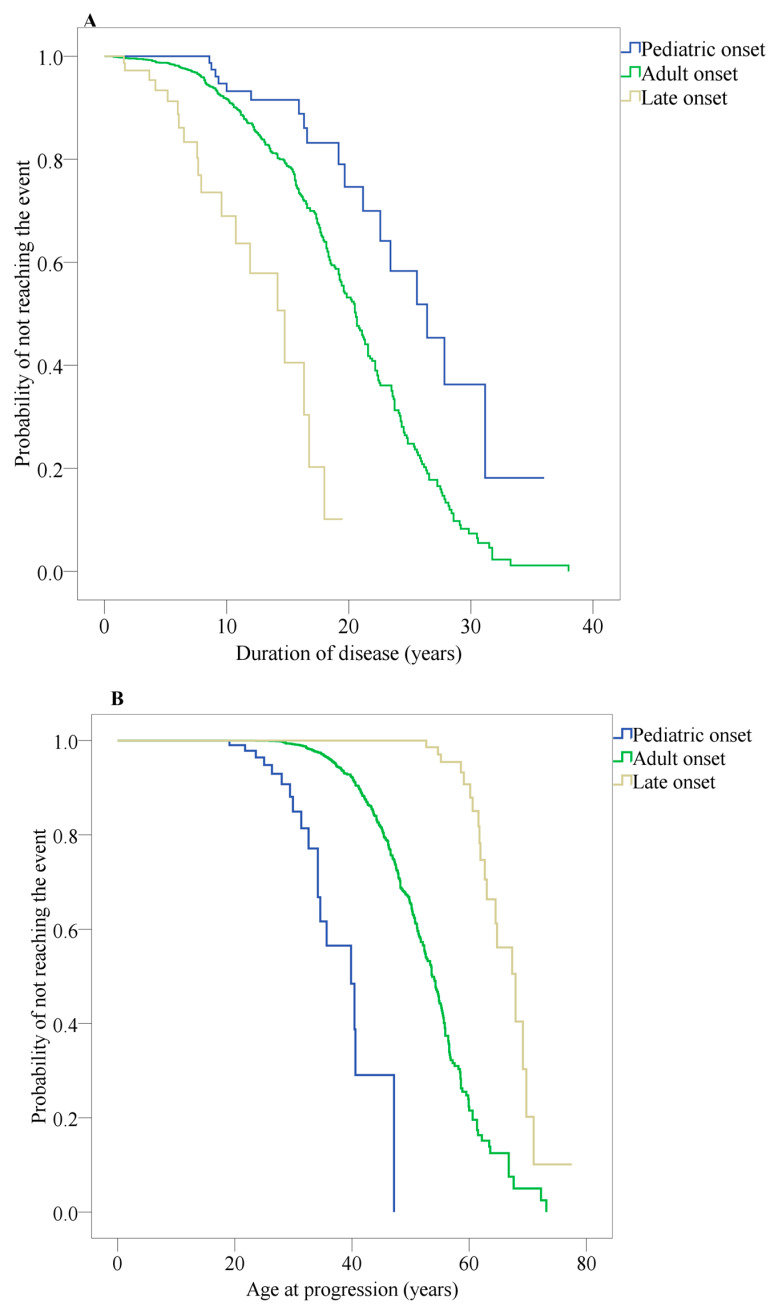
Data were taken from the Isfahan Hakim MS database. Cases were classified as EOMS (MS onset 18 years), LOMS (MS onset >50 years) and AOMS (MS >18 and 50 years). Patients' demographic and clinical (initial symptoms; course of disease; disease patterns from MRI; disease progress) information were gathered and assessed. Kaplan-Meier and Cox proportional hazard regressions were conducted to determine differences between the three groups in the time lapse in conversion from relapsing remitting MS to secondary progressive MS.
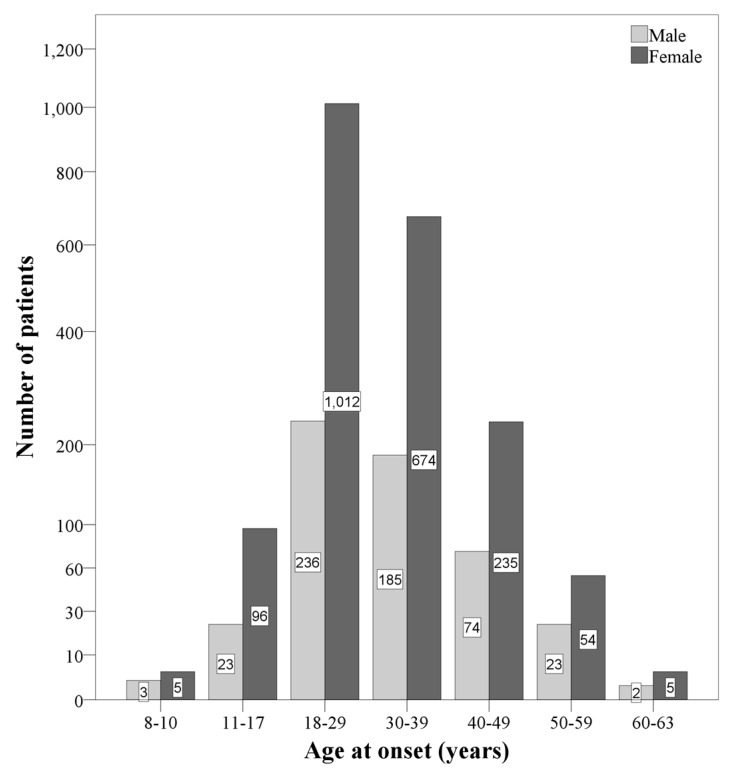
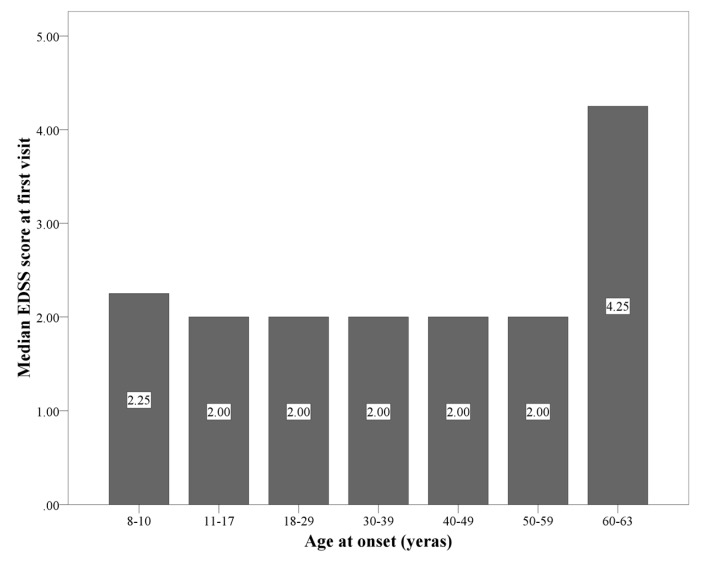
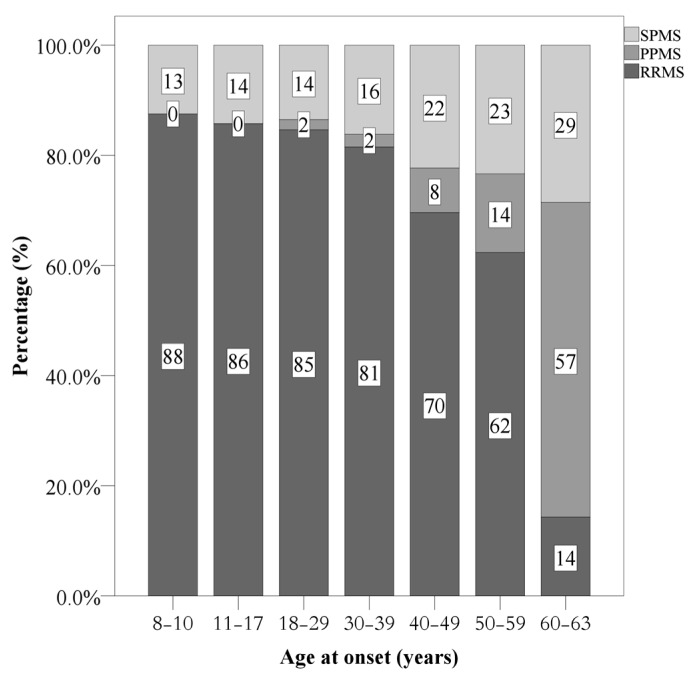
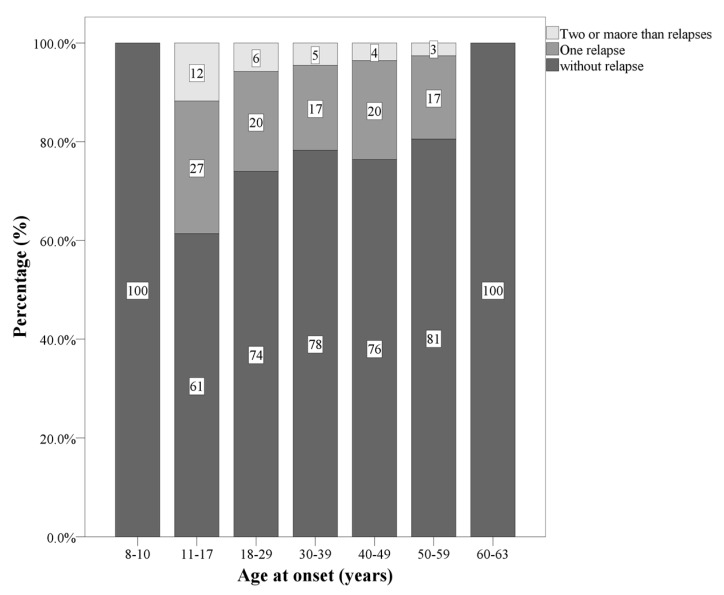
A total of 2627 MS cases were assessed; of these 127 were EOMS, 84 LOMS and 2416 AOMS. The mean age of those with EOMS was 14.5 years; key symptoms were visual impairments, brain stem dysfunction, sensory disturbances and motor dysfunctions. On average, 24.6 years after disease onset, 14.2% with relapsing remitting MS (RRMS) were diagnosed with secondary progressive MS (SPMS). The key predictor variable was a higher Expanded Disability Status Scale (EDSS) score at disease onset. Compared to individuals with AOMS and LOMS, those with EOMS more often had one or two relapses in the first two years, and more often gadolinium-enhancing brain lesions. For individuals with AOMS, mean age was 29.4 years; key symptoms were sensory disturbances, motor dysfunctions and visual impairments. On average, 20.5 years after disease onset, 15.6% with RRMS progressed to SPMS. The key predictors at disease onset were: a higher EDSS score, younger age, a shorter inter-attack interval and spinal lesions. Compared to individuals with EOMS and LOMS, individuals with AOMS more often had either no or three and more relapses in the first two years. For individuals with LOMS, mean age was 53.8 years; key symptoms were motor dysfunctions, sensory disturbances and visual impairments. On average, 14 years after disease onset, 25.3% with RRMS switched to an SPMS. The key predictors at disease onset were: occurrence of spinal lesions and spinal gadolinium-enhancement. Compared to individuals with EOMS and AOMS, individuals with LOMS more often had no relapses in the first two years, and higher EDSS scores at disease onset and at follow-up.
Among a large sample of MS sufferers, cases with early onset and late onset are observable. Individuals with early, adult and late onset MS each display distinct features which should be taken in consideration in their treatment.
与成人起病型多发性硬化症(AOMS)相比,早发型(EOMS)和晚发型(LOMS)多发性硬化症的发病率要低得多,且常常被漏诊或误诊。本研究的目的是:1. 比较早发型、成人起病型和晚发型多发性硬化症患者的人口统计学和临床特征;2. 确定复发缓解型多发性硬化症(RRMS)进展为继发进展型多发性硬化症(SPMS)的残疾进展预测因素。
数据取自伊斯法罕哈基姆多发性硬化症数据库。病例分为早发型(多发性硬化症发病年龄≤18岁)、晚发型(多发性硬化症发病年龄>50岁)和成人起病型(多发性硬化症发病年龄>18岁且<50岁)。收集并评估患者的人口统计学和临床信息(初始症状、病程、MRI显示的疾病模式、疾病进展)。采用Kaplan-Meier法和Cox比例风险回归分析来确定三组患者从复发缓解型多发性硬化症转变为继发进展型多发性硬化症的时间差异。
共评估了2627例多发性硬化症病例;其中127例为早发型,84例为晚发型,2416例为成人起病型。早发型患者的平均年龄为14.5岁;主要症状为视力障碍、脑干功能障碍、感觉障碍和运动功能障碍。疾病发作后平均24.6年,14.2%的复发缓解型多发性硬化症(RRMS)患者被诊断为继发进展型多发性硬化症(SPMS)。关键预测变量是疾病发作时较高的扩展残疾状态量表(EDSS)评分。与成人起病型和晚发型患者相比,早发型患者在疾病发作后的头两年更常出现一到两次复发,且钆增强脑病变更为常见。成人起病型患者的平均年龄为29.4岁;主要症状为感觉障碍、运动功能障碍和视力障碍。疾病发作后平均20.5年,15.6%的复发缓解型多发性硬化症患者进展为继发进展型多发性硬化症。疾病发作时的关键预测因素为:较高的EDSS评分、较年轻的年龄、较短的发作间期和脊髓病变。与早发型和晚发型患者相比,成人起病型患者在疾病发作后的头两年更常出现无复发或三次及以上复发。晚发型患者的平均年龄为53.8岁;主要症状为运动功能障碍、感觉障碍和视力障碍。疾病发作后平均14年,25.3%的复发缓解型多发性硬化症患者转变为继发进展型多发性硬化症。疾病发作时的关键预测因素为:脊髓病变的出现和脊髓钆增强。与早发型和成人起病型患者相比,晚发型患者在疾病发作后的头两年更常无复发,且在疾病发作时和随访时的EDSS评分更高。
在大量多发性硬化症患者样本中,可观察到早发型和晚发型病例。早发型、成人起病型和晚发型多发性硬化症患者各有不同特征,在治疗时应予以考虑。