Bezuidt Oliver K I, Lebre Pedro Humberto, Pierneef Rian, León-Sobrino Carlos, Adriaenssens Evelien M, Cowan Don A, Van de Peer Yves, Makhalanyane Thulani P
Centre for Microbial Ecology and Genomics, Department of Biochemistry, Genetics and Microbiology, University of Pretoria, Pretoria, South Africa.
Biotechnology Platform, Agricultural Research Council, Pretoria, South Africa.
mSystems. 2020 May 5;5(3):e00234-20. doi: 10.1128/mSystems.00234-20.
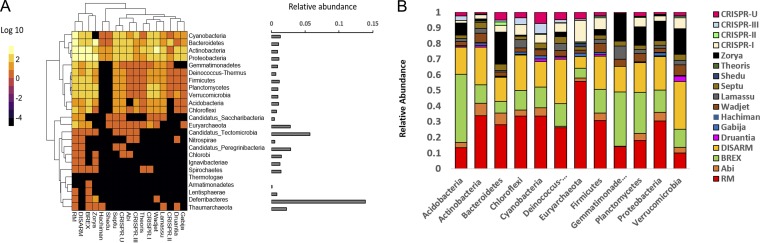
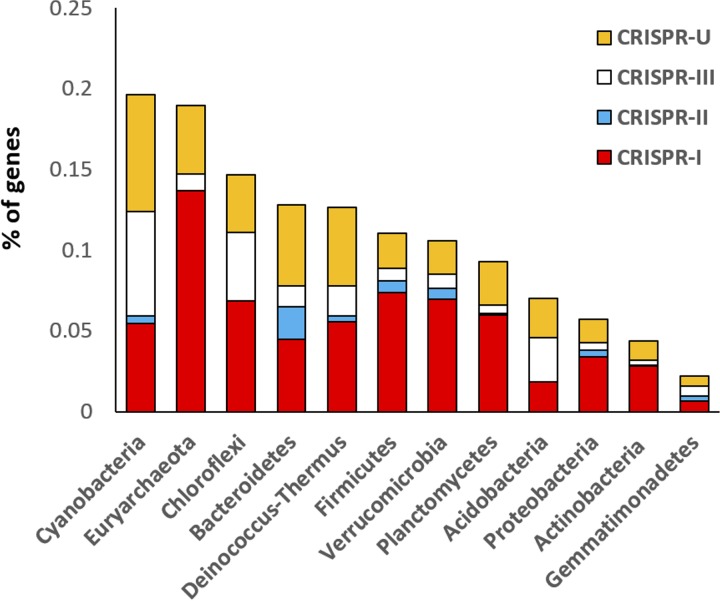
By modulating the structure, diversity, and trophic outputs of microbial communities, phages play crucial roles in many biomes. In oligotrophic polar deserts, the effects of katabatic winds, constrained nutrients, and low water availability are known to limit microbial activity. Although phages may substantially govern trophic interactions in cold deserts, relatively little is known regarding the precise ecological mechanisms. Here, we provide the first evidence of widespread antiphage innate immunity in Antarctic environments using metagenomic sequence data from hypolith communities as model systems. In particular, immunity systems such as DISARM and BREX are shown to be dominant systems in these communities. Additionally, we show a direct correlation between the CRISPR-Cas adaptive immunity and the metavirome of hypolith communities, suggesting the existence of dynamic host-phage interactions. In addition to providing the first exploration of immune systems in cold deserts, our results suggest that phages actively challenge niche communities in Antarctic polar deserts. We provide evidence suggesting that the regulatory role played by phages in this system is an important determinant of bacterial host interactions in this environment. In Antarctic environments, the combination of both abiotic and biotic stressors results in simple trophic levels dominated by microbiomes. Although the past two decades have revealed substantial insights regarding the diversity and structure of microbiomes, we lack mechanistic insights regarding community interactions and how phages may affect these. By providing the first evidence of widespread antiphage innate immunity, we shed light on phage-host dynamics in Antarctic niche communities. Our analyses reveal several antiphage defense systems, including DISARM and BREX, which appear to dominate in cold desert niche communities. In contrast, our analyses revealed that genes which encode antiphage adaptive immunity were underrepresented in these communities, suggesting lower infection frequencies in cold edaphic environments. We propose that by actively challenging niche communities, phages play crucial roles in the diversification of Antarctic communities.
通过调节微生物群落的结构、多样性和营养输出,噬菌体在许多生物群落中发挥着关键作用。在贫营养的极地沙漠中,下坡风、有限的养分和低水分可用性的影响已知会限制微生物活动。尽管噬菌体可能在寒冷沙漠中显著控制营养相互作用,但关于精确的生态机制却知之甚少。在这里,我们利用来自石下群落的宏基因组序列数据作为模型系统,首次提供了南极环境中广泛存在抗噬菌体先天免疫的证据。特别是,诸如DISARM和BREX等免疫系统在这些群落中显示为优势系统。此外,我们展示了CRISPR-Cas适应性免疫与石下群落的元病毒组之间的直接相关性,表明存在动态的宿主-噬菌体相互作用。除了首次探索寒冷沙漠中的免疫系统外,我们的结果表明噬菌体在南极极地沙漠中积极挑战生态位群落。我们提供的证据表明,噬菌体在该系统中发挥的调节作用是该环境中细菌宿主相互作用的重要决定因素。在南极环境中,非生物和生物应激源的结合导致由微生物群落主导的简单营养水平。尽管在过去二十年中已经揭示了关于微生物群落多样性和结构的大量见解,但我们缺乏关于群落相互作用以及噬菌体如何影响这些相互作用的机制性见解。通过提供广泛存在抗噬菌体先天免疫的首个证据,我们揭示了南极生态位群落中的噬菌体-宿主动态。我们的分析揭示了几种抗噬菌体防御系统,包括DISARM和BREX,它们似乎在寒冷沙漠生态位群落中占主导地位。相比之下,我们的分析表明,编码抗噬菌体适应性免疫的基因在这些群落中代表性不足,表明在寒冷土壤环境中的感染频率较低。我们提出,通过积极挑战生态位群落,噬菌体在南极群落的多样化中发挥着关键作用。