Le Phuong Thi, Makhalanyane Thulani P, Guerrero Leandro D, Vikram Surendra, Van de Peer Yves, Cowan Don A
Centre for Microbial Ecology and Genomics (CMEG), Department of Genetics, University of Pretoria, Pretoria, South Africa Department of Plant Systems Biology, VIB, Ghent, Belgium Department of Plant Biotechnology and Bioinformatics, Ghent University, Ghent, Belgium.
Centre for Microbial Ecology and Genomics (CMEG), Department of Genetics, University of Pretoria, Pretoria, South Africa.
Genome Biol Evol. 2016 Sep 11;8(9):2737-47. doi: 10.1093/gbe/evw189.
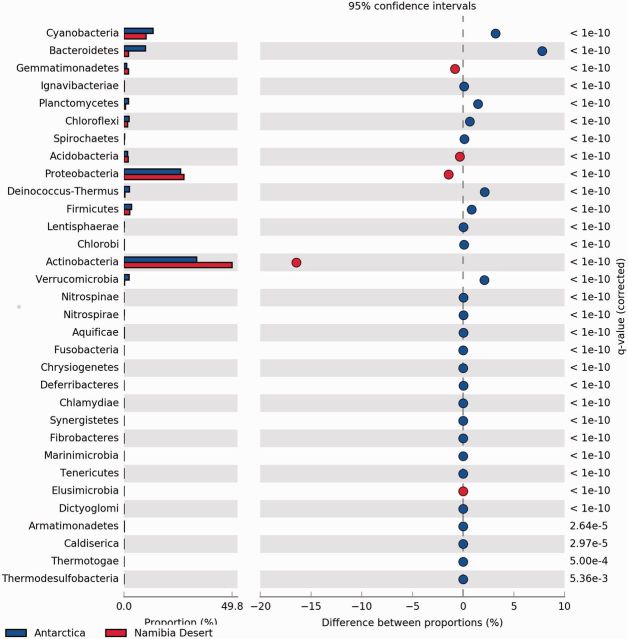
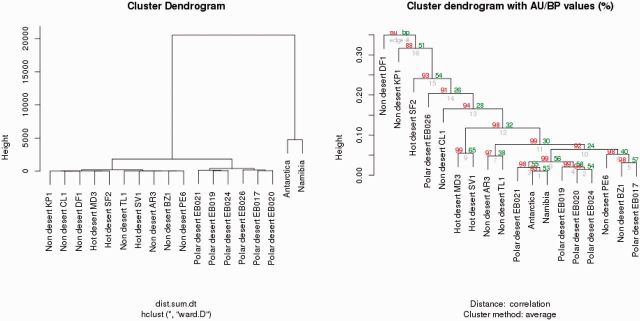
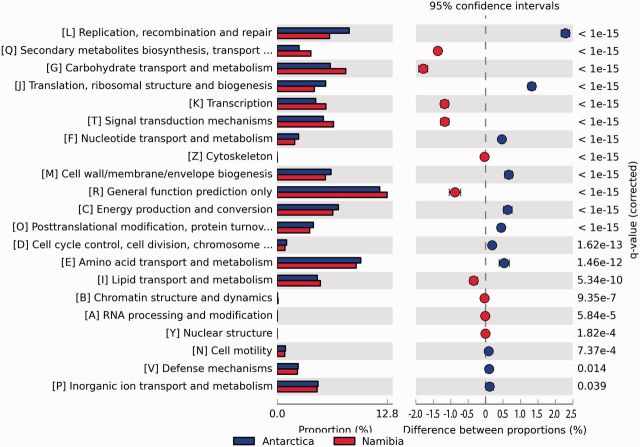
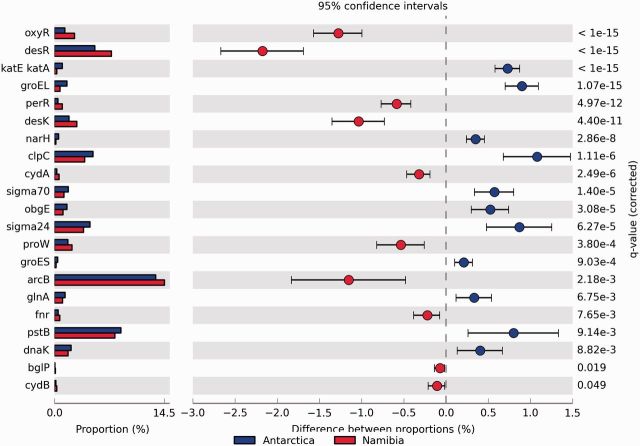
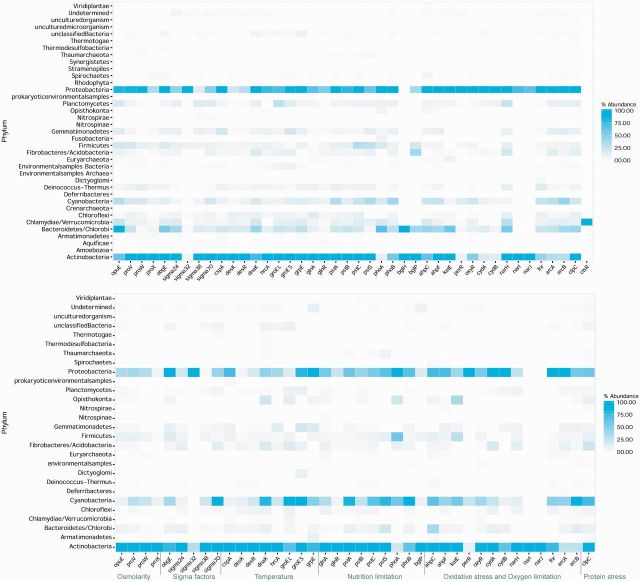
Understanding microbial adaptation to environmental stressors is crucial for interpreting broader ecological patterns. In the most extreme hot and cold deserts, cryptic niche communities are thought to play key roles in ecosystem processes and represent excellent model systems for investigating microbial responses to environmental stressors. However, relatively little is known about the genetic diversity underlying such functional processes in climatically extreme desert systems. This study presents the first comparative metagenome analysis of cyanobacteria-dominated hypolithic communities in hot (Namib Desert, Namibia) and cold (Miers Valley, Antarctica) hyperarid deserts. The most abundant phyla in both hypolith metagenomes were Actinobacteria, Proteobacteria, Cyanobacteria and Bacteroidetes with Cyanobacteria dominating in Antarctic hypoliths. However, no significant differences between the two metagenomes were identified. The Antarctic hypolithic metagenome displayed a high number of sequences assigned to sigma factors, replication, recombination and repair, translation, ribosomal structure, and biogenesis. In contrast, the Namib Desert metagenome showed a high abundance of sequences assigned to carbohydrate transport and metabolism. Metagenome data analysis also revealed significant divergence in the genetic determinants of amino acid and nucleotide metabolism between these two metagenomes and those of soil from other polar deserts, hot deserts, and non-desert soils. Our results suggest extensive niche differentiation in hypolithic microbial communities from these two extreme environments and a high genetic capacity for survival under environmental extremes.
了解微生物对环境压力源的适应性对于解释更广泛的生态模式至关重要。在最极端的炎热和寒冷沙漠中,隐秘的生态位群落被认为在生态系统过程中发挥着关键作用,并且是研究微生物对环境压力源反应的优秀模型系统。然而,对于气候极端的沙漠系统中此类功能过程背后的遗传多样性,我们了解得相对较少。本研究首次对炎热(纳米比亚纳米布沙漠)和寒冷(南极洲米尔斯谷)超干旱沙漠中以蓝细菌为主的石下群落进行了比较宏基因组分析。两个石下宏基因组中最丰富的门类是放线菌门、变形菌门、蓝细菌门和拟杆菌门,其中蓝细菌在南极石下群落中占主导地位。然而,未发现两个宏基因组之间存在显著差异。南极石下宏基因组显示出大量分配给σ因子、复制、重组和修复、翻译、核糖体结构和生物合成的序列。相比之下,纳米布沙漠宏基因组显示出大量分配给碳水化合物运输和代谢的序列。宏基因组数据分析还揭示,这两个宏基因组与其他极地沙漠、炎热沙漠和非沙漠土壤的土壤宏基因组在氨基酸和核苷酸代谢的遗传决定因素方面存在显著差异。我们的结果表明,来自这两种极端环境的石下微生物群落存在广泛的生态位分化,并且在极端环境下具有很高的生存遗传能力。