Department of Botany and Plant Biology, University of Geneva, 1211, Geneva, Switzerland.
Institute of Molecular Systems Biology, ETH Zurich, 8093, Zurich, Switzerland.
Commun Biol. 2020 May 5;3(1):209. doi: 10.1038/s42003-020-0927-z.
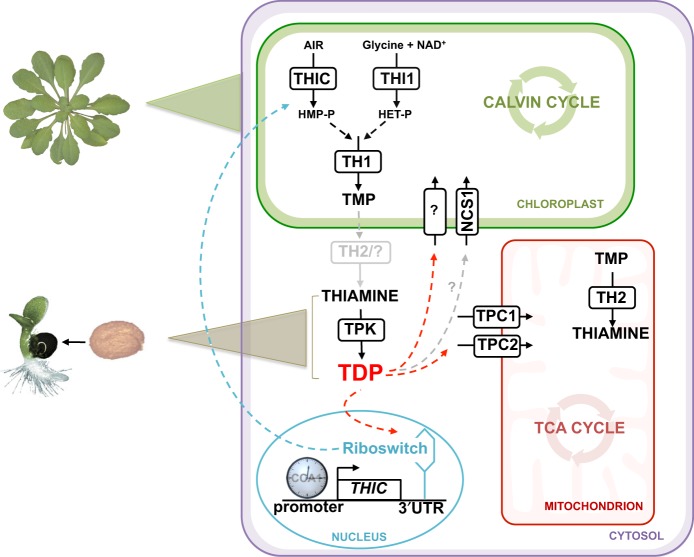
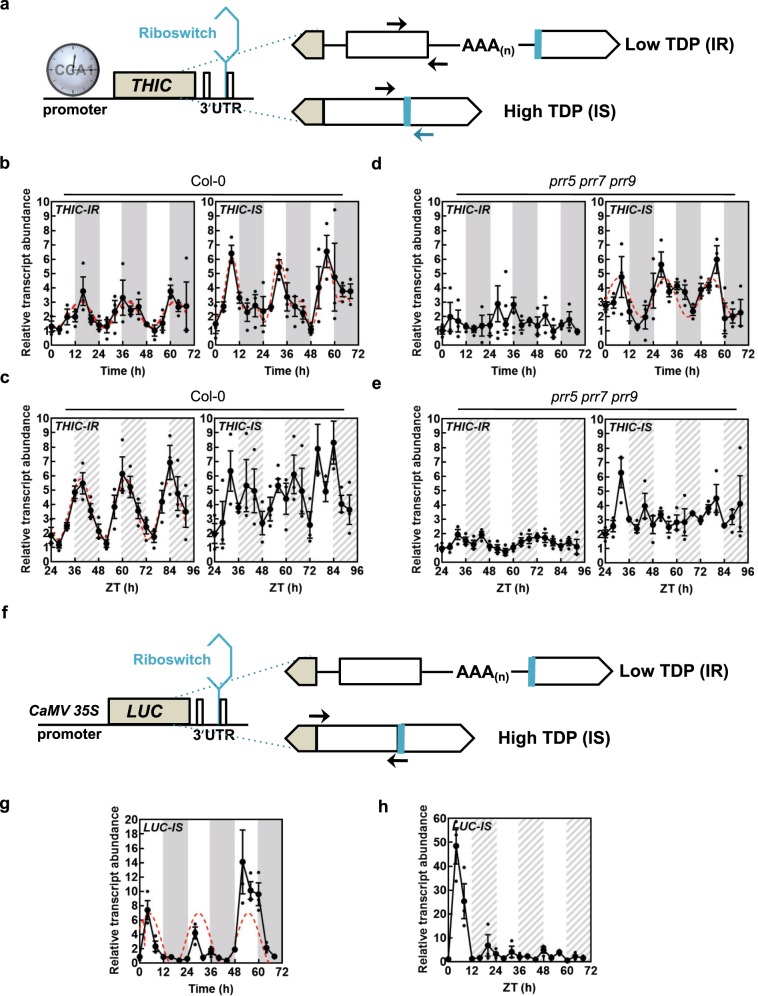
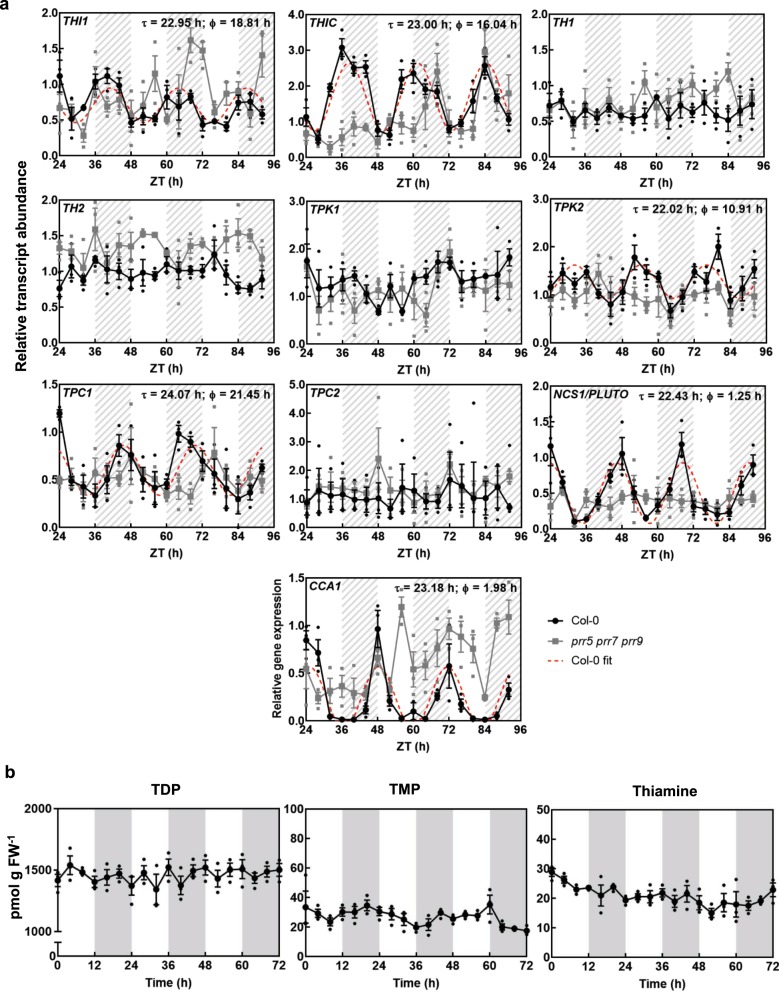
In plants, metabolic homeostasis-the driving force of growth and development-is achieved through the dynamic behavior of a network of enzymes, many of which depend on coenzymes for activity. The circadian clock is established to influence coordination of supply and demand of metabolites. Metabolic oscillations independent of the circadian clock, particularly at the subcellular level is unexplored. Here, we reveal a metabolic rhythm of the essential coenzyme thiamine diphosphate (TDP) in the Arabidopsis nucleus. We show there is temporal separation of the clock control of cellular biosynthesis and transport of TDP at the transcriptional level. Taking advantage of the sole reported riboswitch metabolite sensor in plants, we show that TDP oscillates in the nucleus. This oscillation is a function of a light-dark cycle and is independent of circadian clock control. The findings are important to understand plant fitness in terms of metabolite rhythms.
在植物中,代谢稳态——生长和发育的驱动力——是通过一个酶网络的动态行为来实现的,其中许多酶的活性依赖于辅酶。生物钟的建立是为了影响代谢物供需的协调。目前还没有探索到生物钟之外的代谢物波动,特别是在亚细胞水平上。在这里,我们揭示了拟南芥核中必需辅酶硫胺素二磷酸(TDP)的代谢节律。我们表明,在转录水平上存在时钟控制细胞生物合成和 TDP 运输的时间分离。利用植物中唯一报道的核糖开关代谢物传感器,我们表明 TDP 在核内振荡。这种振荡是光暗循环的一个功能,并且独立于生物钟控制。这些发现对于理解植物在代谢物节律方面的适应能力很重要。