Colomer Marc Serra, Chailyan Anna, Fennessy Ross T, Olsson Kim Friis, Johnsen Lea, Solodovnikova Natalia, Forster Jochen
Carlsberg Research Laboratory, Group Research, Copenhagen, Denmark.
National Institute for Food, Technical University of Denmark, Kongens Lyngby, Denmark.
Front Microbiol. 2020 Apr 9;11:637. doi: 10.3389/fmicb.2020.00637. eCollection 2020.
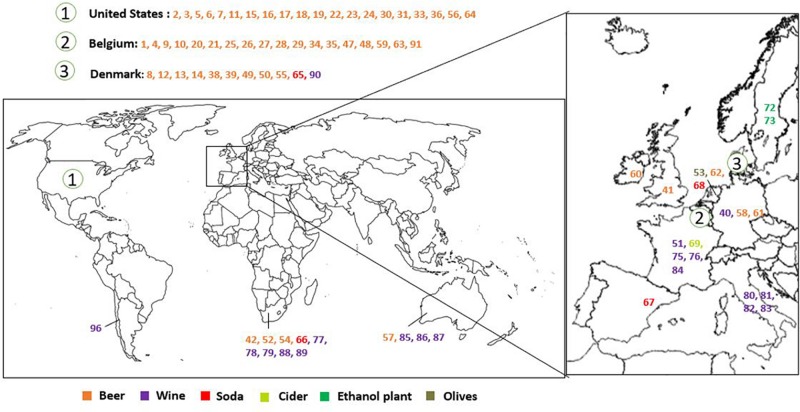
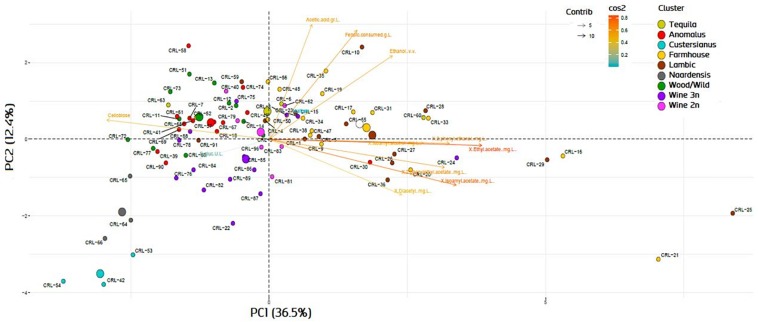
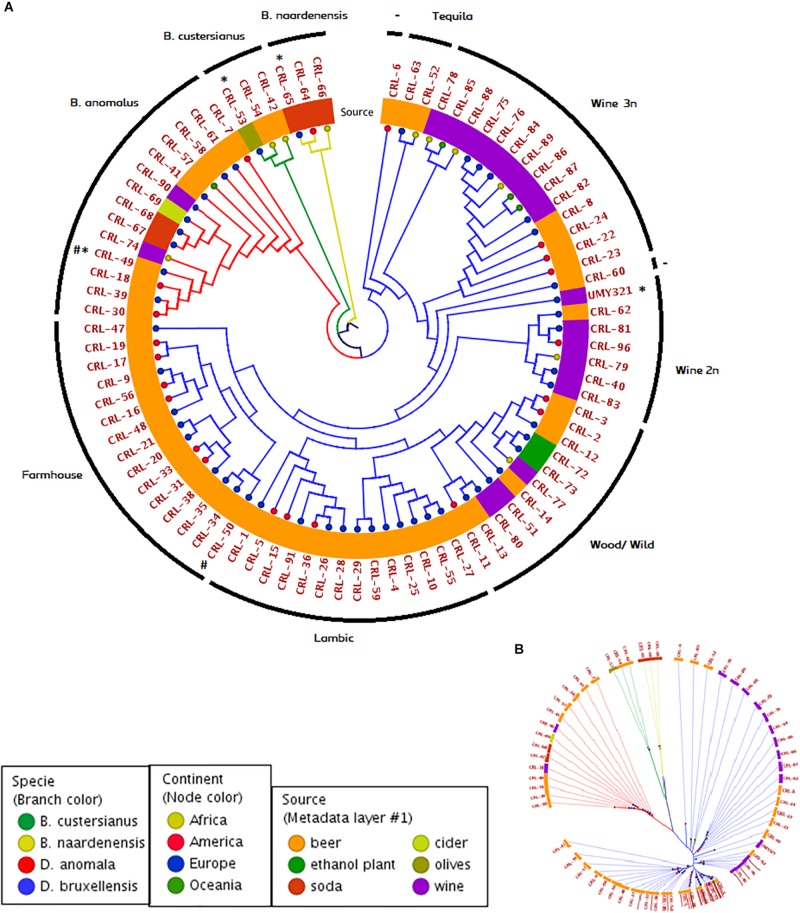
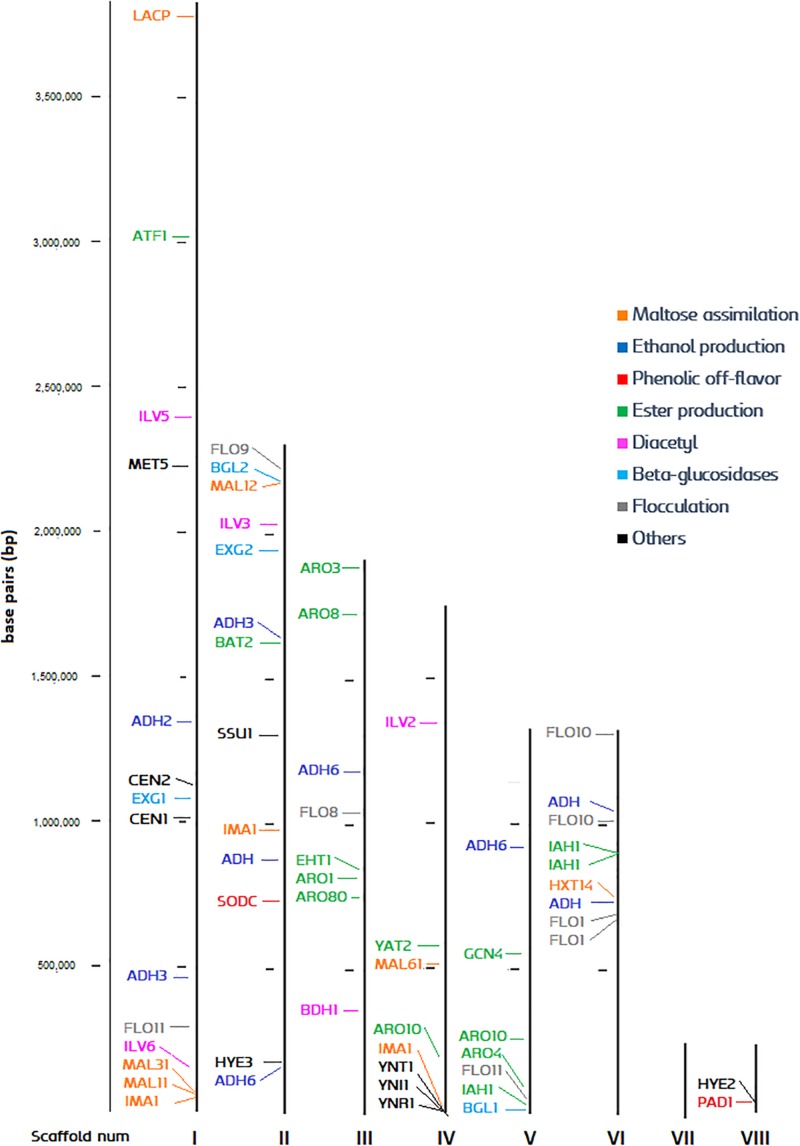
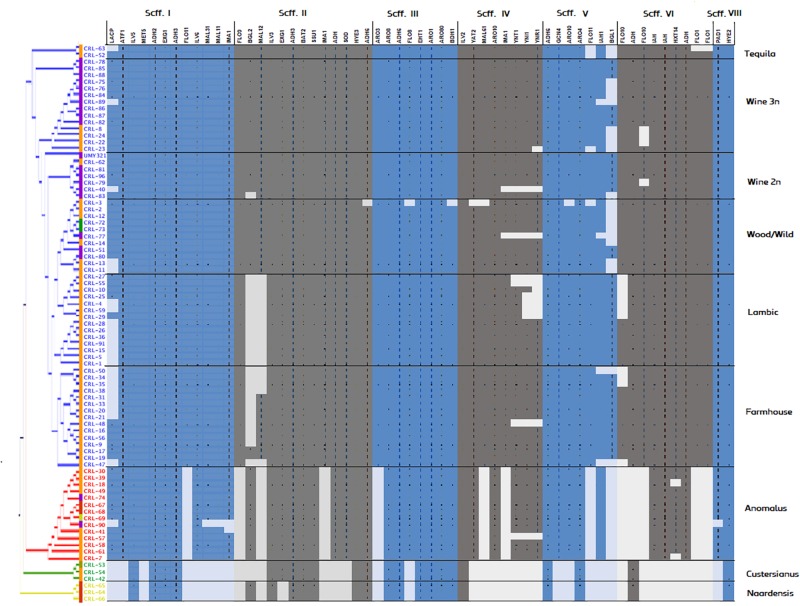
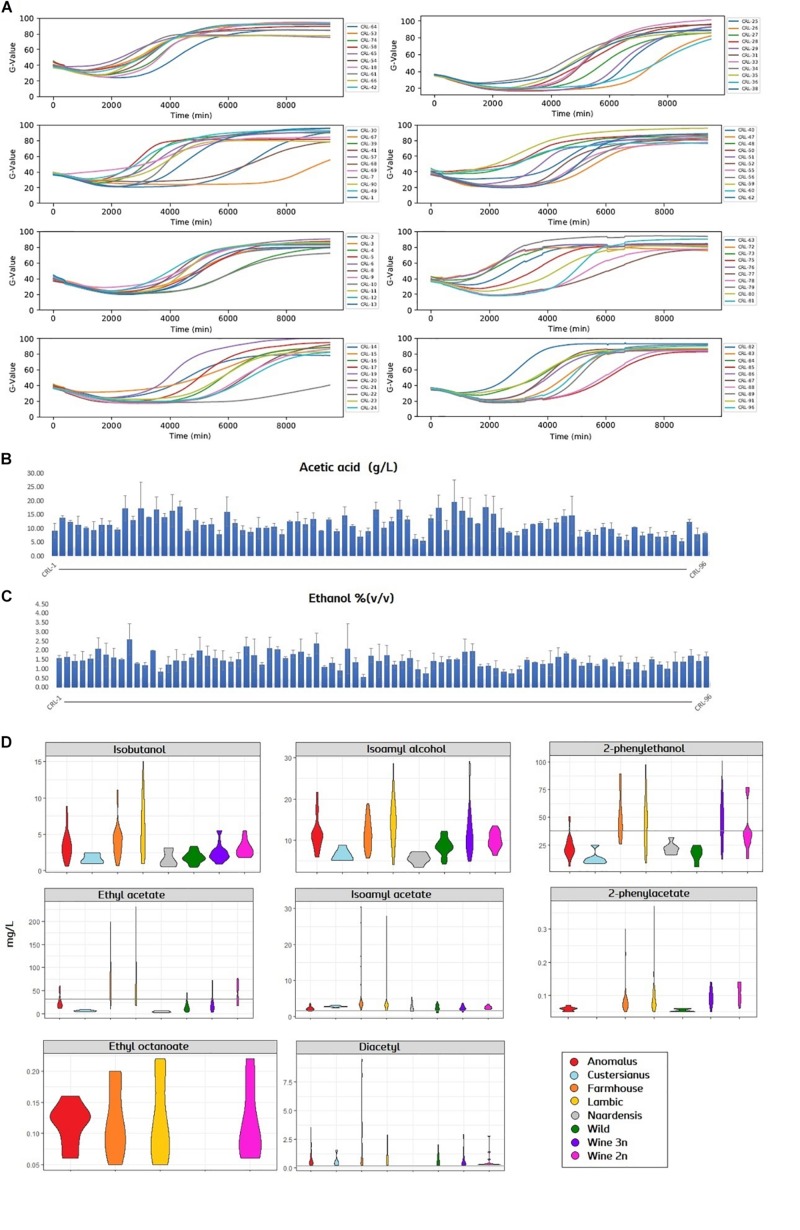
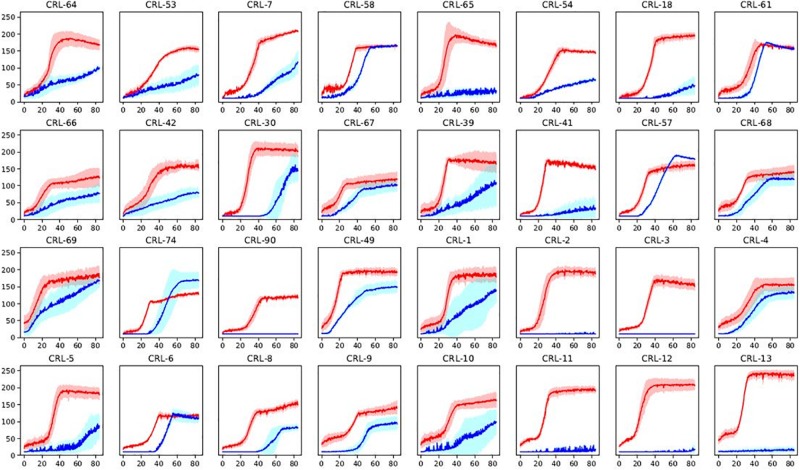
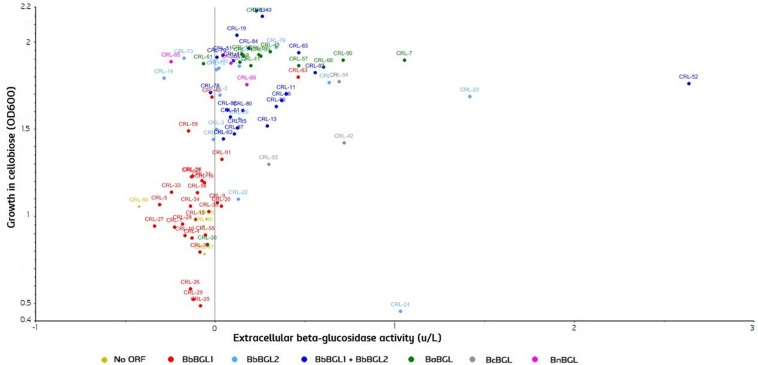
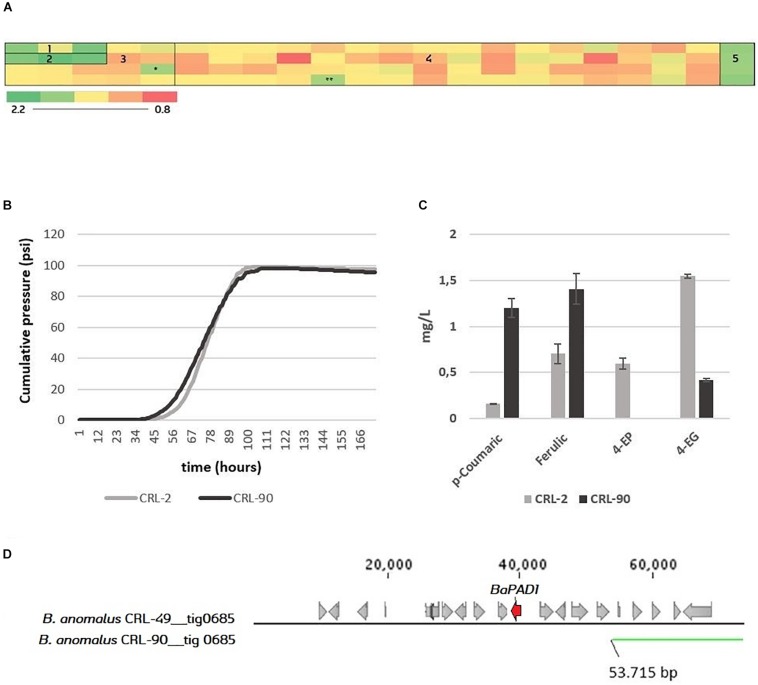
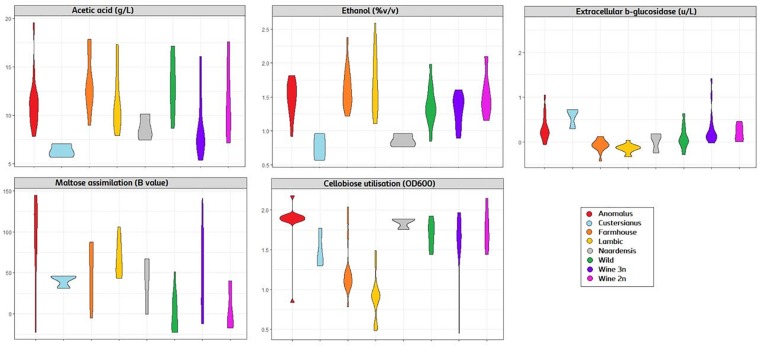
yeasts have gained popularity in many sectors of the biotechnological industry, specifically in the field of beer production, but also in wine and ethanol production. Their unique properties enable to outcompete conventional brewer's yeast in industrially relevant traits such as production of ethanol and pleasant flavors. Recent advances in next-generation sequencing (NGS) and high-throughput screening techniques have facilitated large population studies allowing the selection of appropriate yeast strains with improved traits. In order to get a better understanding of species and its potential for beer production, we sequenced the whole genome of 84 strains, which we make available to the scientific community and carried out several assays for brewing-relevant properties. The collection includes isolates from different substrates and geographical origin. Additionally, we have included two of the oldest Carlsberg Research Laboratory isolates. In this study, we reveal the phylogenetic pattern of species by comparing the predicted proteomes of each strain. Furthermore, we show that the collection is well described using similarity in genomic organization, and that there is a direct correlation between genomic background and phenotypic characteristics. Particularly, genomic patterns affecting flavor production, maltose assimilation, beta-glucosidase activity, and phenolic off-flavor (POF) production are reported. This knowledge yields new insights into population survival strategies, artificial selection pressure, and loss of carbon assimilation traits. On a species-specific level, we have identified for the first time a POF negative strain, without the main spoilage character of species. This strain (CRL-90) has lost , making it incapable of converting ferulic acid to 4-ethylguaiacol (4-EG) and 4-ethylphenol (4-EP). This loss of function makes CRL-90 a good candidate for the production of characteristic s flavors in beverages, without the contaminant increase in POF. Overall, this study displays the potential of exploring yeast species biodiversity to find strains with relevant properties applicable to the brewing industry.
酵母在生物技术产业的许多领域都受到了欢迎,特别是在啤酒生产领域,同时也应用于葡萄酒和乙醇生产。它们的独特特性使其在乙醇生产和风味宜人等与工业相关的特性方面能够胜过传统的酿酒酵母。新一代测序(NGS)和高通量筛选技术的最新进展推动了大规模群体研究,有助于选择具有改良特性的合适酵母菌株。为了更好地了解该物种及其啤酒生产潜力,我们对84个菌株的全基因组进行了测序,并将其提供给科学界,同时还对与酿造相关的特性进行了多项测定。该菌株集合包括来自不同底物和地理来源的分离株。此外,我们还纳入了两个最古老的嘉士伯研究实验室分离株。在本研究中,我们通过比较每个菌株的预测蛋白质组揭示了该物种系统发育模式。此外,我们表明利用基因组组织的相似性可以很好地描述该菌株集合,并且基因组背景与表型特征之间存在直接相关性。特别是,报道了影响风味产生、麦芽糖同化、β - 葡萄糖苷酶活性和酚类异味(POF)产生的基因组模式。这些知识为该群体的生存策略、人工选择压力和碳同化特性丧失提供了新的见解。在物种特异性水平上,我们首次鉴定出一个POF阴性菌株,它没有该物种的主要腐败特征。该菌株(CRL - 90)缺失了[相关基因或功能],使其无法将阿魏酸转化为4 - 乙基愈创木酚(4 - EG)和4 - 乙基苯酚(4 - EP)。这种功能丧失使CRL - 90成为生产具有特色风味饮料的良好候选菌株,同时不会增加POF污染物。总体而言,本研究展示了探索该酵母物种生物多样性以寻找适用于酿造行业的相关特性菌株的潜力。