Gim Jungsoo, An Jaehoon, Sung Joohon, Silverman Edwin K, Cho Michael H, Won Sungho
Department of Biomedical Science, Chosun University, Gwangju, South Korea.
Graduate School of Public Health, Seoul National University, Seoul, South Korea.
Front Genet. 2020 Apr 21;11:329. doi: 10.3389/fgene.2020.00329. eCollection 2020.
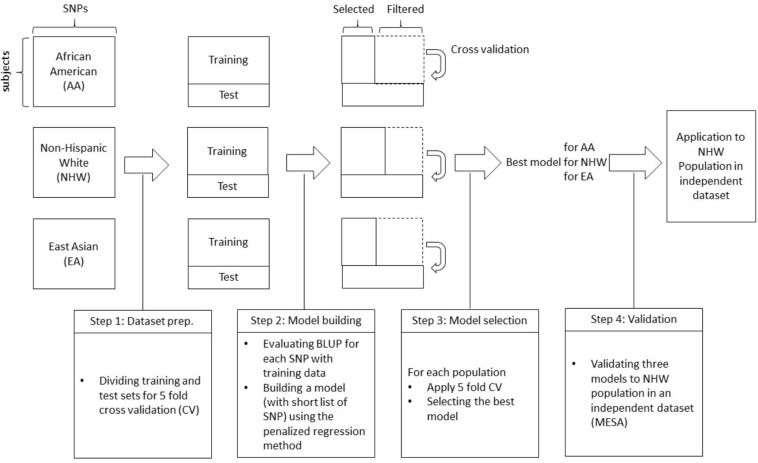
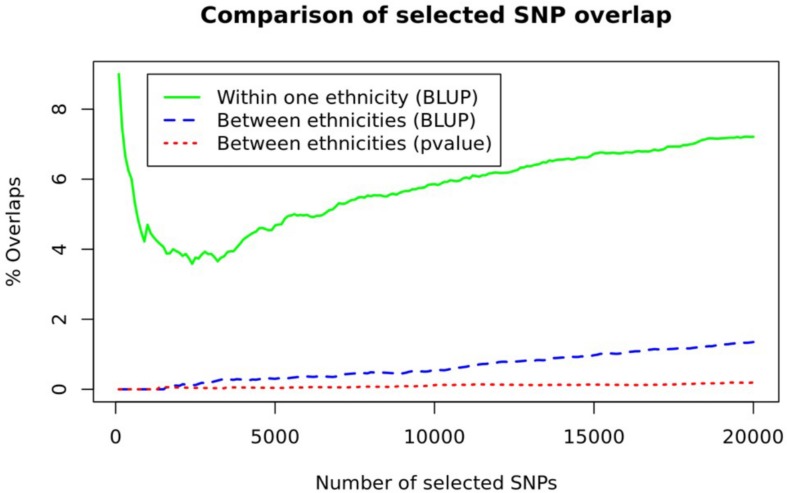
Heterogeneity of lung function levels and risk for developing chronic obstructive pulmonary disease (COPD) among people exposed to the same environmental risk factors, such as cigarette smoking, suggest an important role of genetic factors in COPD susceptibility. To investigate the possible role of different genetic factors in COPD susceptibility across ethnicities. We used a population-stratified analysis for: (i) identifying ethnic-specific genetic susceptibility loci, (ii) developing ethnic-specific polygenic risk prediction models using those SNPs, and (iii) validating the models with an independent dataset. We elucidated substantial differences in SNP heritability and susceptibility loci for the disease across ethnicities. Furthermore, the application of three ethnic-specific prediction models to an independent dataset showed that the best performance is achieved when the prediction model is applied to a dataset with the matched ethnic sample. Our study validates the necessity of considering ethnic differences in COPD risk; understanding these differences might help in preventing COPD and developing therapeutic strategies.
在暴露于相同环境风险因素(如吸烟)的人群中,肺功能水平的异质性以及患慢性阻塞性肺疾病(COPD)的风险表明遗传因素在COPD易感性中起重要作用。为了研究不同遗传因素在不同种族COPD易感性中的可能作用。我们进行了人群分层分析,以:(i)识别种族特异性遗传易感性位点,(ii)使用这些单核苷酸多态性(SNP)开发种族特异性多基因风险预测模型,以及(iii)用独立数据集验证模型。我们阐明了不同种族间该疾病的SNP遗传力和易感性位点存在实质性差异。此外,将三个种族特异性预测模型应用于独立数据集表明,当预测模型应用于具有匹配种族样本的数据集时,能获得最佳性能。我们的研究验证了在COPD风险中考虑种族差异的必要性;了解这些差异可能有助于预防COPD并制定治疗策略。