Institute for Global Health, University College London, 30 Guilford Street, London, WC1N 1EH, UK.
Mother and Infant Research Activities, PO Box 921, Thapathali, Kathmandu, Nepal.
BMC Pregnancy Childbirth. 2020 May 6;20(1):268. doi: 10.1186/s12884-020-02960-6.
Engaging citizens and communities to make services accountable is vital to achieving health development goals. Community participation in health management committees can increase public accountability of health services. We conducted a cluster randomised controlled trial to test the impact of strengthened health management committees (HMCs) and community mobilisation through women's groups on institutional deliveries and deliveries by trained health workers in rural Nepal.
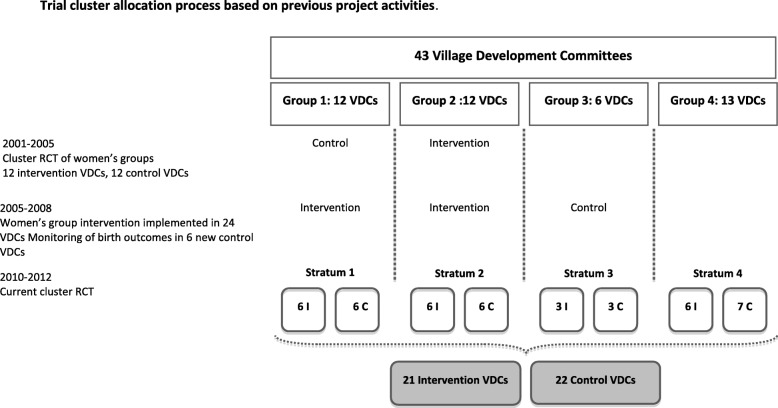
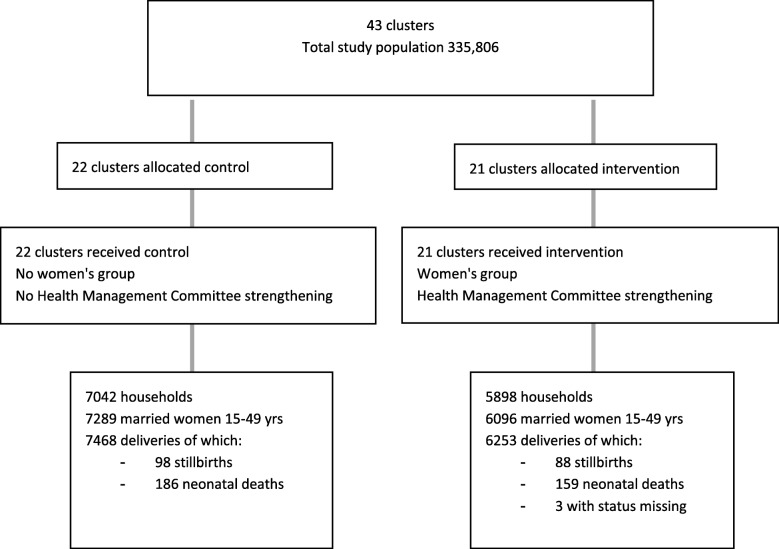
The study was conducted in all Village Development Committee clusters in the hills district of Makwanpur (population of 420,500). In 21 intervention clusters, we conducted three-day workshops with HMCs to improve their capacity for planning and action and supported female community health volunteers to run women's groups. These groups met once a month and mobilised communities to address barriers to institutional delivery through participatory learning and action cycles. We compared this intervention with 22 control clusters. Prospective surveillance from October 2010 to the end of September 2012 captured complete data on 13,721 deliveries in intervention and control areas. Analysis was by intention to treat.
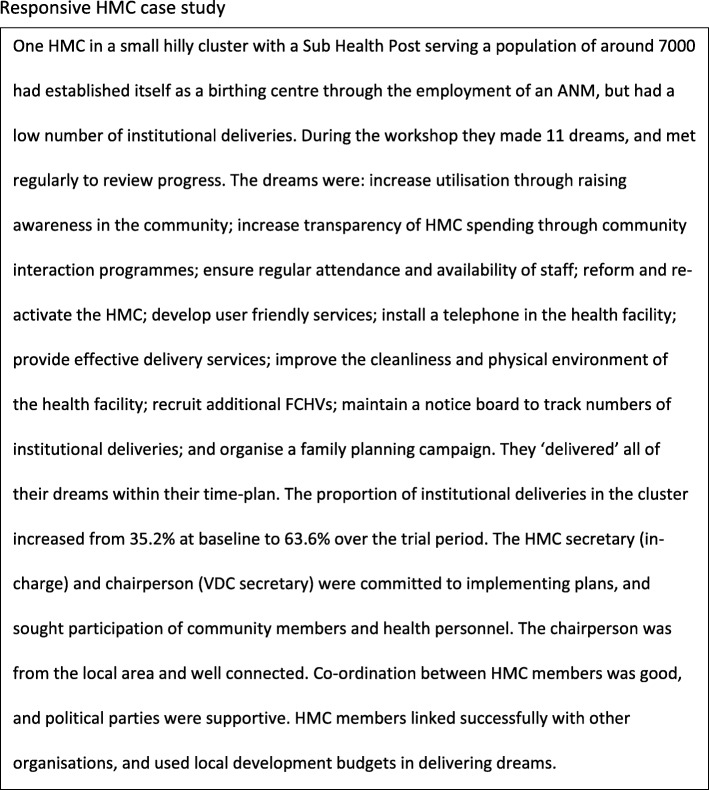
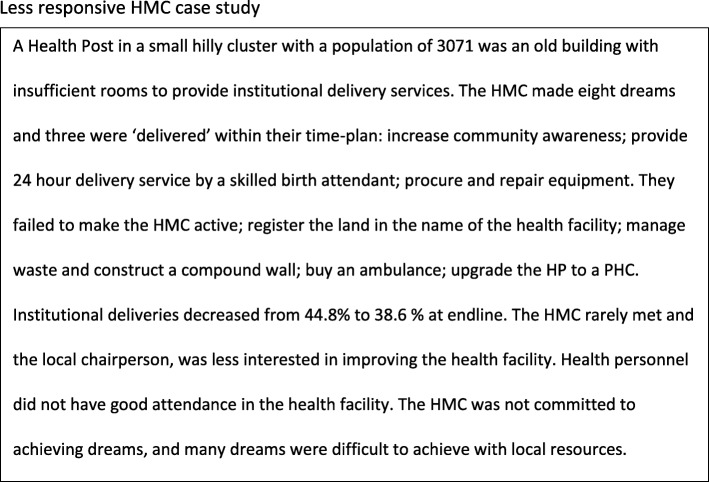
The women's group intervention was implemented as intended, but we were unable to support HMCs as planned because many did not meet regularly. The activities of community based organisations were systematically targeted at control clusters, which meant that there were no true 'control' clusters. 39% (5403) of deliveries were in health institutions and trained health workers attended most of them. There were no differences between trial arms in institutional delivery uptake (1.45, 0.76-2.78) or attendance by trained health workers (OR 1.43, 95% CI 0.74-2.74).
The absence of a true counterfactual and inadequate coverage of the HMC strengthening intervention impedes our ability to draw conclusions. Further research is needed to test the effectiveness of strengthening public accountability mechanisms on increased utilisation of services at delivery.
Current Controlled Trials ISRCTN99834806. Date of registration:28/09/10.
让公民和社区参与服务问责对于实现卫生发展目标至关重要。社区参与卫生管理委员会可以提高卫生服务的公众问责制。我们进行了一项整群随机对照试验,以检验通过妇女团体加强卫生管理委员会(HMC)和社区动员对尼泊尔农村地区机构分娩和培训卫生工作者分娩的影响。
该研究在马坎布尔(人口 420500 人)山区的所有村发展委员会群中进行。在 21 个干预群中,我们与 HMC 举行了为期三天的研讨会,以提高他们的规划和行动能力,并支持女性社区卫生志愿者开展妇女团体。这些团体每月开会一次,并通过参与式学习和行动周期动员社区解决机构分娩的障碍。我们将这种干预与 22 个对照组进行了比较。从 2010 年 10 月到 2012 年 9 月底的前瞻性监测,在干预和对照地区共捕获了 13721 例分娩的完整数据。分析采用意向治疗。
妇女团体干预按计划实施,但我们无法按计划支持 HMC,因为许多 HMC 没有定期开会。基层组织的活动有系统地针对对照组进行,这意味着没有真正的“对照组”。39%(5403)的分娩发生在卫生机构,大多数由经过培训的卫生工作者接生。试验组之间在机构分娩率(1.45,0.76-2.78)或由经过培训的卫生工作者接生(OR 1.43,95%CI 0.74-2.74)方面没有差异。
缺乏真正的对照和 HMC 强化干预的覆盖不足,妨碍了我们得出结论的能力。需要进一步研究来检验加强公众问责机制对提高分娩时服务利用的有效性。
当前对照试验 ISRCTN99834806。注册日期:2010 年 9 月 28 日。