Dittrich Florian, Beck Sascha, Harren Anna Katharina, Reinecke Felix, Serong Sebastian, Jung Jochen, Back David Alexander, Wolf Milan, Landgraeber Stefan
Department for Orthopaedics and Orthopaedics Surgery, Saarland University Medical Center and Saarland University Faculty of Medicine, Homburg, Germany.
Sportsclinic Hellersen, Lüdenscheid, Germany.
JMIR Mhealth Uhealth. 2020 May 7;8(5):e17085. doi: 10.2196/17085.
It is undeniable that appropriate smartphone apps offer enormous opportunities for dealing with future challenges in orthopedic surgery and public health, in general. However, it is still unclear how the apps currently available in the two major app stores can be used in daily clinical routine by German orthopedic surgeons.
This study aimed to gain evidence regarding the quantity and quality of apps available in the two major app stores and their suitability for use by orthopedic surgeons in Germany.
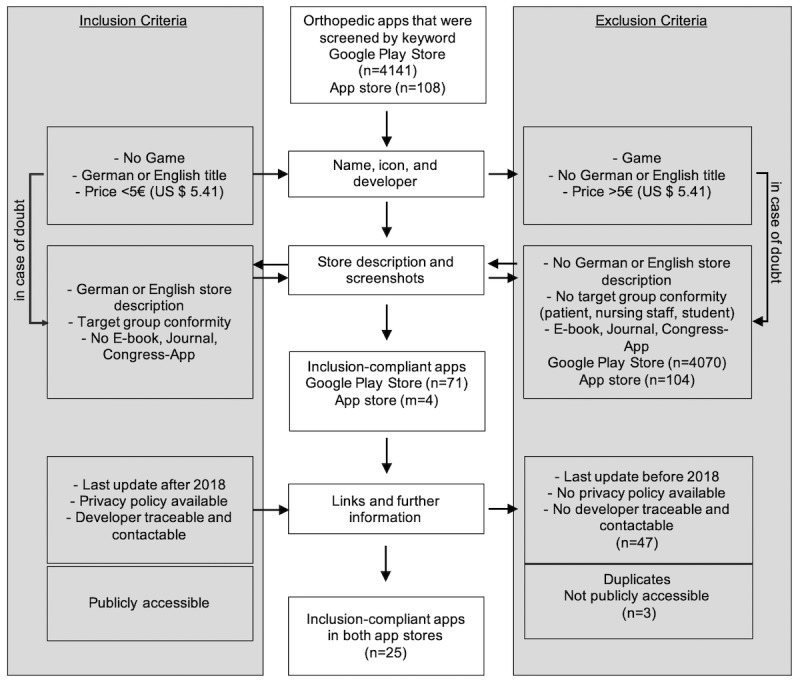
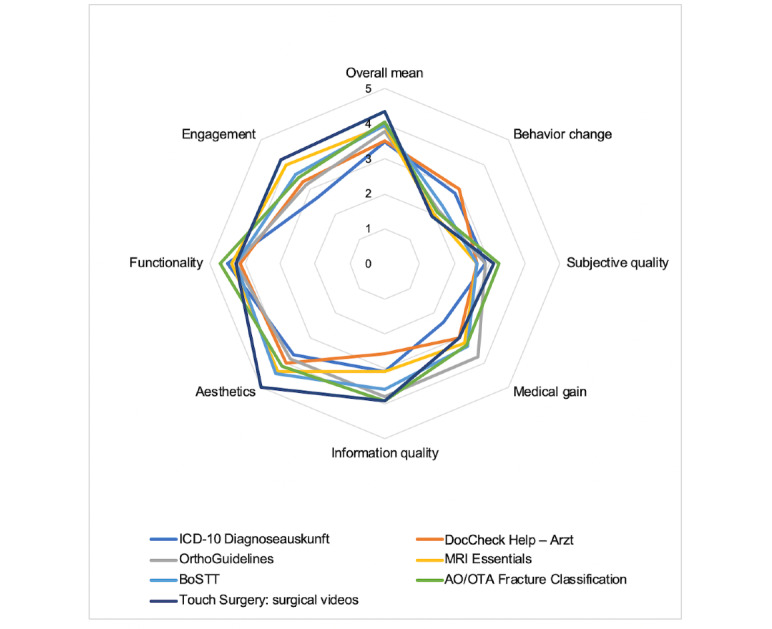
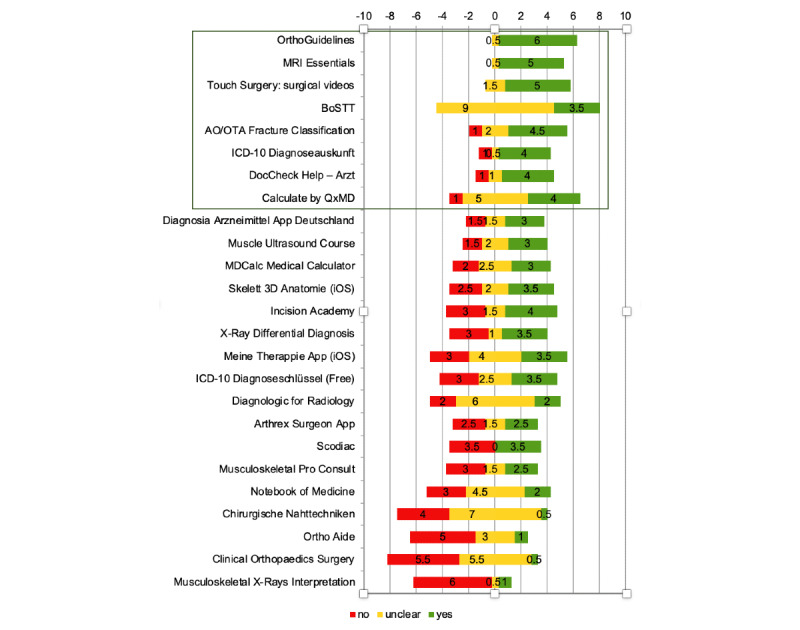
We conducted a systematic, keyword-based app store screening to obtain evidence concerning the quantity and quality of commercially available apps. Apps that met the inclusion criteria were evaluated using the app synopsis-checklist for users and the German Mobile App Rating Scale for secure use, trustworthiness, and quality.
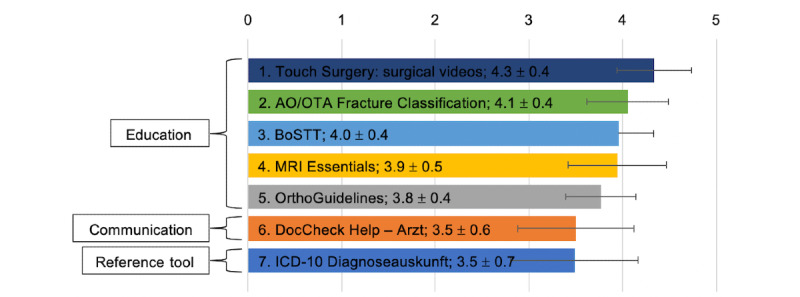
The investigation revealed serious shortcomings regarding legal and medical aspects. Furthermore, most apps turned out to be useless and unsuitable for the clinical field of application (4242/4249, 99.84%). Finally, 7 trustworthy and high-quality apps (7/4249, 0.16%) offering secure usage in the daily clinical routine of orthopedists were identified. These apps mainly focused on education (5/7). None of them were CE (Conformité Européenne) certified. Moreover, there are no studies providing evidence that these apps have any positive use whatsoever.
The data obtained in our study suggest that the number of trustworthy and high-quality apps on offer is extremely low. Nowadays, finding appropriate apps in the fast-moving, complex, dynamic, and rudimentarily controlled app stores is most challenging. Promising approaches, for example, systematic app store screenings, app-rating developments, reviews or app libraries, and the creation of consistent standards have been established. However, further efforts are necessary to ensure that these innovative mobile health apps not only provide the correct information but are also safe to use in daily clinical practice.
不可否认,合适的智能手机应用程序总体上为应对骨科手术和公共卫生领域未来的挑战提供了巨大机遇。然而,目前德国骨科医生如何在日常临床工作中使用两大应用商店中现有的应用程序仍不清楚。
本研究旨在获取有关两大应用商店中可用应用程序的数量、质量及其对德国骨科医生适用性的证据。
我们进行了基于关键词的系统应用商店筛选,以获取有关市售应用程序数量和质量的证据。符合纳入标准的应用程序使用针对用户的应用程序简介检查表和德国移动应用程序安全使用、可信度和质量评级量表进行评估。
调查揭示了在法律和医学方面存在严重缺陷。此外,大多数应用程序被证明毫无用处且不适用于临床应用领域(4242/4249,99.84%)。最后,确定了7个值得信赖且高质量的应用程序(7/4249,0.16%),它们在骨科医生的日常临床工作中提供安全使用。这些应用程序主要侧重于教育(5/7)。它们均未获得CE(欧洲合格认证)认证。此外,没有研究提供证据表明这些应用程序有任何积极用途。
我们研究中获得的数据表明,提供的值得信赖且高质量的应用程序数量极少。如今,在快速发展、复杂、动态且基本不受控制的应用商店中找到合适的应用程序极具挑战性。已经建立了一些有前景的方法,例如系统的应用商店筛选、应用程序评级发展、评论或应用程序库以及制定一致的标准。然而,还需要进一步努力以确保这些创新的移动健康应用程序不仅能提供正确信息,而且在日常临床实践中使用安全。