Kleekayai Thanyaporn, Le Gouic Aurélien V, Deracinois Barbara, Cudennec Benoit, FitzGerald Richard J
Department of Biological Sciences, University of Limerick, V94 T9PX Limerick, Ireland.
Joint Research Unit BioEcoAgro N° 1158, Université Lille, INRAE, Université Liège, UPJV, YNCREA, Université d'Artois, Université Littoral Côte d'Opale, ICV Institut Charles Viollette, F-59000 Lille, France.
Foods. 2020 May 5;9(5):582. doi: 10.3390/foods9050582.
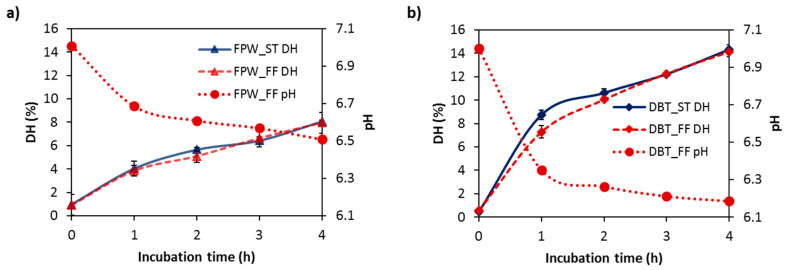
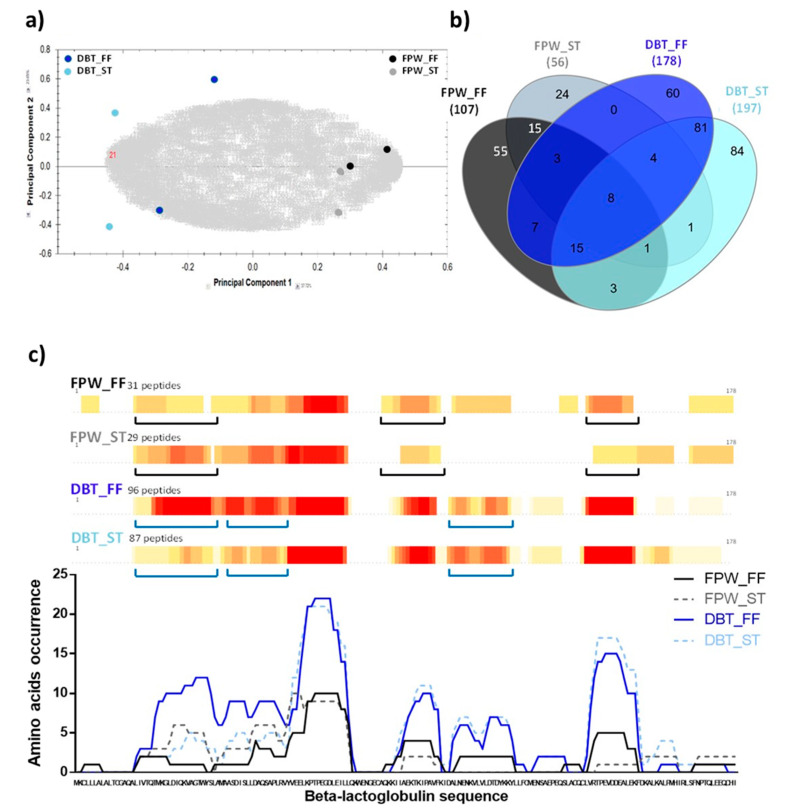
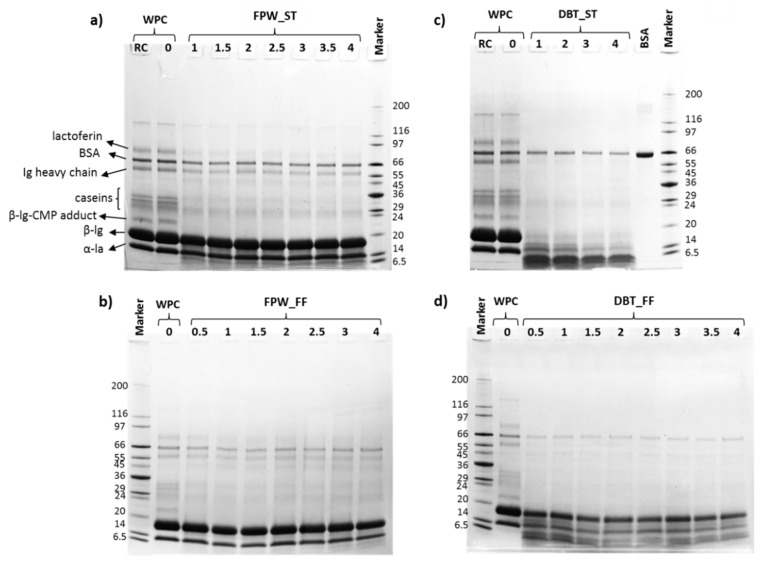
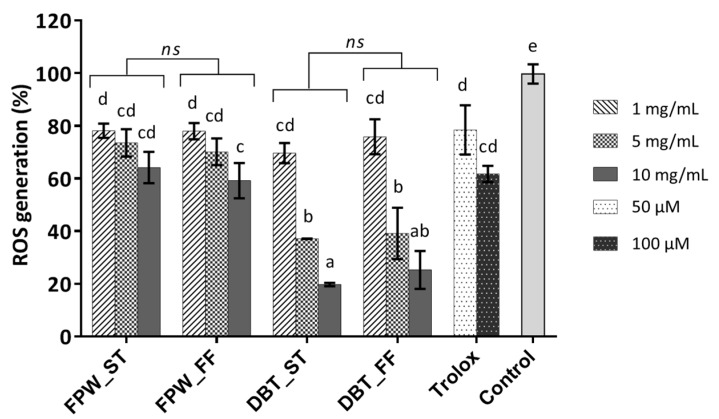
Bovine whey protein concentrate (WPC) was hydrolysed under pH-stat (ST) and non pH-controlled (free-fall, FF) conditions using Debitrase (DBT) and FlavorPro Whey (FPW). The resultant whey protein hydrolysates (WPHs) were assessed for the impact of hydrolysis conditions on the physicochemical and the in vitro antioxidant and intracellular reactive oxygen species (ROS) generation in oxidatively stressed HepG2 cells. Enzyme and hydrolysis condition dependent differences in the physicochemical properties of the hydrolysates were observed, however, the extent of hydrolysis was similar under ST and FF conditions. Significantly higher ( < 0.05) in vitro and cellular antioxidant activities were observed for the DBT compared to the FPW-WPHs. The WPHs generated under ST conditions displayed significantly higher ( < 0.05) oxygen radical absorbance capacity (ORAC) and Trolox equivalent antioxidant capacity (TEAC) values compared to the FF-WPHs. The impact of hydrolysis conditions was more pronounced in the in vitro compared to the cellular antioxidant assay. WPH peptide profiles (LC-MS/MS) were also enzyme and hydrolysis conditions dependent as illustrated in the case of β-lactoglobulin. Therefore, variation in the profiles of the peptides released may explain the observed differences in the antioxidant activity. Targeted generation of antioxidant hydrolysates needs to consider the hydrolysis conditions and the antioxidant assessment method employed.
使用Debitrase(DBT)和FlavorPro Whey(FPW)在pH值恒定(ST)和非pH值控制(自由落体,FF)条件下对牛浓缩乳清蛋白(WPC)进行水解。评估所得乳清蛋白水解物(WPHs)的水解条件对氧化应激的HepG2细胞的物理化学性质、体外抗氧化活性和细胞内活性氧(ROS)生成的影响。观察到水解产物的物理化学性质存在酶和水解条件依赖性差异,然而,在ST和FF条件下水解程度相似。与FPW-WPHs相比,DBT的体外和细胞抗氧化活性显著更高(<0.05)。与FF-WPHs相比,在ST条件下生成的WPHs显示出显著更高(<0.05)的氧自由基吸收能力(ORAC)和Trolox等效抗氧化能力(TEAC)值。与细胞抗氧化试验相比,水解条件对体外试验的影响更为明显。WPH肽谱(LC-MS/MS)也取决于酶和水解条件,如β-乳球蛋白的情况所示。因此,释放的肽谱变化可能解释了观察到的抗氧化活性差异。有针对性地生成抗氧化水解产物需要考虑水解条件和所采用的抗氧化评估方法。