Department of Pediatrics, Pediatric Infectious Diseases, Medical Faculty Mannheim, Heidelberg University, 68167 Mannheim, Germany.
Toxins (Basel). 2020 May 5;12(5):297. doi: 10.3390/toxins12050297.
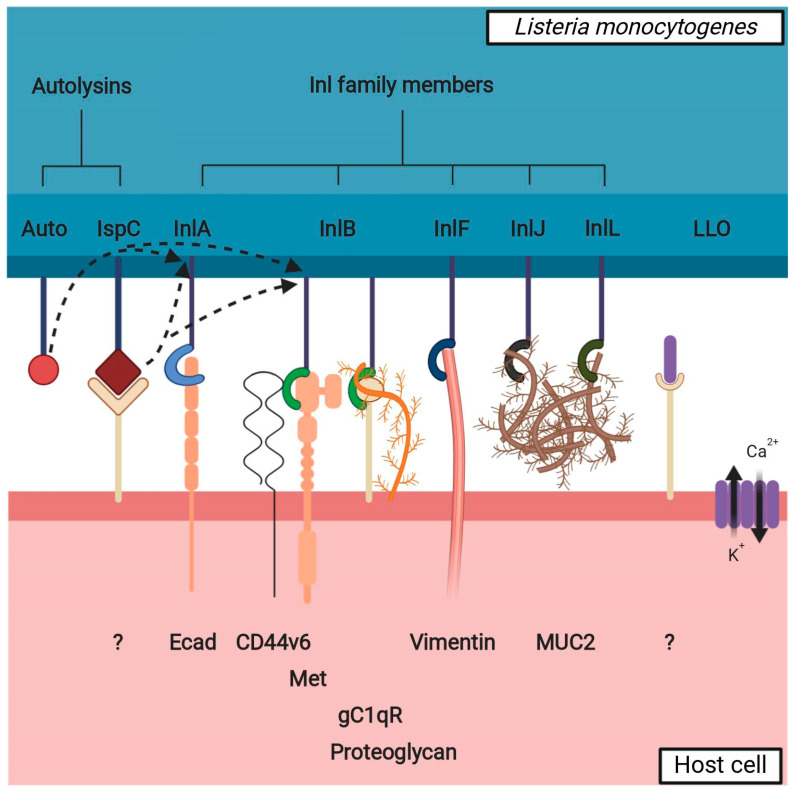
Although it rarely induces disease in humans, () is important due to the frequency of serious pathological conditions-such as sepsis and meningitis-it causes in those few people that do get infected. Virulence factors (VF) of -especially those involved in the passage through multiple cellular barriers of the body, including internalin (Inl) family members and listeriolysin O (LLO)-have been investigated both in vitro and in vivo, but the majority of work was focused on the mechanisms utilized during penetration of the gut and fetoplacental barriers. The role of listerial VF during entry into other organs remain as only partially solved puzzles. Here, we review the current knowledge on the entry of into one of its more significant destinations, the brain, with a specific focus on the role of various VF in cellular adhesion and invasion.
虽然它在人类中很少引起疾病,但由于它在少数感染的人中引起严重病理状况的频率很高,如败血症和脑膜炎,因此它很重要。特别是那些参与穿过身体多个细胞屏障的毒力因子(VF),包括内毒素(Inl)家族成员和李斯特菌溶血素 O(LLO),已经在体外和体内进行了研究,但大多数工作都集中在穿透肠道和胎盘屏障时所利用的机制上。李斯特菌 VF 在进入其他器官中的作用仍然只是部分解决的难题。在这里,我们综述了李斯特菌进入其更重要的目的地之一——大脑的最新知识,特别关注各种 VF 在细胞黏附和入侵中的作用。