Pediatric Infectious Diseases, Department of Pediatrics, Medical Faculty Mannheim, Heidelberg University, 68167 Mannheim, Germany.
Institute of Medical Microbiology, German Center for Infection Research (DZIF), Partner Site Giessen-Marburg-Langen, Justus-Liebig University Giessen, 35392 Giessen, Germany.
Int J Mol Sci. 2022 Oct 26;23(21):12908. doi: 10.3390/ijms232112908.
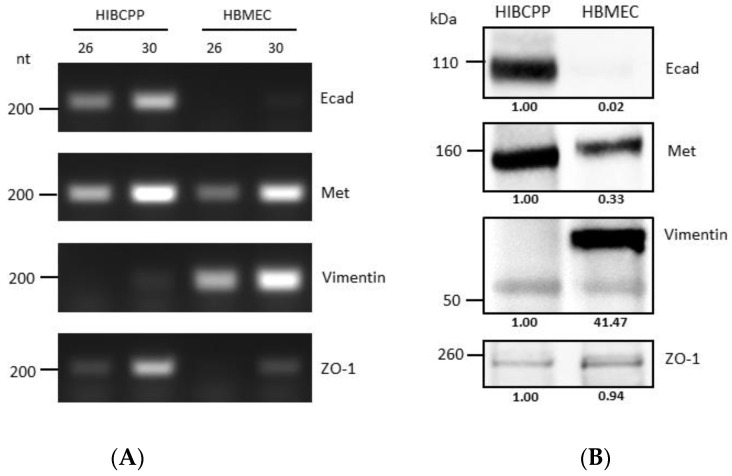
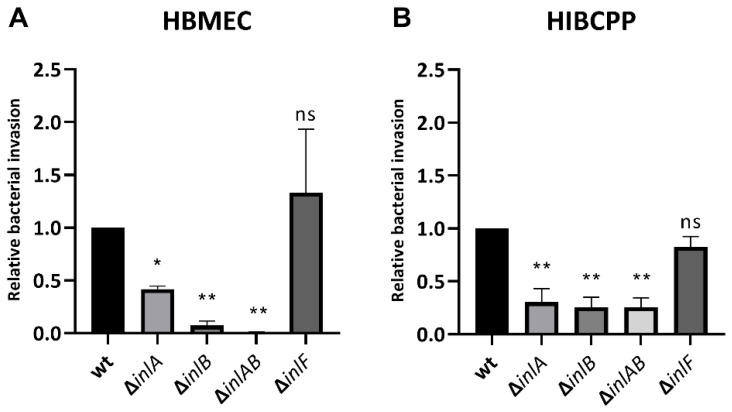
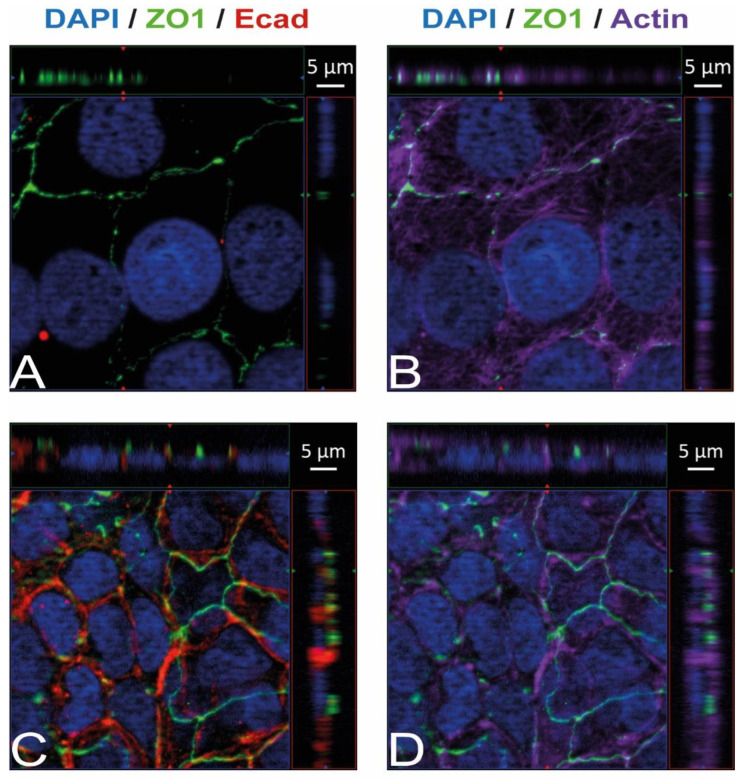
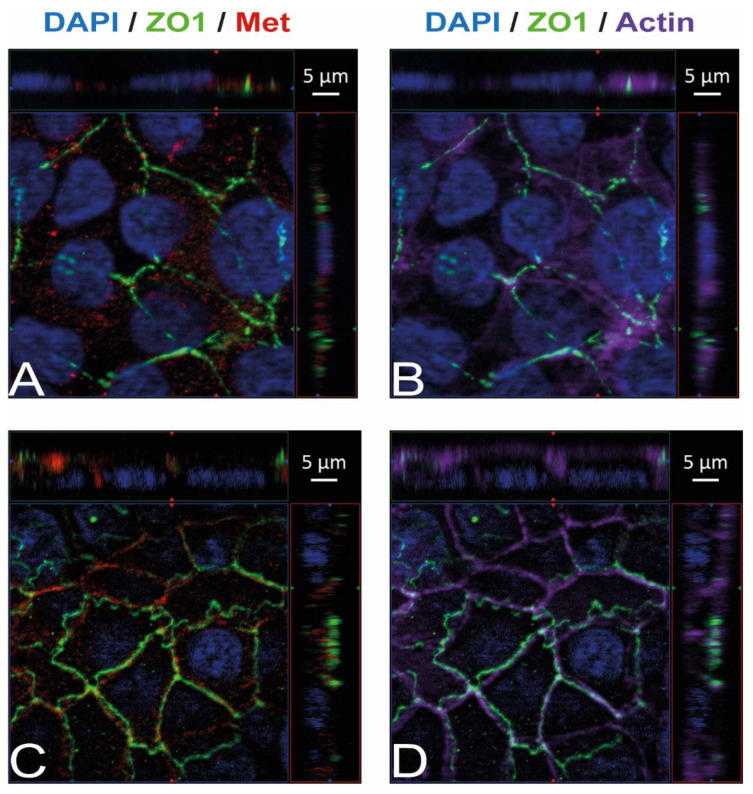
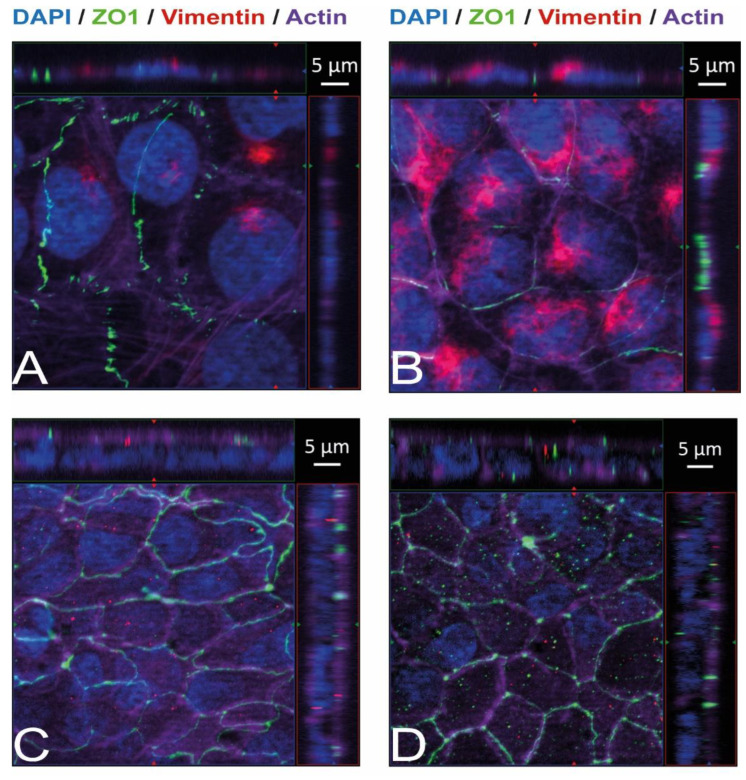
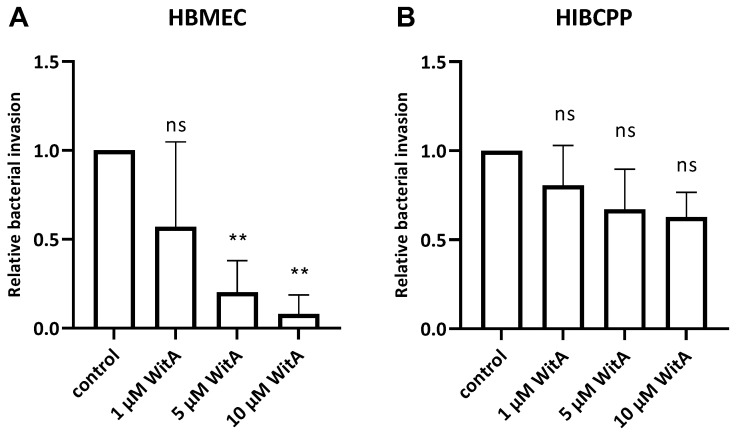
The human central nervous system (CNS) is separated from the blood by distinct cellular barriers, including the blood-brain barrier (BBB) and the blood-cerebrospinal fluid (CFS) barrier (BCSFB). Whereas at the center of the BBB are the endothelial cells of the brain capillaries, the BCSFB is formed by the epithelium of the choroid plexus. Invasion of cells of either the BBB or the BCSFB is a potential first step during CNS entry by the Gram-positive bacterium (). possesses several virulence factors mediating host cell entry, such as the internalin protein family-including internalin (InlA), which binds E-cadherin (Ecad) on the surface of target cells, and internalin B (InlB)-interacting with the host cell receptor tyrosine kinase Met. A further family member is internalin (InlF), which targets the intermediate filament protein vimentin. Whereas InlF has been shown to play a role during brain invasion at the BBB, its function during infection at the BCSFB is not known. We use human brain microvascular endothelial cells (HBMEC) and human choroid plexus epithelial papilloma (HIBCPP) cells to investigate the roles of InlF and vimentin during CNS invasion by . Whereas HBMEC present intracellular and surface vimentin (besides Met), HIBCPP cells do not express vimentin (except Met and Ecad). Treatment with the surface vimentin modulator withaferin A (WitA) inhibited invasion of into HBMEC, but not HIBCPP cells. Invasion of into HBMEC and HIBCPP cells is, however, independent of InlF, since a deletion mutant of lacking InlF did not display reduced invasion rates.
人类中枢神经系统 (CNS) 被独特的细胞屏障与血液隔开,包括血脑屏障 (BBB) 和血脑脊液 (CSF) 屏障 (BCSFB)。虽然 BBB 的中心是脑毛细血管的内皮细胞,但 BCSFB 是由脉络丛上皮形成的。无论是 BBB 还是 BCSFB 的细胞入侵,都是革兰阳性菌 () 通过中枢神经系统进入的潜在第一步。该菌拥有几种介导宿主细胞进入的毒力因子,例如包括内膜蛋白家族的内蛋白(如与靶细胞表面的 E-钙黏蛋白 (Ecad) 结合的内膜素 A (InlA) 和与宿主细胞受体酪氨酸激酶 Met 相互作用的内膜素 B (InlB))。另一个家族成员是内膜素 (InlF),它靶向中间丝蛋白波形蛋白。虽然已经证明 InlF 在 BBB 处的脑入侵中发挥作用,但它在 BCSFB 处感染期间的功能尚不清楚。我们使用人脑微血管内皮细胞 (HBMEC) 和人脉络丛上皮乳头瘤 (HIBCPP) 细胞来研究 InlF 和波形蛋白在 () 通过中枢神经系统入侵中的作用。尽管 HBMEC 呈现细胞内和表面波形蛋白(除了 Met),但 HIBCPP 细胞不表达波形蛋白(除了 Met 和 Ecad)。用表面波形蛋白调节剂 Withaferin A (WitA) 处理可抑制 进入 HBMEC 的入侵,但不能抑制 HIBCPP 细胞的入侵。然而,进入 HBMEC 和 HIBCPP 细胞的入侵不依赖于 InlF,因为缺乏 InlF 的 缺失突变体并未显示出入侵率降低。