Biabani Morteza, Fotouhi Hossein, Yazdani Nasser
School of Electrical and Computer Engineering, College of Engineering, University of Tehran, Tehran 14395-515, Iran.
School of Innovation, Design and Engineering, Mälardalen University, 721 23 Västerås, Sweden.
Sensors (Basel). 2020 May 6;20(9):2647. doi: 10.3390/s20092647.
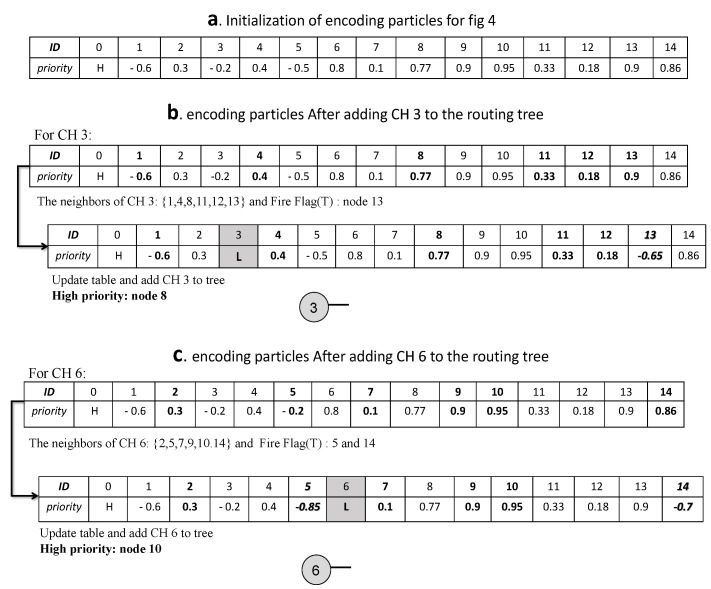
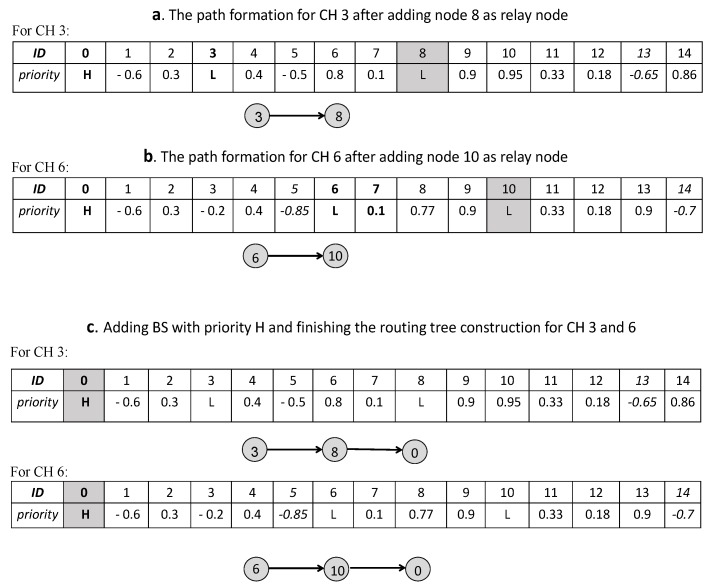
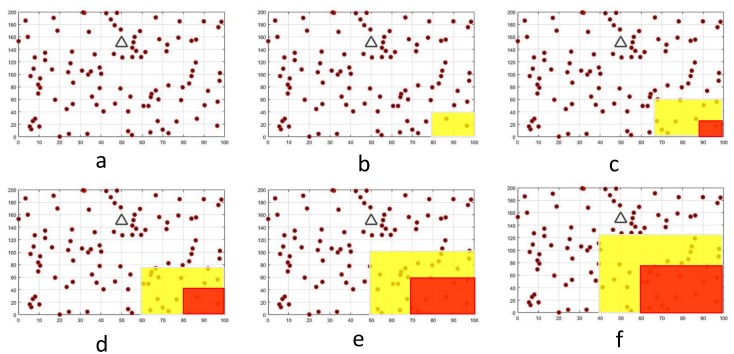
Wireless Sensor Networks (WSNs) are key elements of Internet of Things (IoT) networks which provide sensing and wireless connectivity. Disaster management in smart cities is classified as a safety-critical application. Thus, it is important to ensure system availability by increasing the lifetime of WSNs. Clustering is one of the routing techniques that benefits energy efficiency in WSNs. This paper provides an evolutionary clustering and routing method which is capable of managing the energy consumption of nodes while considering the characteristics of a disaster area. The proposed method consists of two phases. First, we present a model with improved hybrid Particle Swarm Optimization (PSO) and Harmony Search Algorithm (HSA) for cluster head (CH) selection. Second, we design a PSO-based multi-hop routing system with enhanced tree encoding and a modified data packet format. The simulation results for disaster scenarios prove the efficiency of the proposed method in comparison with the state-of-the-art approaches in terms of the overall residual energy, number of live nodes, network coverage, and the packet delivery ratio.
无线传感器网络(WSNs)是物联网(IoT)网络的关键要素,可提供传感和无线连接功能。智慧城市中的灾害管理被归类为安全关键型应用。因此,通过延长无线传感器网络的寿命来确保系统可用性非常重要。聚类是一种有助于提高无线传感器网络能源效率的路由技术。本文提出了一种进化聚类和路由方法,该方法能够在考虑灾区特征的同时管理节点的能量消耗。所提出的方法包括两个阶段。首先,我们提出了一种改进的混合粒子群优化(PSO)和和声搜索算法(HSA)的模型,用于簇头(CH)选择。其次,我们设计了一种基于PSO的多跳路由系统,该系统具有增强的树编码和修改后的数据分组格式。灾害场景的仿真结果证明,与现有方法相比,该方法在总剩余能量、存活节点数量、网络覆盖范围和数据包传输率方面具有更高的效率。