State Key Laboratory of Food Science and Technology, Jiangnan University, 214122, Wuxi, China.
Key Laboratory of Industrial Biotechnology, Ministry of Education, Jiangnan University, 214122, Wuxi, China.
Nat Commun. 2020 May 8;11(1):2262. doi: 10.1038/s41467-020-16154-3.
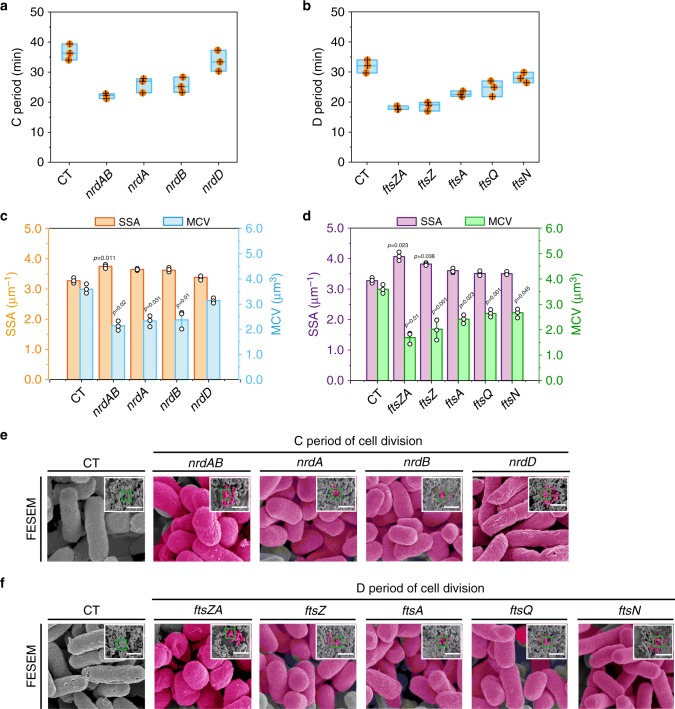
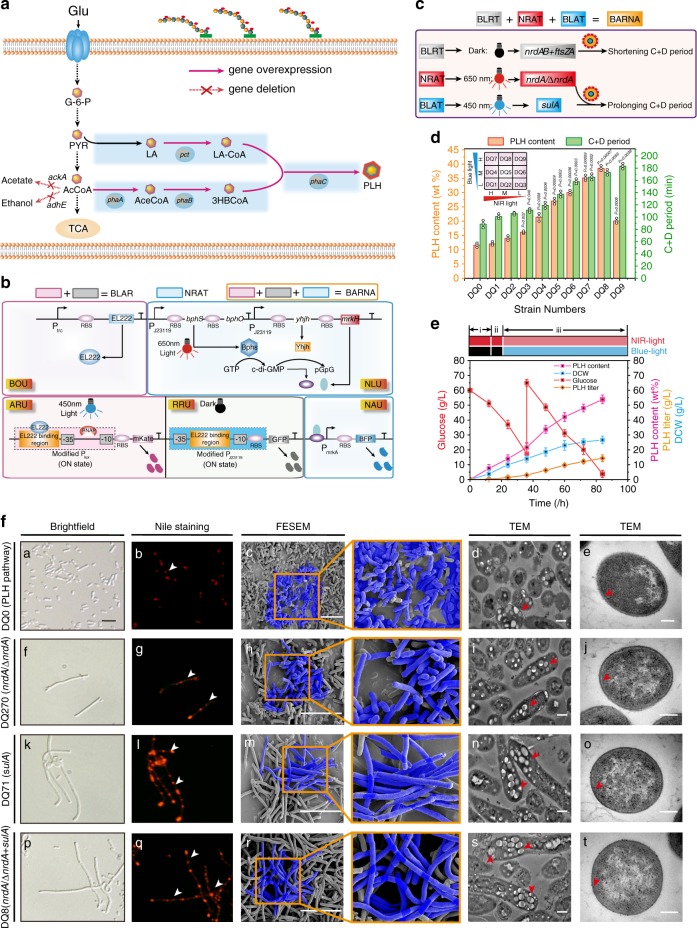
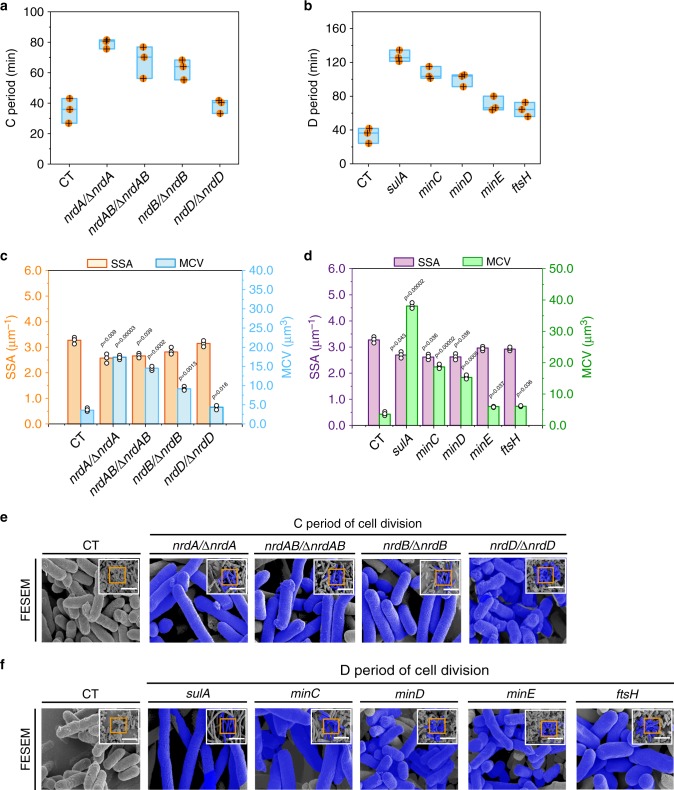
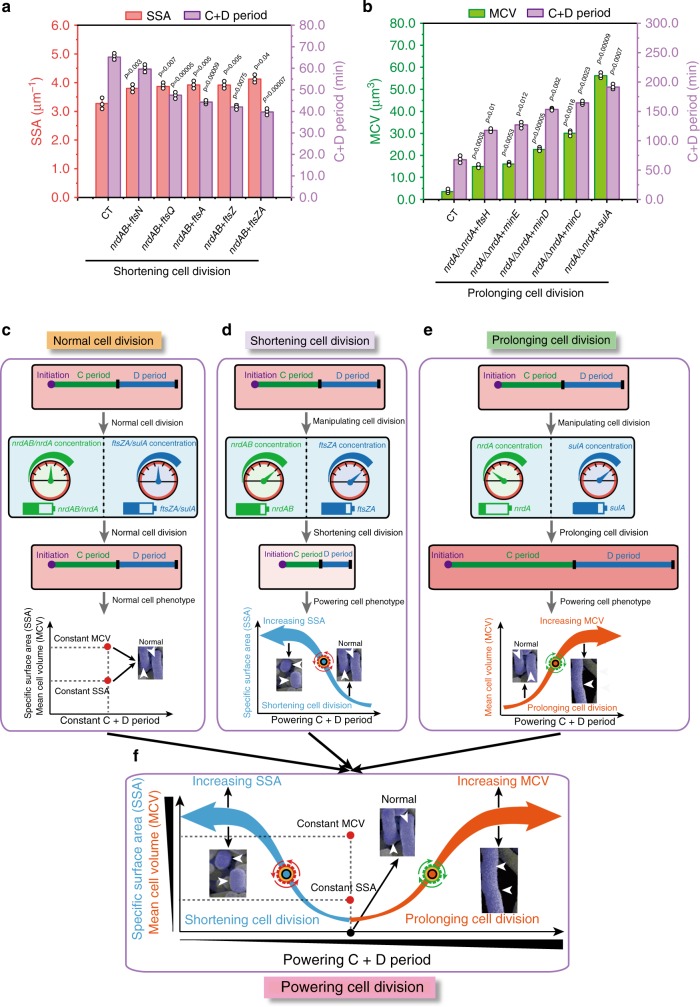
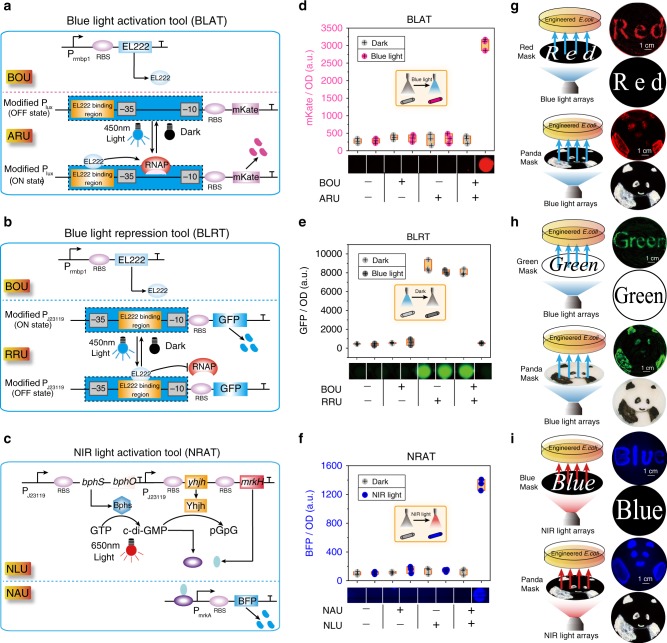
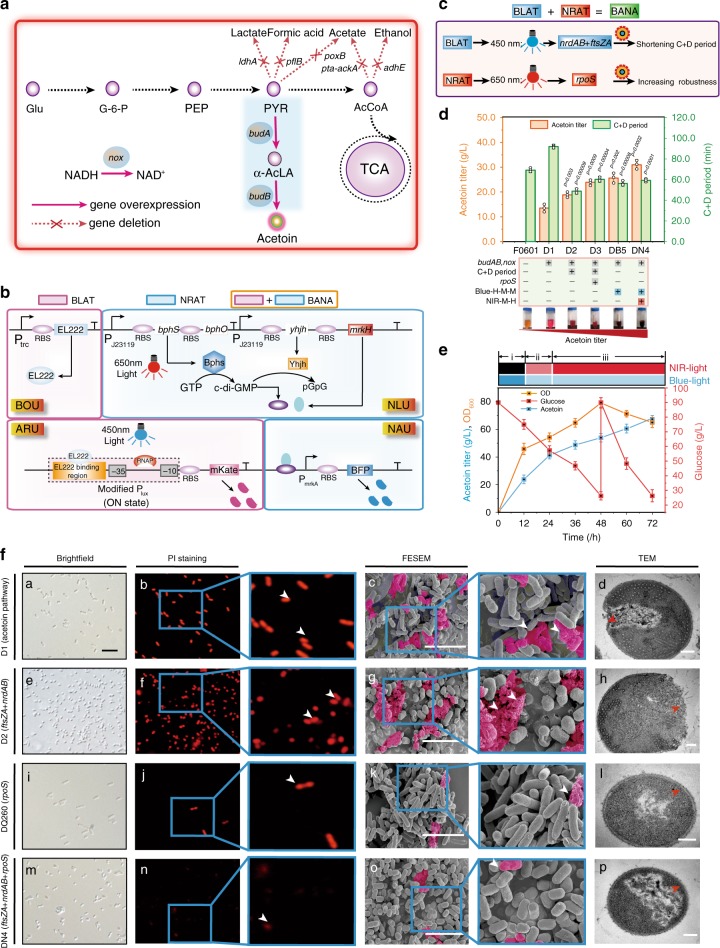
Cell division can perturb the metabolic performance of industrial microbes. The C period of cell division starts from the initiation to the termination of DNA replication, whereas the D period is the bacterial division process. Here, we first shorten the C and D periods of E. coli by controlling the expression of the ribonucleotide reductase NrdAB and division proteins FtsZA through blue light and near-infrared light activation, respectively. It increases the specific surface area to 3.7 μm and acetoin titer to 67.2 g·L. Next, we prolong the C and D periods of E. coli by regulating the expression of the ribonucleotide reductase NrdA and division protein inhibitor SulA through blue light activation-repression and near-infrared (NIR) light activation, respectively. It improves the cell volume to 52.6 μm and poly(lactate-co-3-hydroxybutyrate) titer to 14.31 g·L. Thus, the optogenetic-based cell division regulation strategy can improve the efficiency of microbial cell factories.
细胞分裂会干扰工业微生物的代谢性能。细胞分裂的 C 期始于 DNA 复制的开始到终止,而 D 期是细菌分裂过程。在这里,我们首先通过分别控制蓝、近红外光激活的核糖核苷酸还原酶 NrdAB 和分裂蛋白 FtsZA 的表达来缩短大肠杆菌的 C 和 D 期。这将比表面积提高到 3.7μm,乙酰 3.7μm 产量提高到 67.2g·L-1。接下来,我们通过分别调控蓝、近红外(NIR)光激活抑制的核糖核苷酸还原酶 NrdA 和分裂蛋白抑制剂 SulA 的表达来延长大肠杆菌的 C 和 D 期。这将细胞体积提高到 52.6μm,聚(乳酸-共-3-羟基丁酸)产量提高到 14.31g·L-1。因此,基于光遗传学的细胞分裂调控策略可以提高微生物细胞工厂的效率。