Sanchez de Miguel Alejandro, Kyba Christopher C M, Zamorano Jaime, Gallego Jesús, Gaston Kevin J
Environment and Sustainability Institute, University of Exeter, Penryn, Cornwall, TR10 9FE, UK.
Department Física de la Tierra y Astrofísica and Instituto de Física de partículas y del Cosmos IPARCOS, Universidad Complutense de Madrid, Madrid, 28040, Spain.
Sci Rep. 2020 May 8;10(1):7829. doi: 10.1038/s41598-020-64673-2.
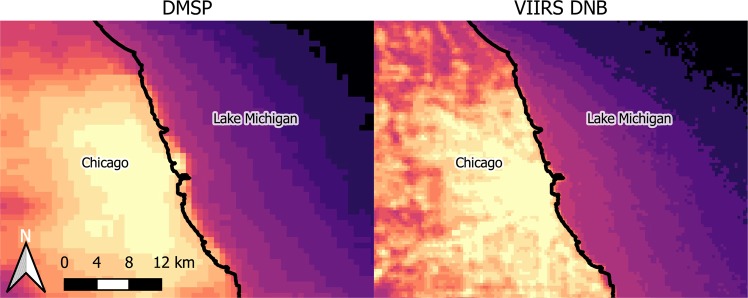
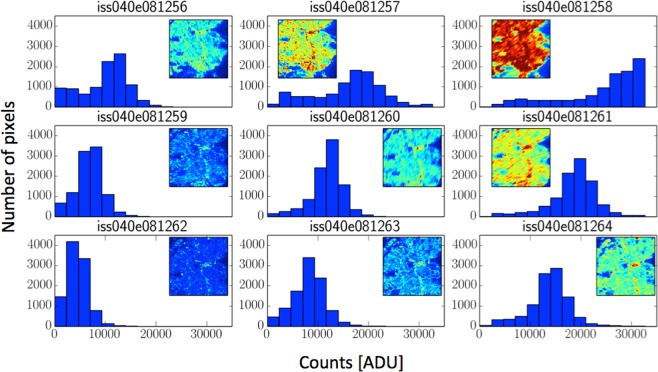
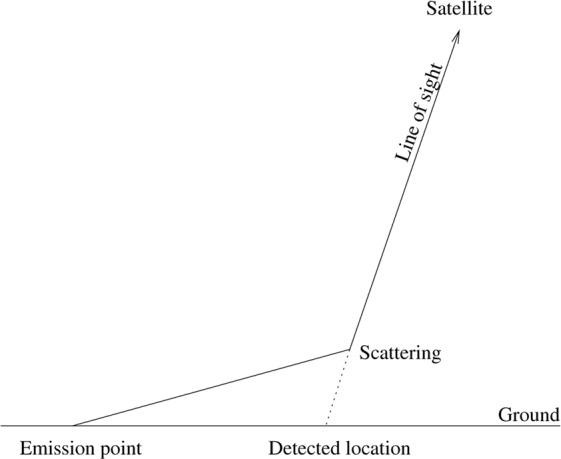
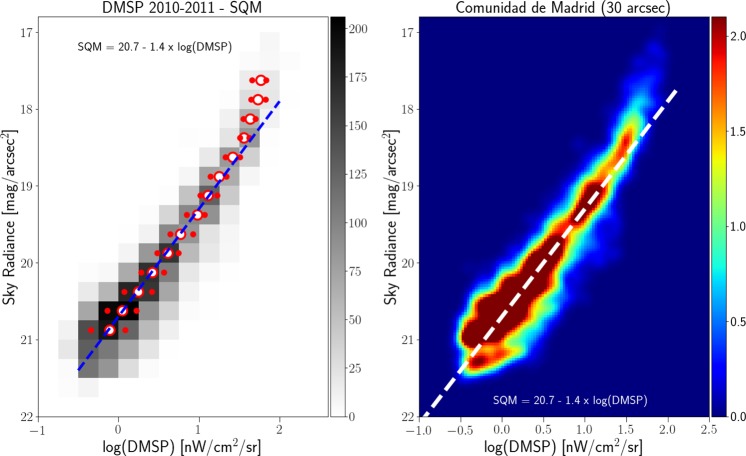
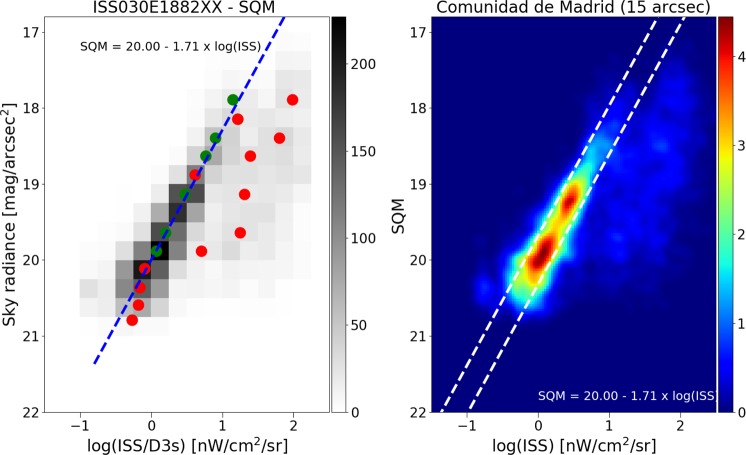
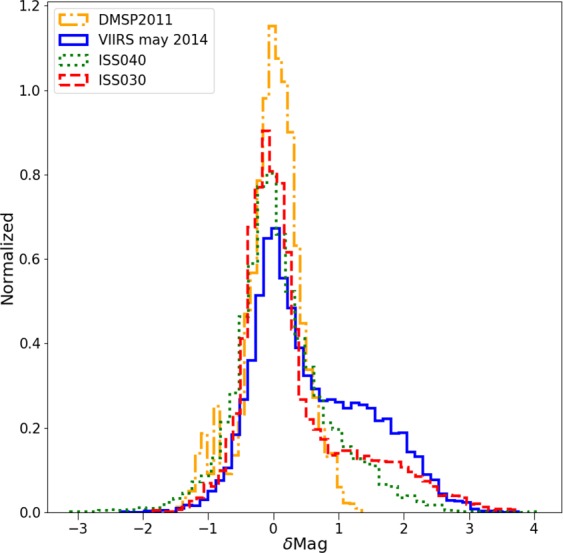
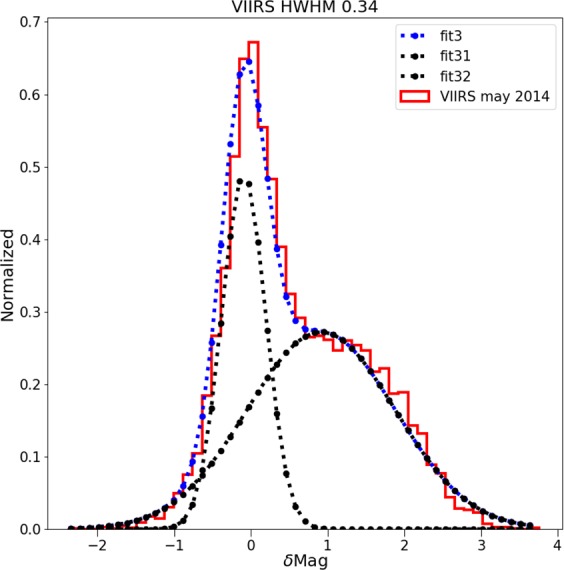
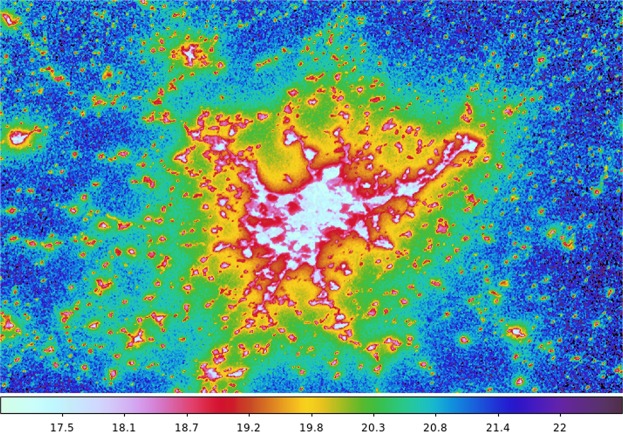
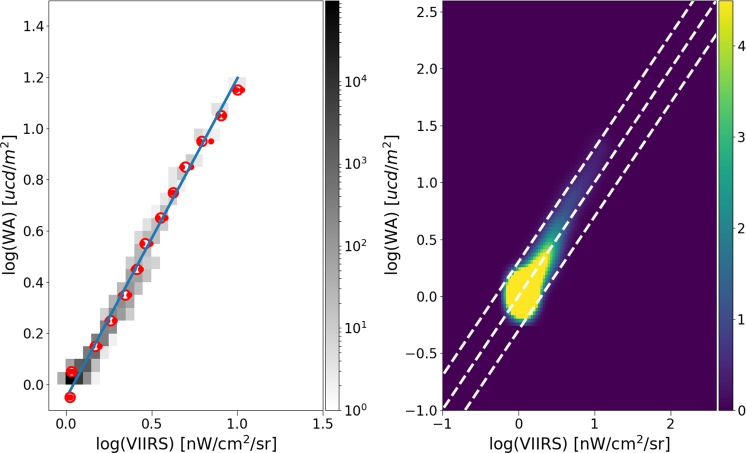
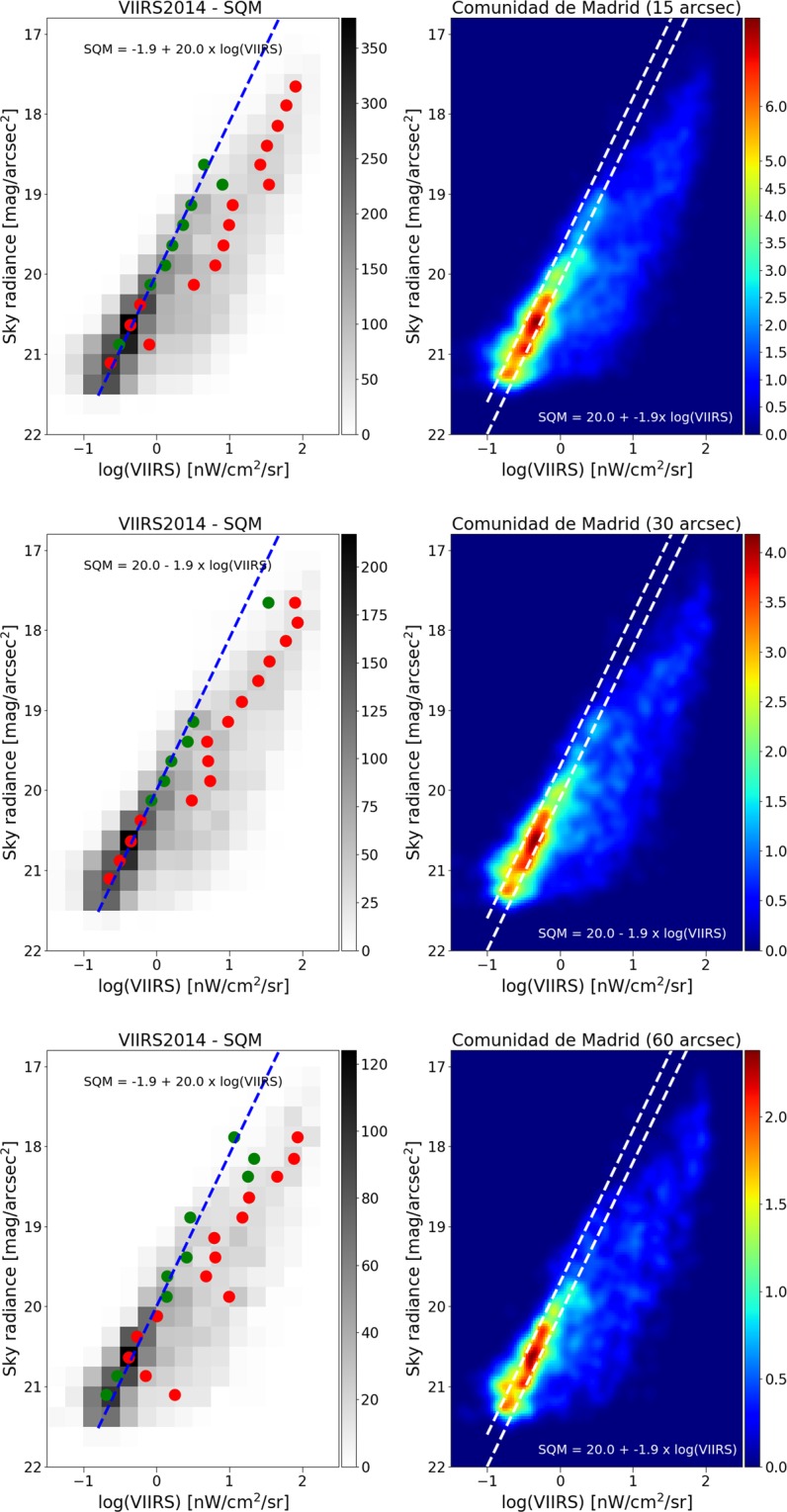
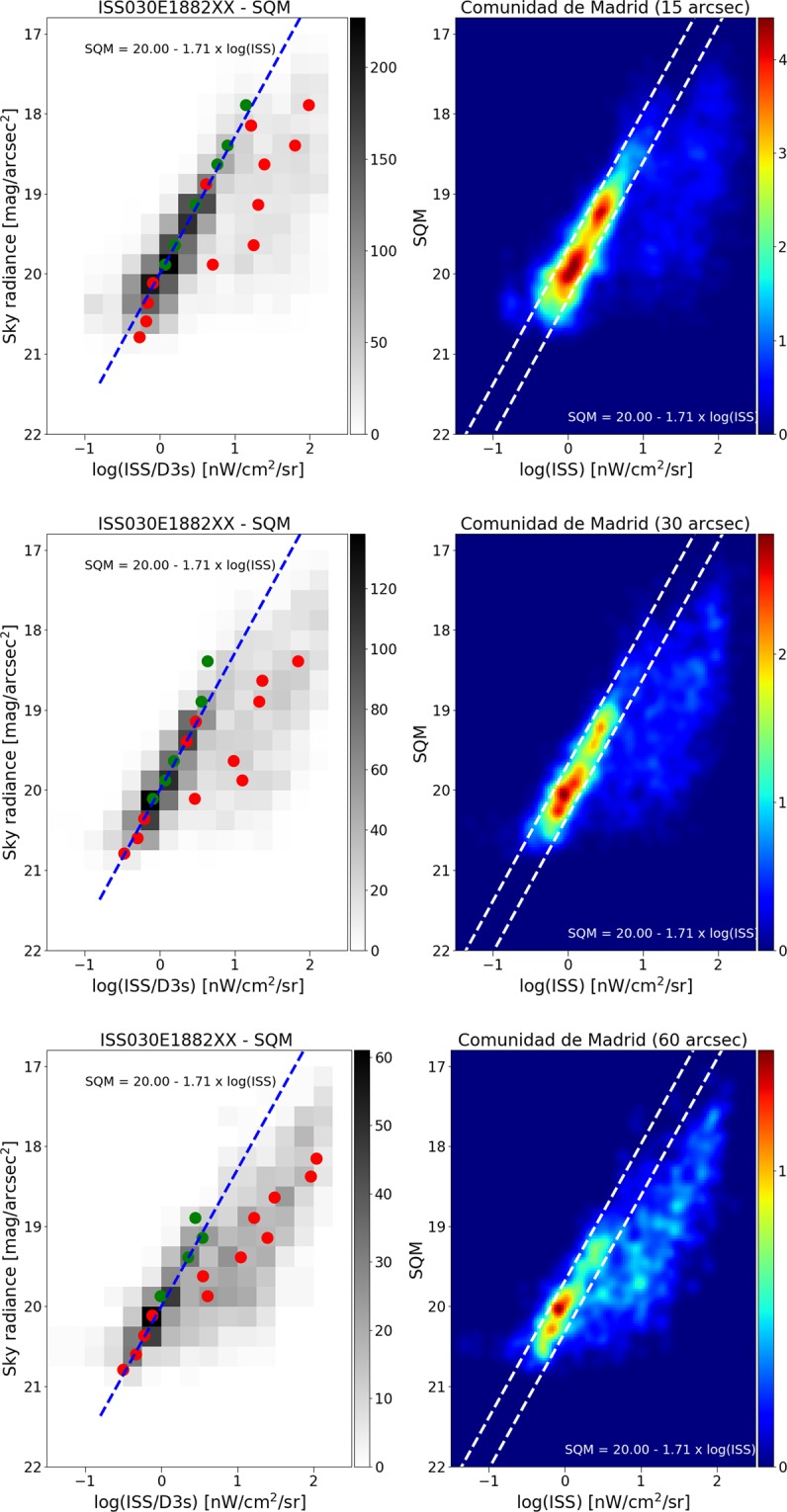
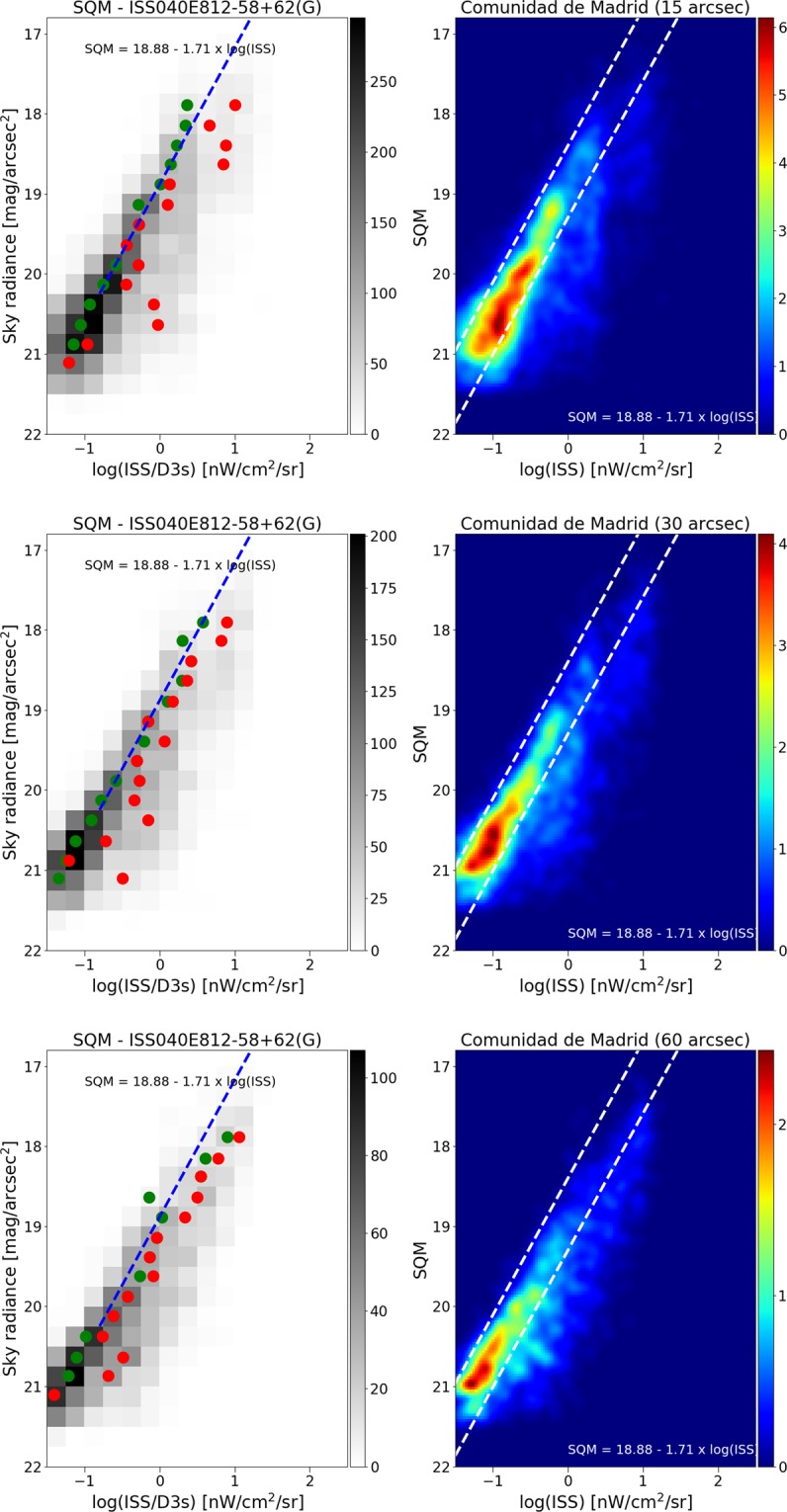
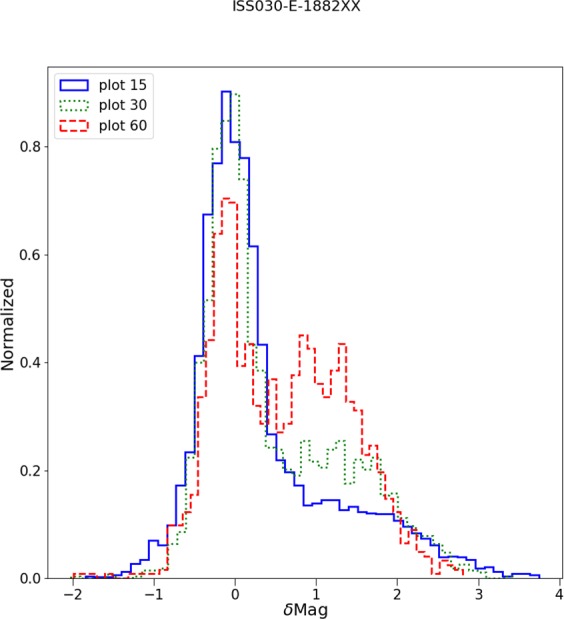
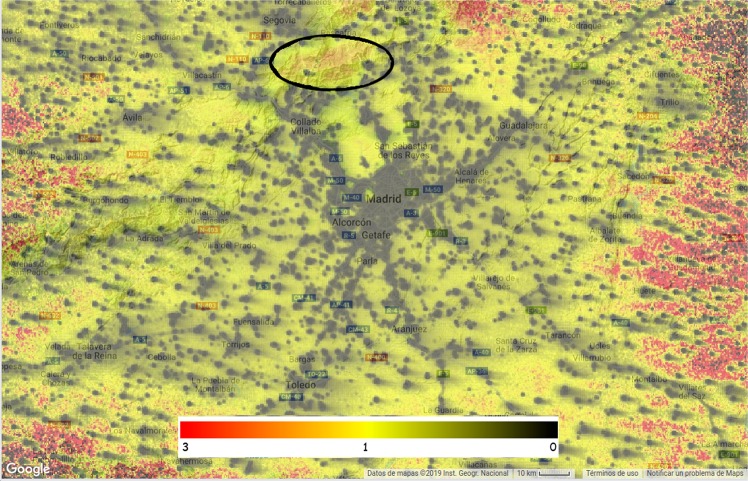
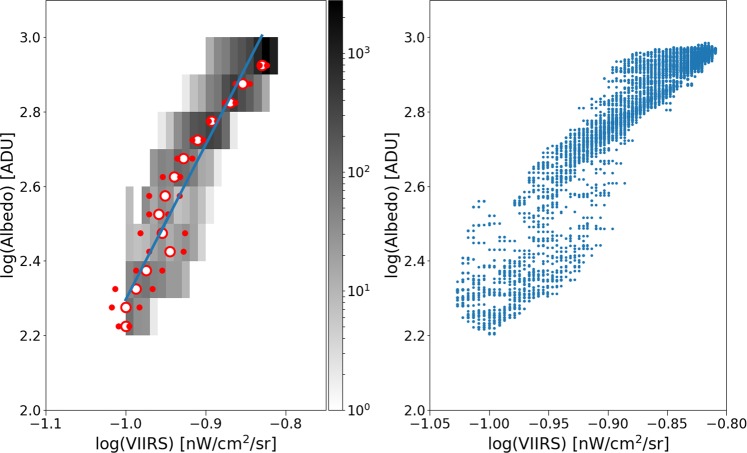
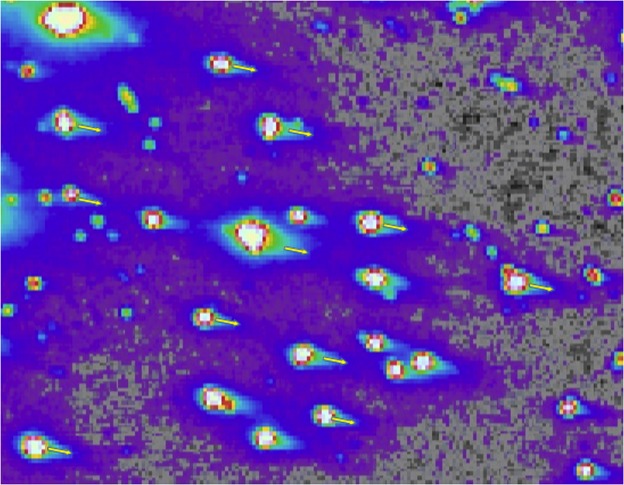
Diffuse glow has been observed around brightly lit cities in nighttime satellite imagery since at least the first publication of large scale maps in the late 1990s. In the literature, this has often been assumed to be an error related to the sensor, and referred to as "blooming", presumably in relation to the effect that can occur when using a CCD to photograph a bright light source. Here we show that the effect seen on the DMSP/OLS, SNPP/VIIRS-DNB and ISS is not only instrumental, but in fact represents a real detection of light scattered by the atmosphere. Data from the Universidad Complutense Madrid sky brightness survey are compared to nighttime imagery from multiple sensors with differing spatial resolutions, and found to be strongly correlated. These results suggest that it should be possible for a future space-based imaging radiometer to monitor changes in the diffuse artificial skyglow of cities.
至少自20世纪90年代末首次发布大规模地图以来,在夜间卫星图像中,人们就观察到明亮城市周围存在漫射辉光。在文献中,这通常被认为是与传感器相关的误差,并被称为“光晕”,大概是与使用电荷耦合器件(CCD)拍摄明亮光源时可能出现的效应有关。在这里,我们表明,在国防气象卫星计划/业务线扫描系统(DMSP/OLS)、苏梅号/可见光红外成像辐射仪-昼夜波段(SNPP/VIIRS-DNB)和国际空间站(ISS)上看到的这种效应不仅是仪器造成的,实际上还代表了对大气散射光的真实探测。将马德里康普顿斯大学天空亮度调查的数据与来自多个具有不同空间分辨率的传感器的夜间图像进行比较,发现它们具有很强的相关性。这些结果表明,未来的天基成像辐射计应该有可能监测城市漫射人造天空辉光的变化。