Department of Surgery, Duke University Medical Center, Durham, NC, 27710, USA.
Department of Medicine, Duke University Medical Center, Durham, NC, 27710, USA.
Commun Biol. 2020 May 8;3(1):226. doi: 10.1038/s42003-020-0956-7.
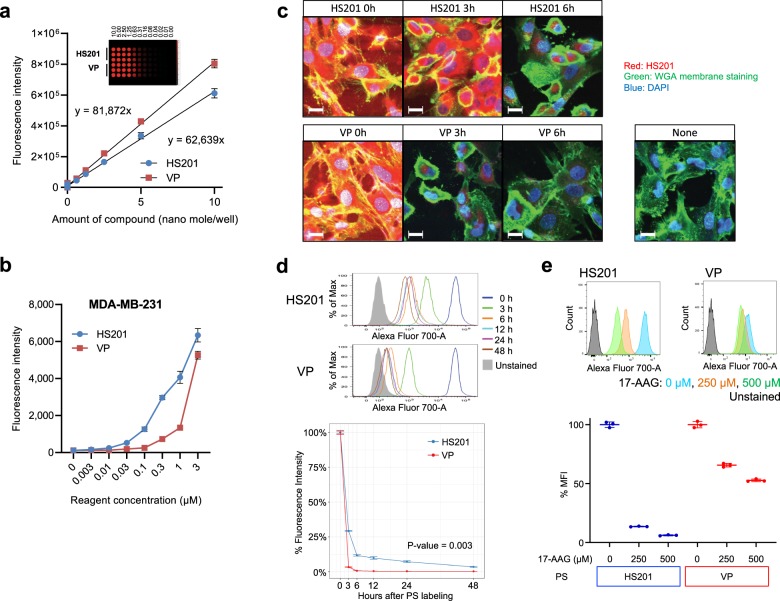
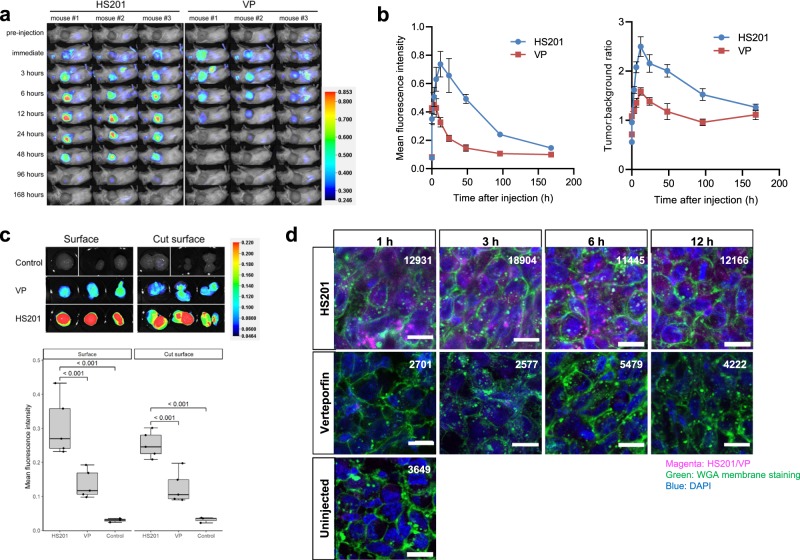
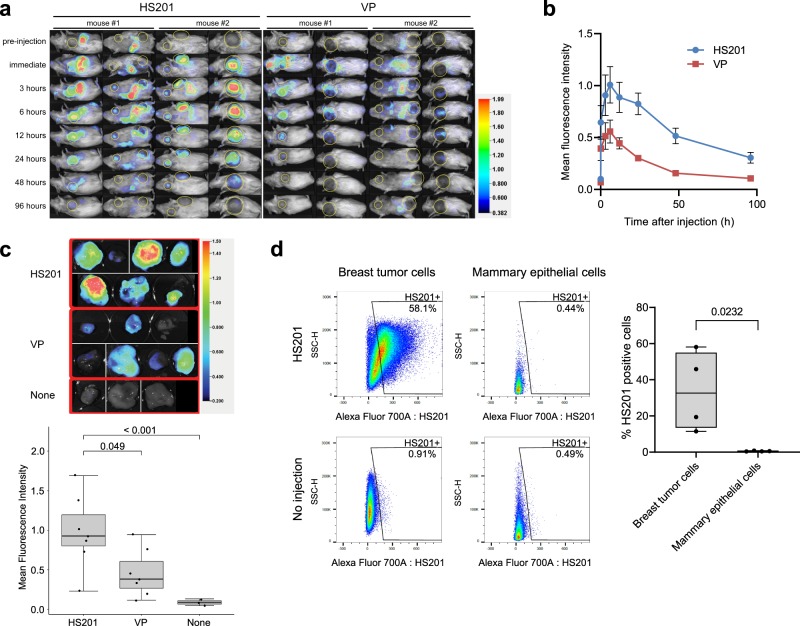
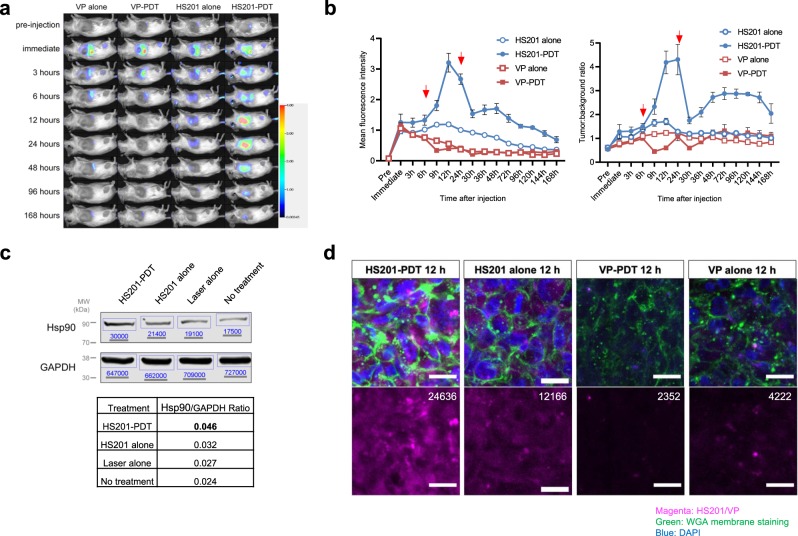
Photodynamic therapy (PDT) ablates malignancies by applying focused near-infrared (nIR) light onto a lesion of interest after systemic administration of a photosensitizer (PS); however, the accumulation of existing PS is not tumor-exclusive. We developed a tumor-localizing strategy for PDT, exploiting the high expression of heat shock protein 90 (Hsp90) in cancer cells to retain high concentrations of PS by tethering a small molecule Hsp90 inhibitor to a PS (verteporfin, VP) to create an Hsp90-targeted PS (HS201). HS201 accumulates to a greater extent than VP in breast cancer cells both in vitro and in vivo, resulting in increased treatment efficacy of HS201-PDT in various human breast cancer xenografts regardless of molecular and clinical subtypes. The therapeutic index achieved with Hsp90-targeted PDT would permit treatment not only of localized tumors, but also more diffusely infiltrating processes such as inflammatory breast cancer.
光动力疗法(PDT)通过在全身给予光敏剂(PS)后将集中的近红外(nIR)光应用于感兴趣的病变来消融恶性肿瘤;然而,现有 PS 的积累并不是肿瘤特有的。我们开发了一种 PDT 的肿瘤定位策略,利用癌细胞中热休克蛋白 90(Hsp90)的高表达,通过将小分子 Hsp90 抑制剂与 PS(verteporfin,VP)连接来保留高浓度的 PS,从而创建 Hsp90 靶向 PS(HS201)。HS201 在体外和体内比 VP 更大量地积聚在乳腺癌细胞中,导致 HS201-PDT 在各种人乳腺癌异种移植物中的治疗效果增加,而与分子和临床亚型无关。用 Hsp90 靶向 PDT 实现的治疗指数不仅允许治疗局部肿瘤,而且还允许治疗更弥漫浸润的过程,如炎性乳腺癌。