Department of Neuroscience, University of Minnesota, Minneapolis, MN, USA.
University of Minnesota Medical School, Minneapolis, MN, USA.
Neuroscientist. 2020 Oct-Dec;26(5-6):503-520. doi: 10.1177/1073858420916696. Epub 2020 May 9.
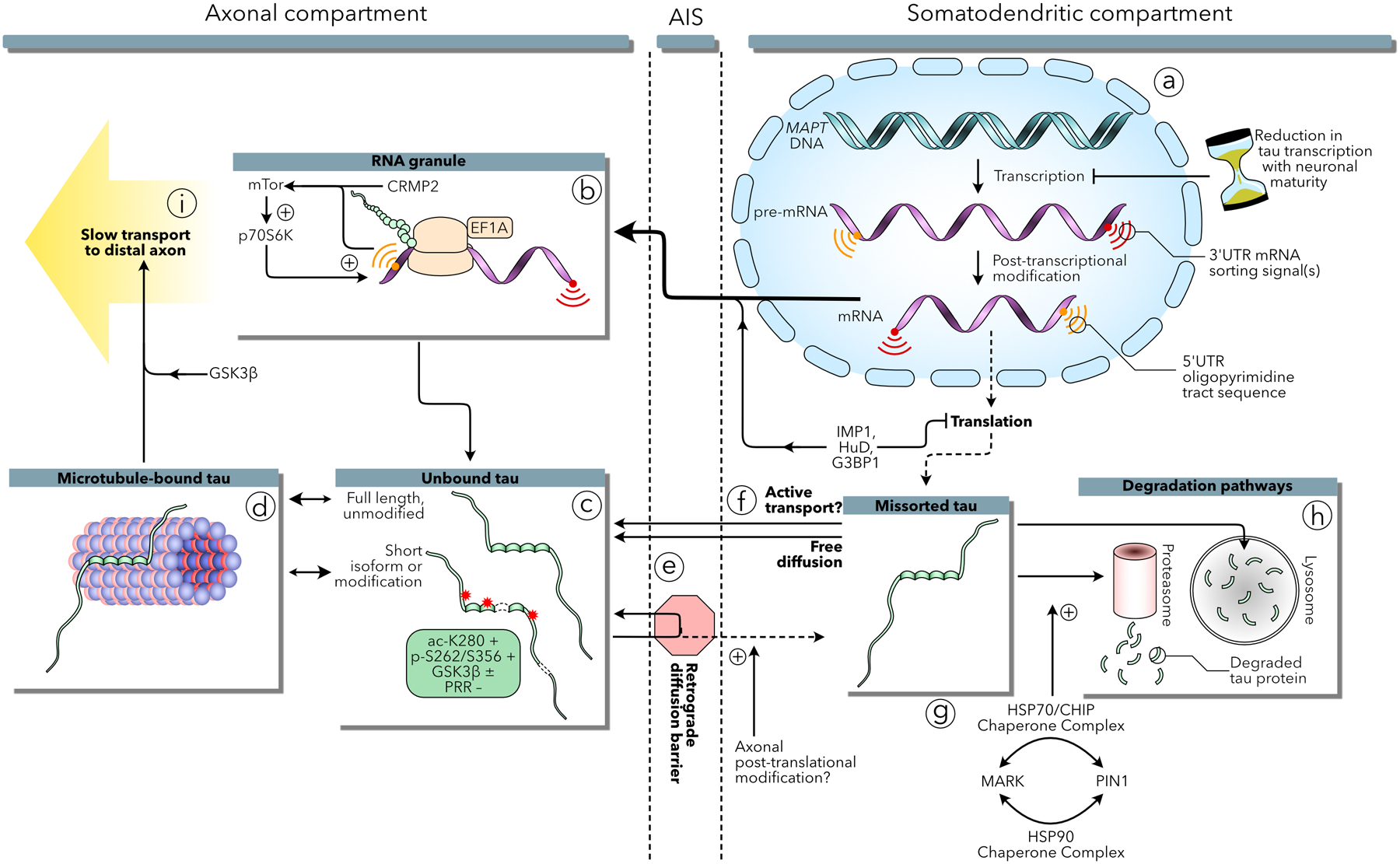
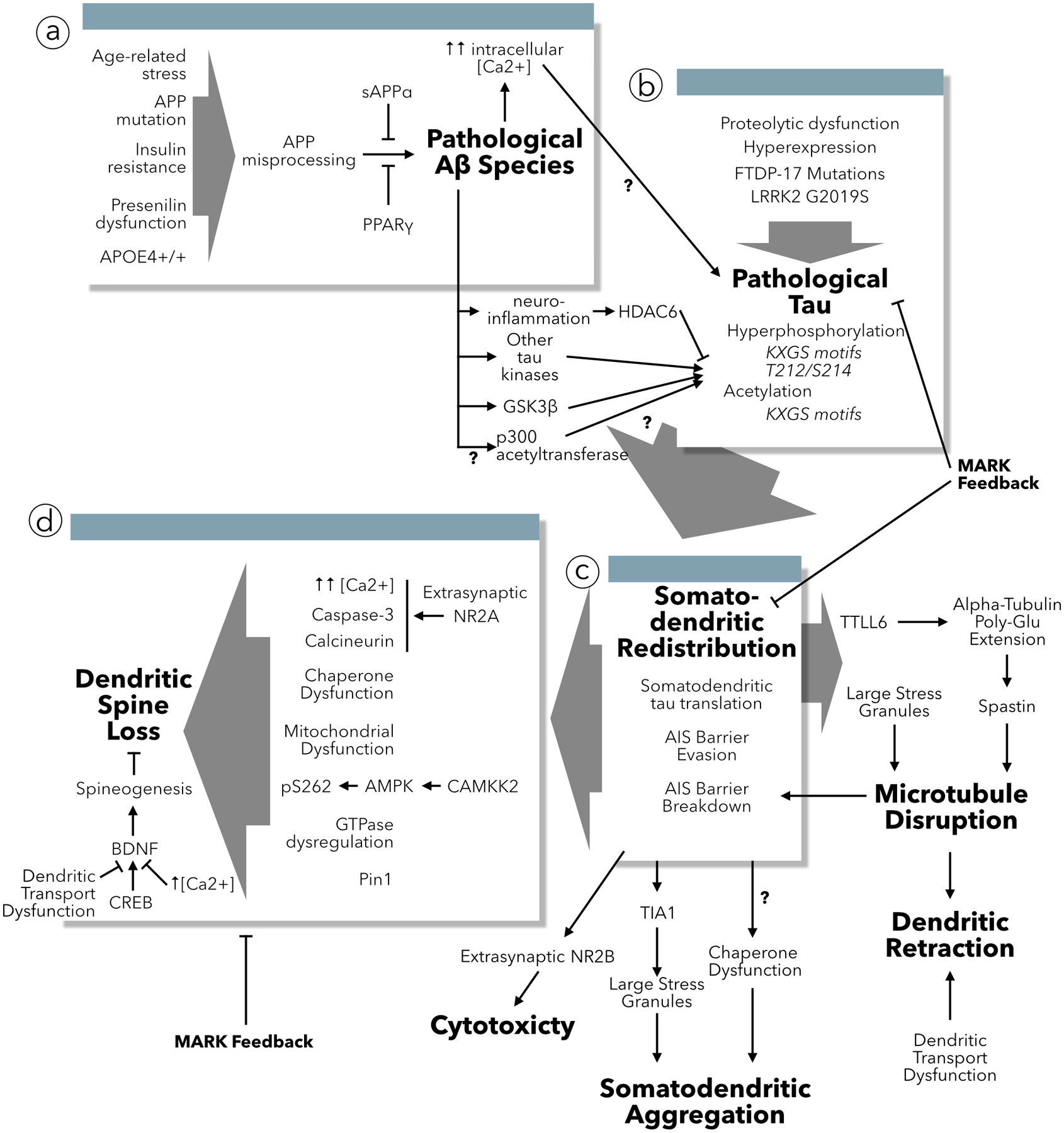
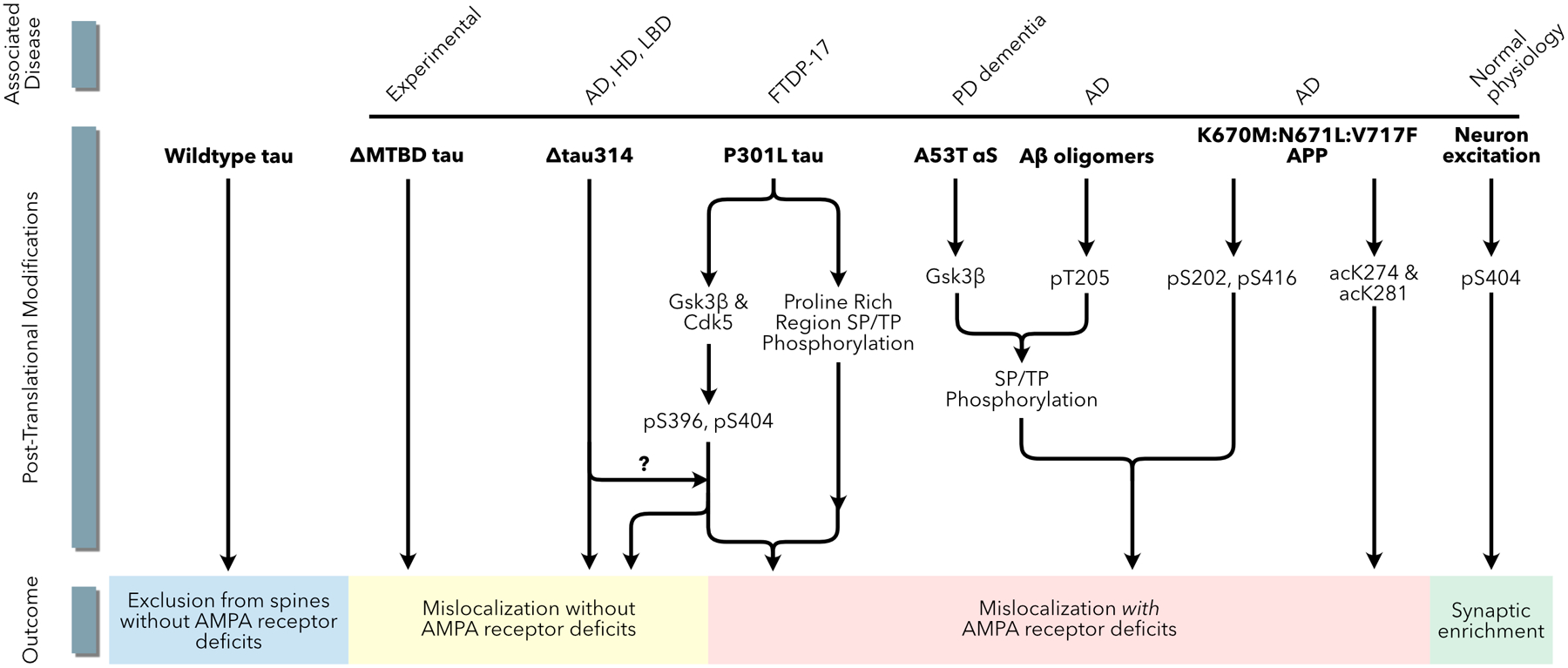
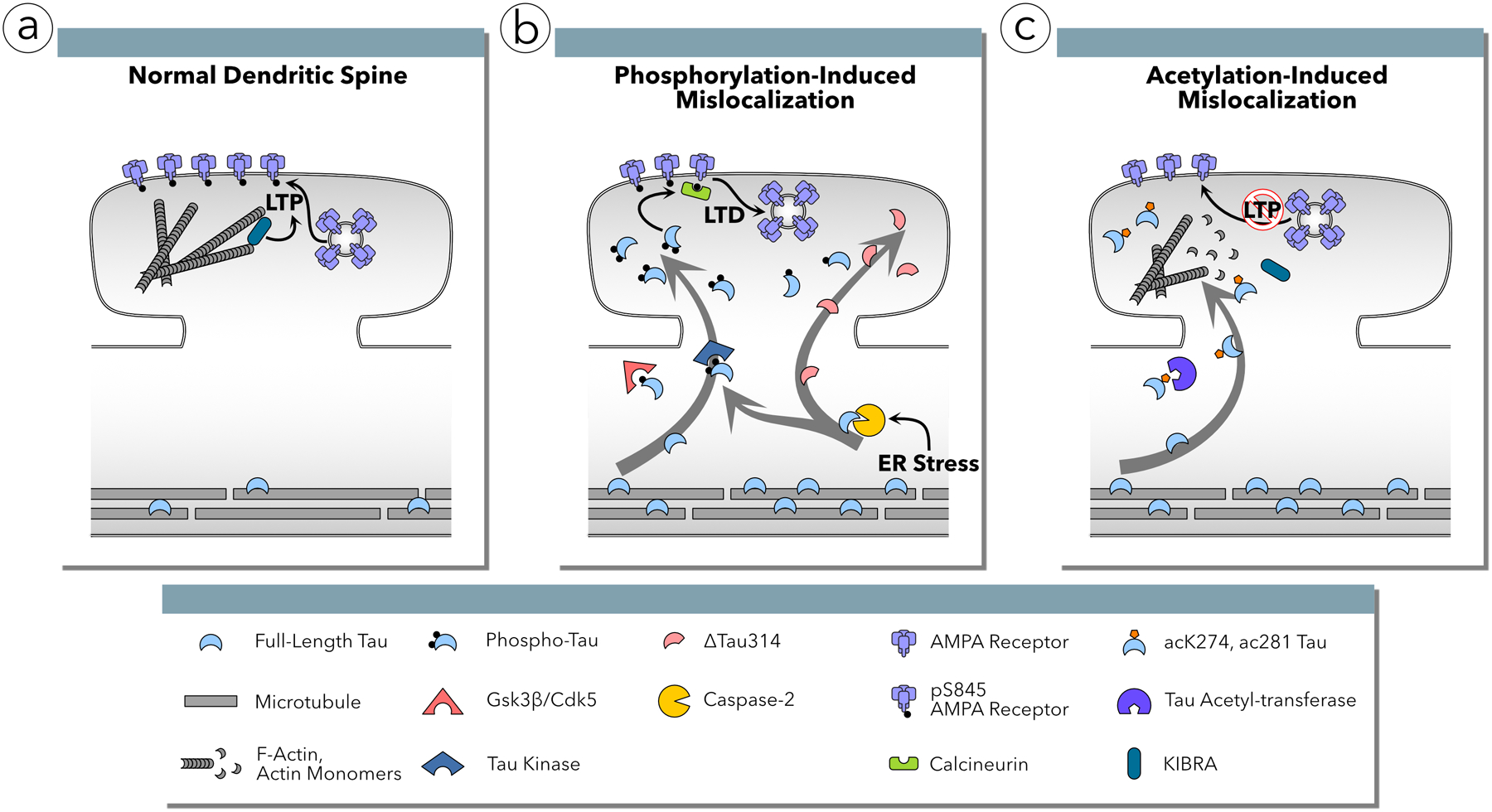
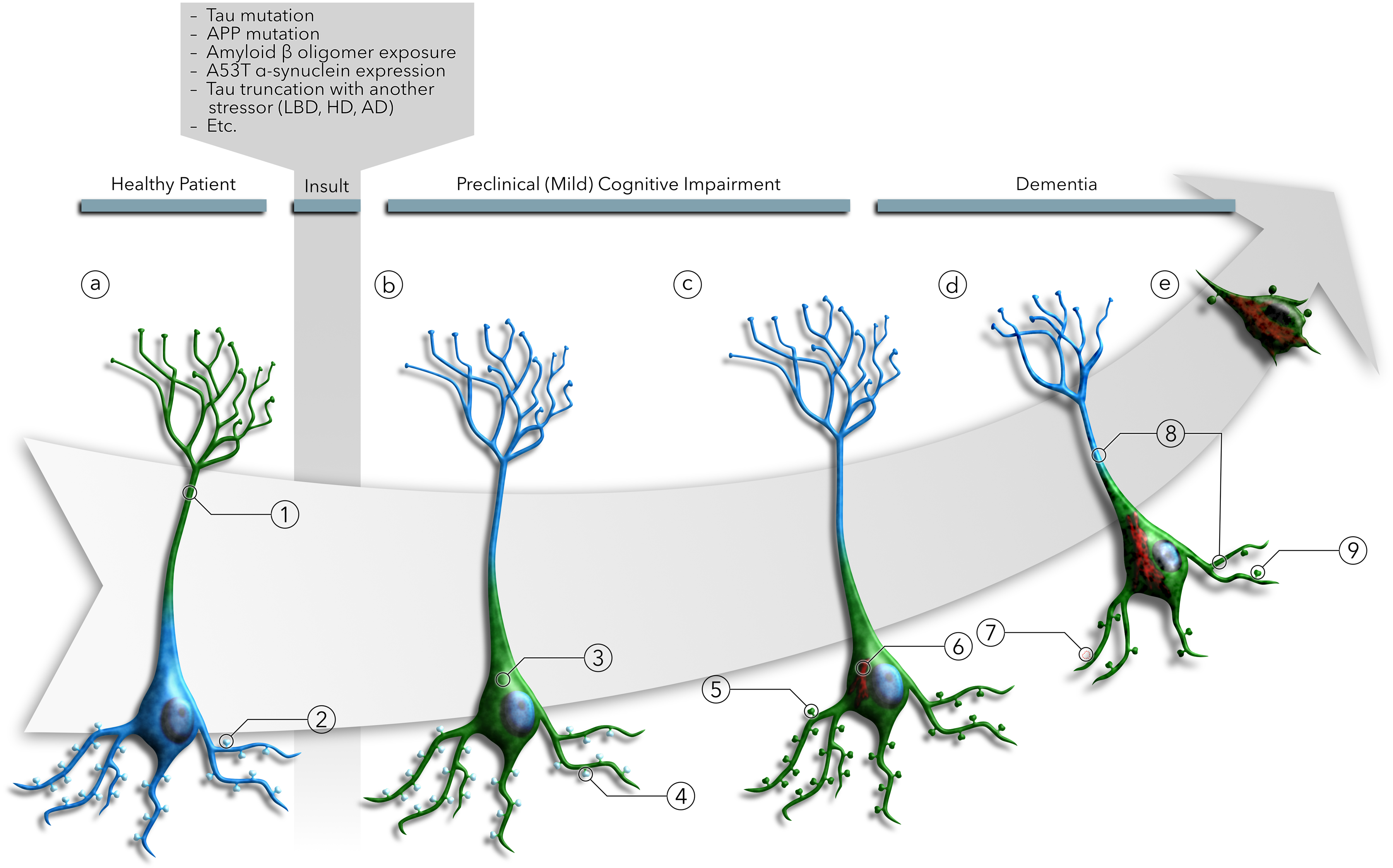
Increasingly, research suggests that neurodegenerative diseases and dementias are caused not by unique, solitary cellular mechanisms, but by multiple contributory mechanisms manifesting as heterogeneous clinical presentations. However, diverse neurodegenerative diseases also share common pathological hallmarks and cellular mechanisms. One such mechanism involves the redistribution of the microtubule associated protein tau from the axon into the somatodendritic compartment of neurons, followed by the mislocalization of tau into dendritic spines, resulting in postsynaptic functional deficits. Here we review various signaling pathways that trigger the redistribution of tau to the cell body and dendritic tree, and its mislocalization to dendritic spines. The convergence of multiple pathways in different disease models onto this final common pathway suggests that it may be an attractive pathway to target for developing new treatments for neurodegenerative diseases.
越来越多的研究表明,神经退行性疾病和痴呆症不是由独特的、单一的细胞机制引起的,而是由多种促成机制表现为异质的临床特征。然而,不同的神经退行性疾病也有共同的病理特征和细胞机制。其中一种机制涉及微管相关蛋白 tau 从轴突重新分布到神经元的体树突区,随后 tau 错误定位到树突棘,导致突触后功能缺陷。在这里,我们综述了触发 tau 向细胞体和树突重新分布及其错误定位到树突棘的各种信号通路。不同疾病模型中的多种途径汇聚到这个最终的共同途径上,这表明它可能是一个有吸引力的靶点,可用于开发治疗神经退行性疾病的新疗法。