Department of Psychology, University of Wisconsin-Milwaukee, Milwaukee, Wisconsin.
Department of Psychology, University of Wisconsin-Milwaukee, Milwaukee, Wisconsin.
Biol Psychiatry Cogn Neurosci Neuroimaging. 2020 Sep;5(9):891-900. doi: 10.1016/j.bpsc.2020.03.004. Epub 2020 Mar 28.
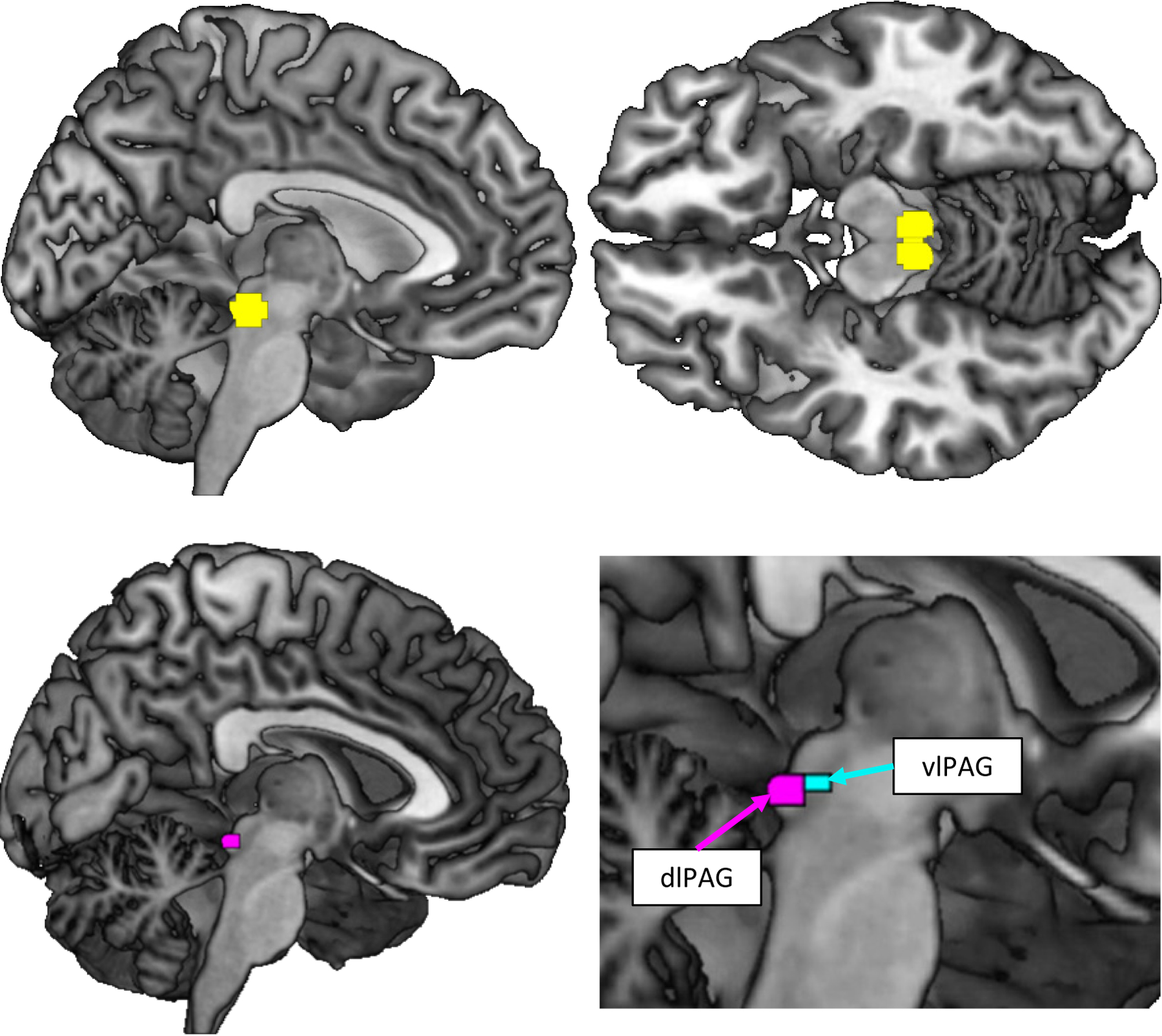
Posttraumatic stress disorder (PTSD) is characterized by hyperarousal, avoidance, and intrusive/re-experiencing symptoms. The periaqueductal gray (PAG), which generates behavioral responses to physical and psychological stressors, is also implicated in threat processing. Distinct regions of the PAG elicit opposing responses to threatening or stressful stimuli; the ventrolateral PAG evokes passive coping strategies (e.g., analgesia), whereas the dorsolateral PAG (dlPAG) promotes active responses (e.g., fight or flight). We investigated whether altered PAG resting-state functional connectivity (RSFC) prospectively predicted PTSD symptoms.
A total of 48 trauma-exposed individuals underwent an RSFC scan 2 weeks posttraumatic injury. Self-report measures, including the visual analog scale for pain and the Impact of Event Scale, were collected at 2 weeks and 6 months posttrauma. We analyzed whether acute bilateral PAG RSFC was a marker of risk for total 6-month symptom severity and specific symptom clusters. In an exploratory analysis, we investigated whether dlPAG RSFC predicted PTSD symptoms.
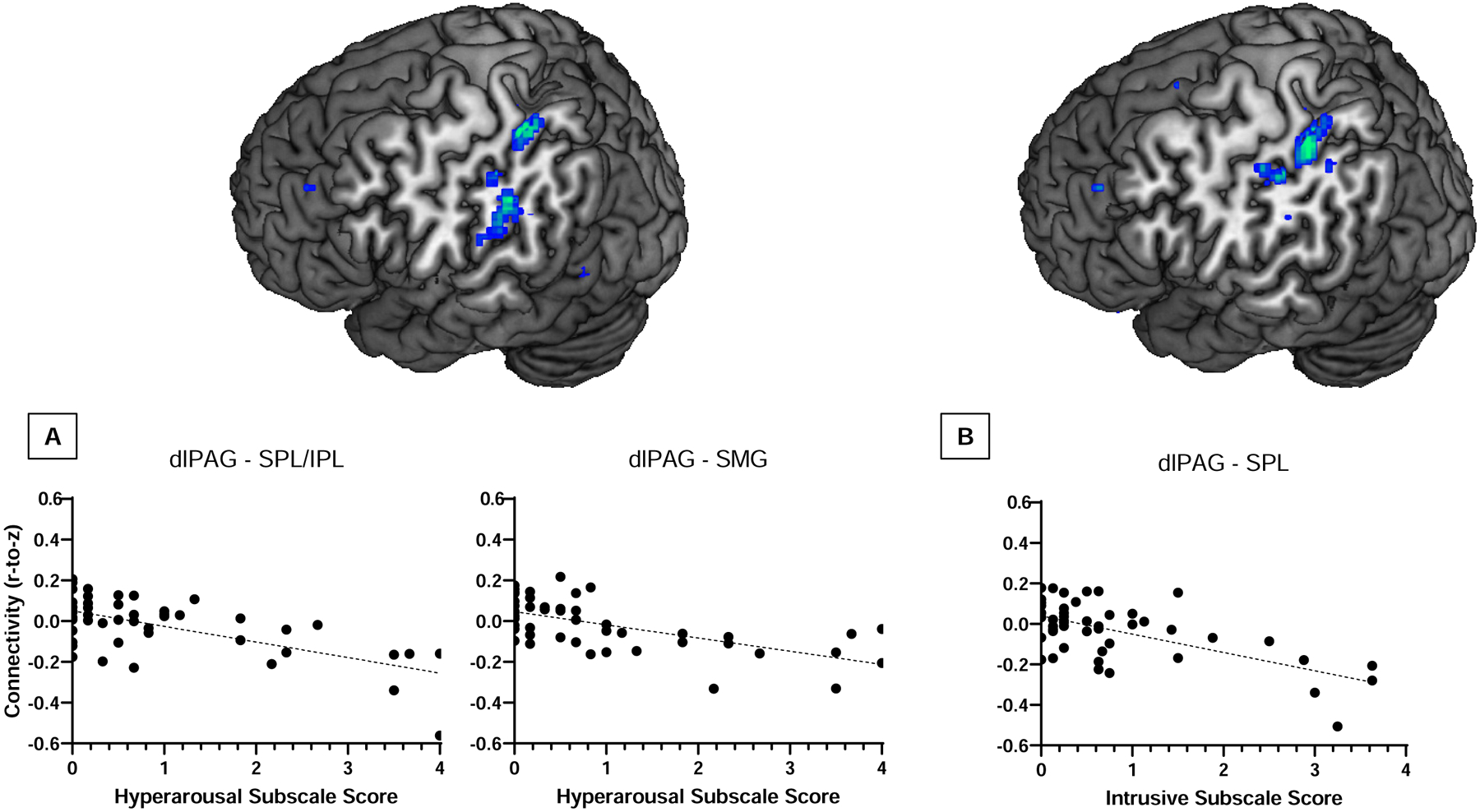
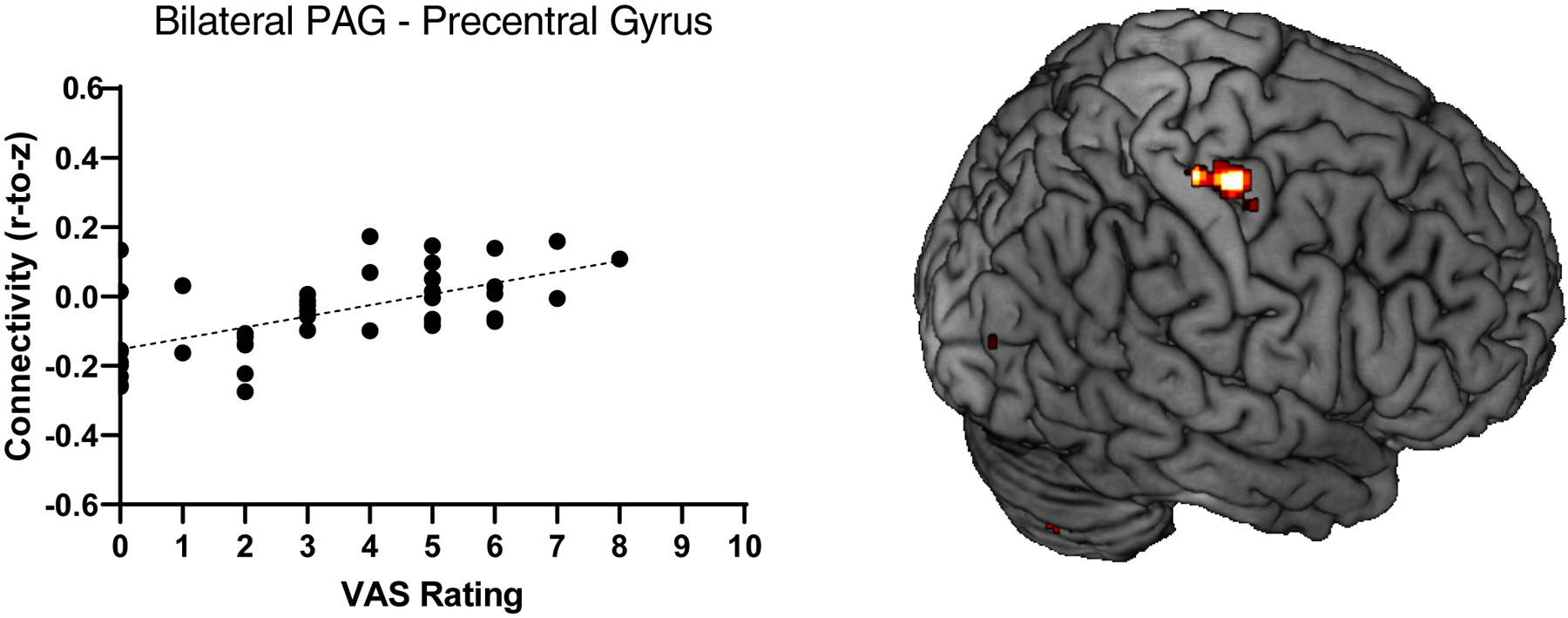
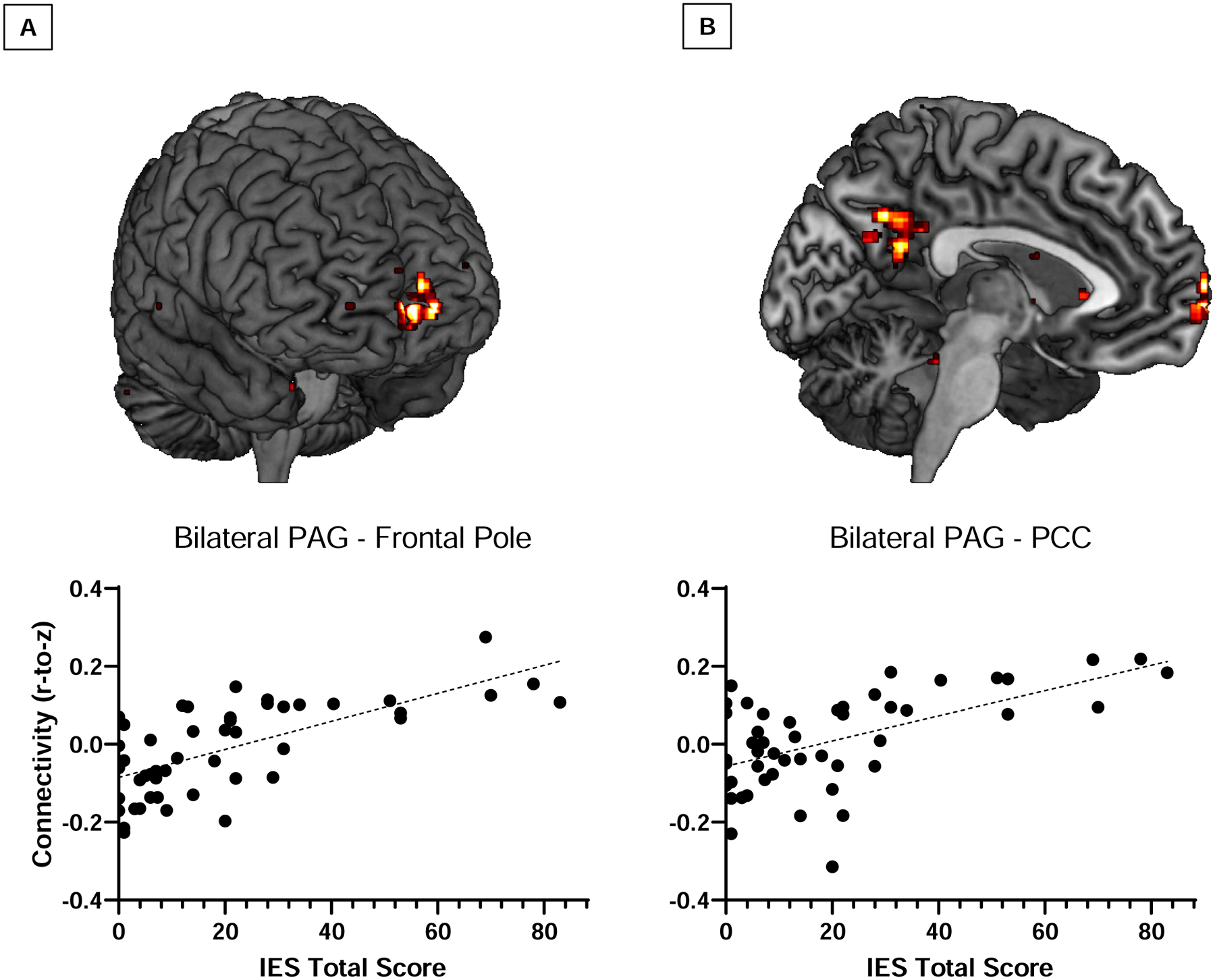
After adjusting for physical pain ratings, greater acute posttrauma PAG-frontal pole and PAG-posterior cingulate cortex connectivity was positively associated with 6-month total PTSD symptoms. Weaker dlPAG-superior/inferior parietal lobule connectivity predicted both higher hyperarousal and higher intrusive symptoms, while weaker dlPAG-supramarginal gyrus RSFC was associated with only hyperarousal symptoms.
Altered connectivity of the PAG 2 weeks posttrauma prospectively predicted PTSD symptoms. These findings suggest that aberrant PAG function may serve as a marker of risk for chronic PTSD symptoms, possibly by driving specific symptom clusters, and more broadly that connectivity of specific brain regions may underlie specific symptom profiles.
创伤后应激障碍(PTSD)的特征是过度警觉、回避和侵入性/再体验症状。导水管周围灰质(PAG)生成对身体和心理应激源的行为反应,也与威胁处理有关。PAG 的不同区域对威胁或应激刺激产生相反的反应;腹外侧 PAG 引起被动应对策略(例如镇痛),而背外侧 PAG(dlPAG)促进主动反应(例如战斗或逃跑)。我们研究了 PAG 静息状态功能连接(RSFC)是否可以预测 PTSD 症状。
共有 48 名创伤后个体在创伤后 2 周进行了 RSFC 扫描。自我报告测量,包括疼痛视觉模拟量表和事件影响量表,在创伤后 2 周和 6 个月进行收集。我们分析了急性双侧 PAG RSFC 是否是总 6 个月症状严重程度和特定症状群的风险标志物。在一项探索性分析中,我们研究了 dlPAG RSFC 是否可以预测 PTSD 症状。
在调整身体疼痛评分后,更大的急性创伤后 PAG-额极和 PAG-后扣带回皮质连接与 6 个月的总 PTSD 症状呈正相关。较弱的 dlPAG-顶下/顶上叶连接预测了更高的警觉和更高的侵入性症状,而较弱的 dlPAG-缘上回 RSFC 仅与警觉症状相关。
创伤后 2 周 PAG 连接的改变前瞻性地预测了 PTSD 症状。这些发现表明,PAG 功能异常可能是慢性 PTSD 症状的风险标志物,可能通过驱动特定的症状群,更广泛地说,特定脑区的连接可能是特定症状谱的基础。