Wu Koulong, Wei Xuemei
Physical Education Department, Wannan Medical College, Wuhu, Anhui, China (mainland).
Med Sci Monit Basic Res. 2020 May 11;26:e924085. doi: 10.12659/MSMBR.924085.
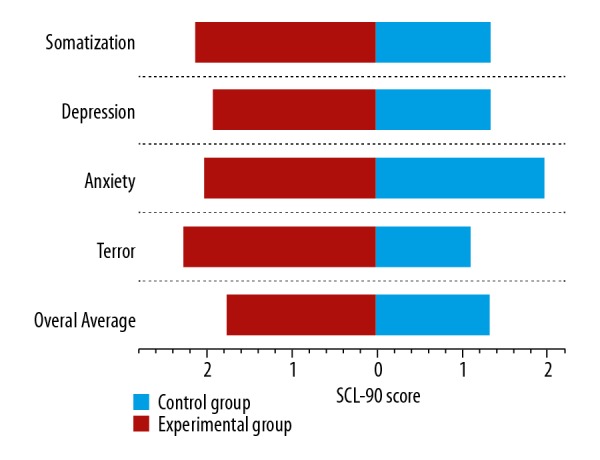
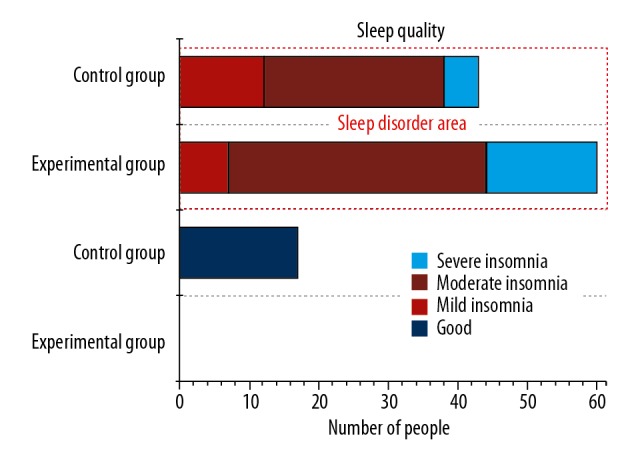
BACKGROUND The aim of this study was to understand the changes in psychological factors and sleep status of front-line medical staff in the fight against COVID-19 and provide evidence of exercise interventions to relieve psychological stress and improve sleep status for medical staff. MATERIAL AND METHODS A survey study was conducted among 120 front-line medical staff in the fight against COVID-19, of which 60 medical staff worked at the designated hospital (experimental group) and 60 medical staff worked at the non-designated hospital (control group). The Symptom Checklist 90 (SCL-90), Self-rating Anxiety Scale (SAS), Self-rating Depression Scale (SDS), and PTSD Checklist-Civilian Version (PCL-C) were used to assess mental status. Sleep status was assessed using the Pittsburgh Sleep Quality Index (PSQI). RESULTS SCL-90 scores of somatization, depression, anxiety, and terror were higher than normal in front-line medical staff at the designated hospital. The SAS (45.89±1.117), SDS (50.13±1.813), and PCL-C (50.13±1.813) scores in the experimental group were higher than the normal control group, and were significantly different from those in the control group on SDS and PCL-C scales (P<0.05). The total average PSQI of the experimental group was 16.07±3.761, indicating that the sleep quality was poor. Among them, participants with moderate insomnia reached 61.67%, and participants with severe insomnia reached 26.67%. CONCLUSIONS There are psychological symptoms and sleep symptoms in front-line medical staff who participate in the fight against COVID-19, and they affect each other. Hospitals should improve emergency management measures, strengthen psychological counseling for clinical front-line medical staff, strengthen exercise intervention, and improve their sleep quality and mental health.
背景 本研究旨在了解抗击新型冠状病毒肺炎一线医护人员心理因素及睡眠状况的变化,为运动干预缓解医护人员心理压力、改善睡眠状况提供依据。
材料与方法 对120名抗击新型冠状病毒肺炎一线医护人员进行调查研究,其中60名医护人员在定点医院工作(实验组),60名医护人员在非定点医院工作(对照组)。采用症状自评量表(SCL-90)、焦虑自评量表(SAS)、抑郁自评量表(SDS)和创伤后应激障碍检查表平民版(PCL-C)评估心理状态。采用匹兹堡睡眠质量指数(PSQI)评估睡眠状况。
结果 定点医院一线医护人员SCL-90的躯体化、抑郁、焦虑、恐怖因子得分高于常模。实验组SAS(45.89±1.117)、SDS(50.13±1.813)和PCL-C(50.13±1.813)得分高于正常对照组,且在SDS和PCL-C量表上与对照组差异有统计学意义(P<0.05)。实验组PSQI总均分16.07±3.761,提示睡眠质量较差。其中,中度失眠者达61.67%,重度失眠者达26.67%。
结论 参与抗击新型冠状病毒肺炎的一线医护人员存在心理症状和睡眠症状,且二者相互影响。医院应完善应急管理措施,加强对临床一线医护人员的心理疏导,加强运动干预,改善其睡眠质量和心理健康。