Zhang Ke, Zhou Hong, Yan Bo, Cao Xuanping
The First Affiliated Hospital of Zhengzhou University, No. 1 Jianshe East Road, Zhengzhou, 450000 Henan China.
Cancer Cell Int. 2020 May 6;20:148. doi: 10.1186/s12935-020-01224-9. eCollection 2020.
Long noncoding RNA taurine upregulated 1 (TUG1) has been reported to play an important role in human cancers. However, little is known about the role of TUG1 in drug resistance and its mechanism in tongue squamous cell carcinoma (TSCC).
Twenty-one cisplatin-sensitive or resistant TSCC patients were enrolled in this study. Cisplatin-resistant cells (SCC25/CDDP and CAL27/CDDP) were used for experiments in vitro. Transfection was performed using Lipofectamine 2000 transfection reagent. The levels of TUG1, microRNA-133b (miR-133b) and cysteine-X-cysteine chemokine receptor 4 (CXCR4) were measured by quantitative real-time polymerase chain reaction or western blot. The cisplatin resistance was investigated by cell viability, transwell invasion and apoptosis assays. The interactions among TUG1, miR-133b and CXCR4 were evaluated by luciferase reporter assay and RNA immunoprecipitation. Murine xenograft model was established using the stably transfected CAL27/CDDP cells.
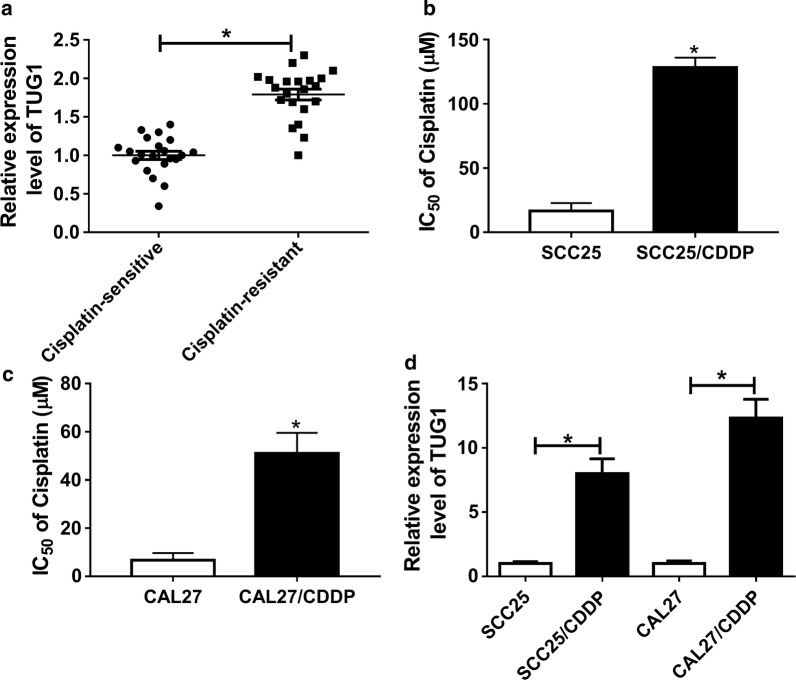
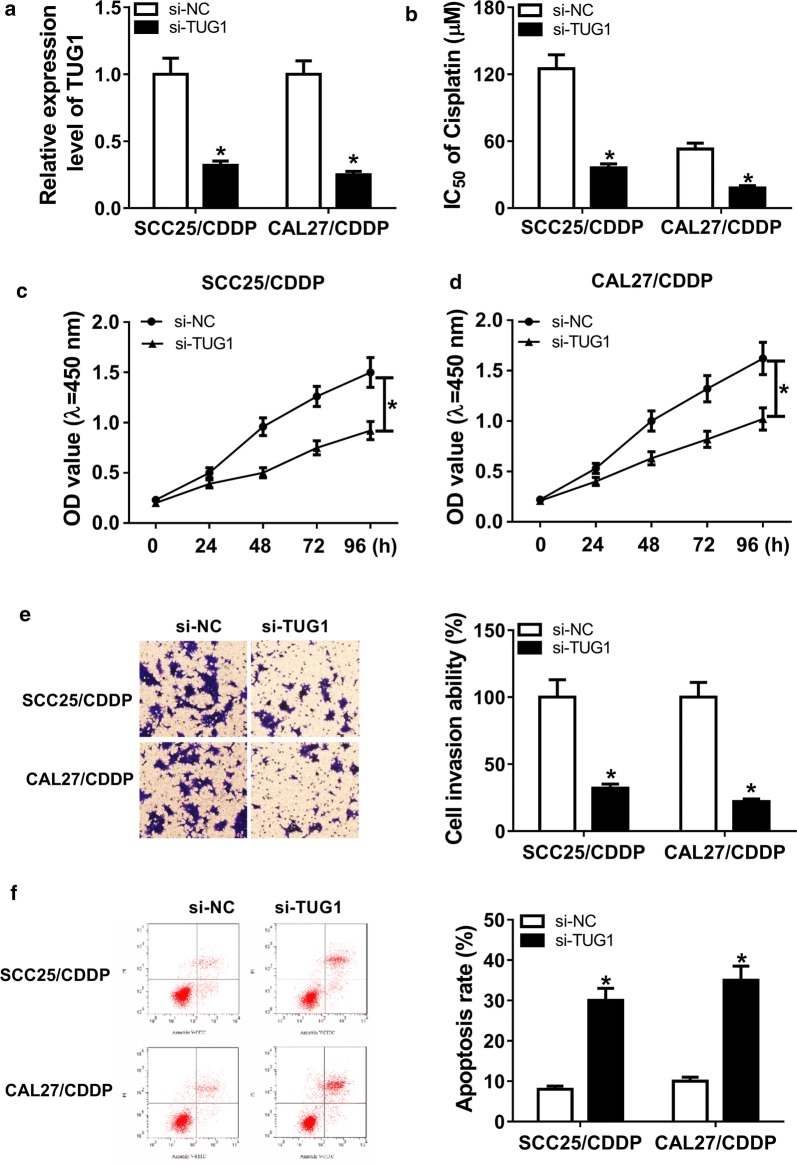
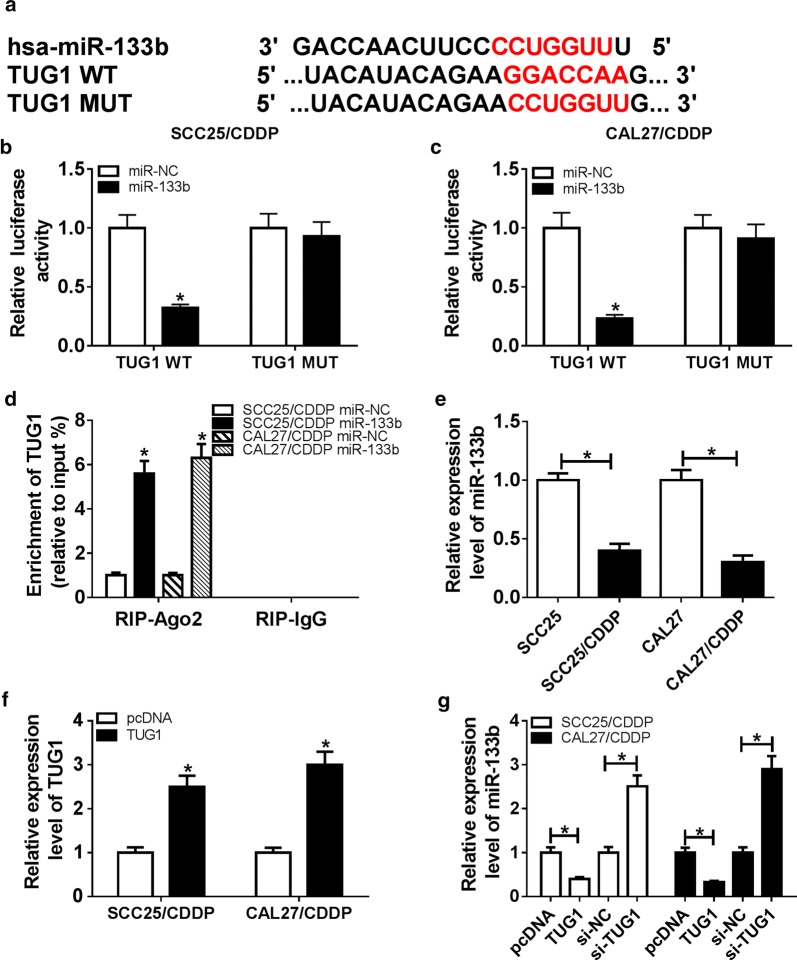
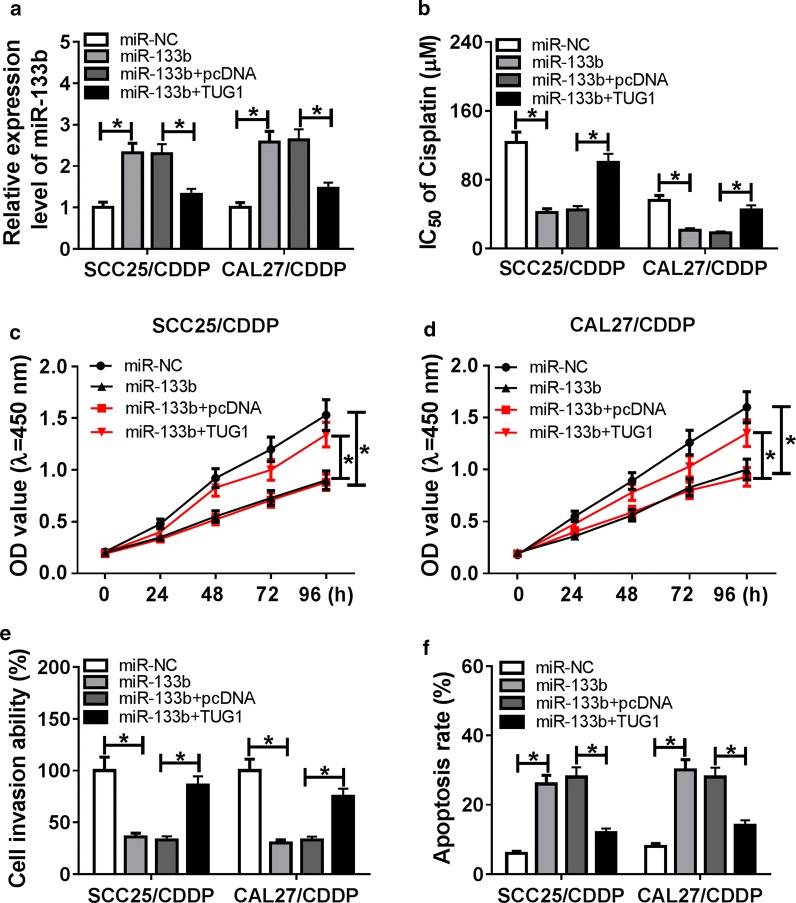
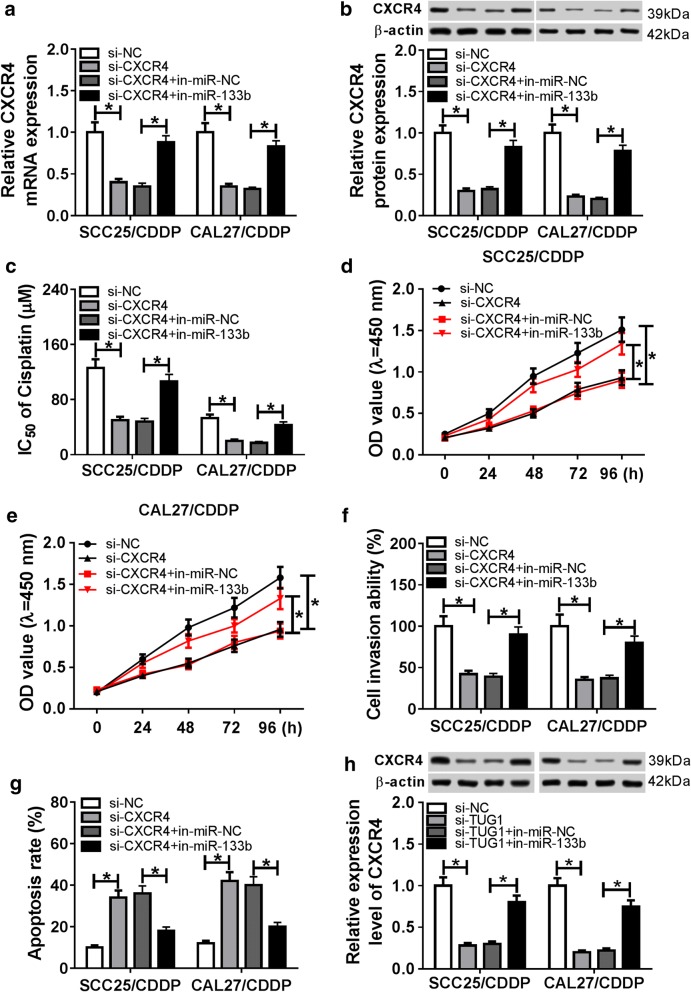
TUG1 expression was elevated in cisplatin-resistant TSCC tissues and cells compared with that in sensitive group and its knockdown inhibited cisplatin resistance to SCC25/CDDP and CAL27/CDDP cells. miR-133b was targeted via TUG1 and its overexpression suppressed cisplatin resistance. Moreover, CXCR4 was a target of miR-133b. CXCR4 silence repressed cisplatin resistance, which was reversed by miR-133b knockdown. The level of CXCR4 protein was decreased by inhibition of TUG1 and recuperated by miR-133b knockdown. Besides, interference of TUG1 attenuated tumor growth by regulating miR-133b and CXCR4 in vivo.
Downregulation of TUG1 impeded cisplatin resistance in TSCC-resistant cells by mediating miR-133b and CXCR4, indicating TUG1 as a promising target for TSCC chemotherapy.
据报道,长链非编码RNA牛磺酸上调基因1(TUG1)在人类癌症中发挥重要作用。然而,关于TUG1在舌鳞状细胞癌(TSCC)耐药中的作用及其机制知之甚少。
本研究纳入了21例顺铂敏感或耐药的TSCC患者。使用顺铂耐药细胞(SCC25/CDDP和CAL27/CDDP)进行体外实验。采用Lipofectamine 2000转染试剂进行转染。通过定量实时聚合酶链反应或蛋白质印迹法检测TUG1、微小RNA-133b(miR-133b)和CXC趋化因子受体4(CXCR4)的水平。通过细胞活力、Transwell侵袭和凋亡实验研究顺铂耐药情况。通过荧光素酶报告基因实验和RNA免疫沉淀评估TUG1、miR-133b和CXCR4之间的相互作用。使用稳定转染的CAL27/CDDP细胞建立小鼠异种移植模型。
与敏感组相比,顺铂耐药的TSCC组织和细胞中TUG1表达升高,敲低其表达可抑制SCC25/CDDP和CAL27/CDDP细胞对顺铂的耐药性。miR-133b是TUG1的靶标,其过表达可抑制顺铂耐药。此外,CXCR4是miR-133b的靶标。CXCR4沉默可抑制顺铂耐药,而miR-133b敲低可逆转这种抑制作用。抑制TUG1可降低CXCR4蛋白水平,而miR-133b敲低可使其恢复。此外,在体内,干扰TUG1通过调节miR-133b和CXCR4减弱肿瘤生长。
下调TUG1通过介导miR-133b和CXCR4阻碍TSCC耐药细胞对顺铂的耐药性,表明TUG1是TSCC化疗的一个有前景的靶点。