Thomas Nicholas C, Hendrich Connor G, Gill Upinder S, Allen Caitilyn, Hutton Samuel F, Schultink Alex
Fortiphyte Inc., Berkeley, CA, United States.
Innovative Genomics Institute, University of California, Berkeley, Berkeley, CA, United States.
Front Plant Sci. 2020 Apr 23;11:463. doi: 10.3389/fpls.2020.00463. eCollection 2020.
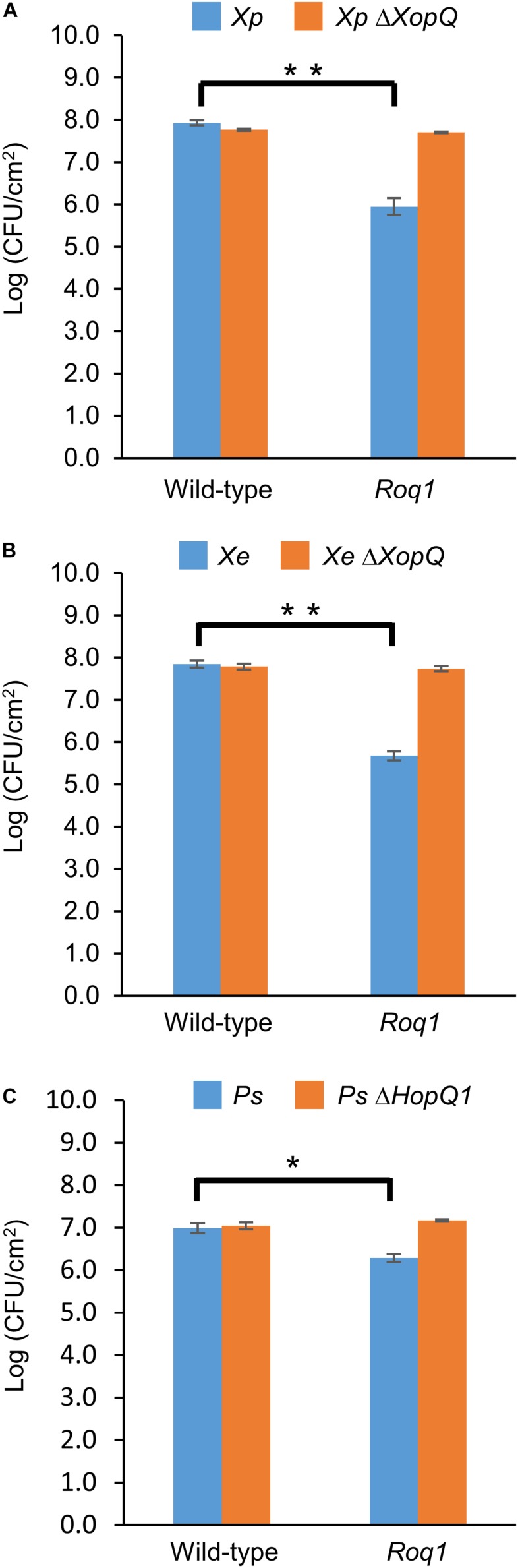
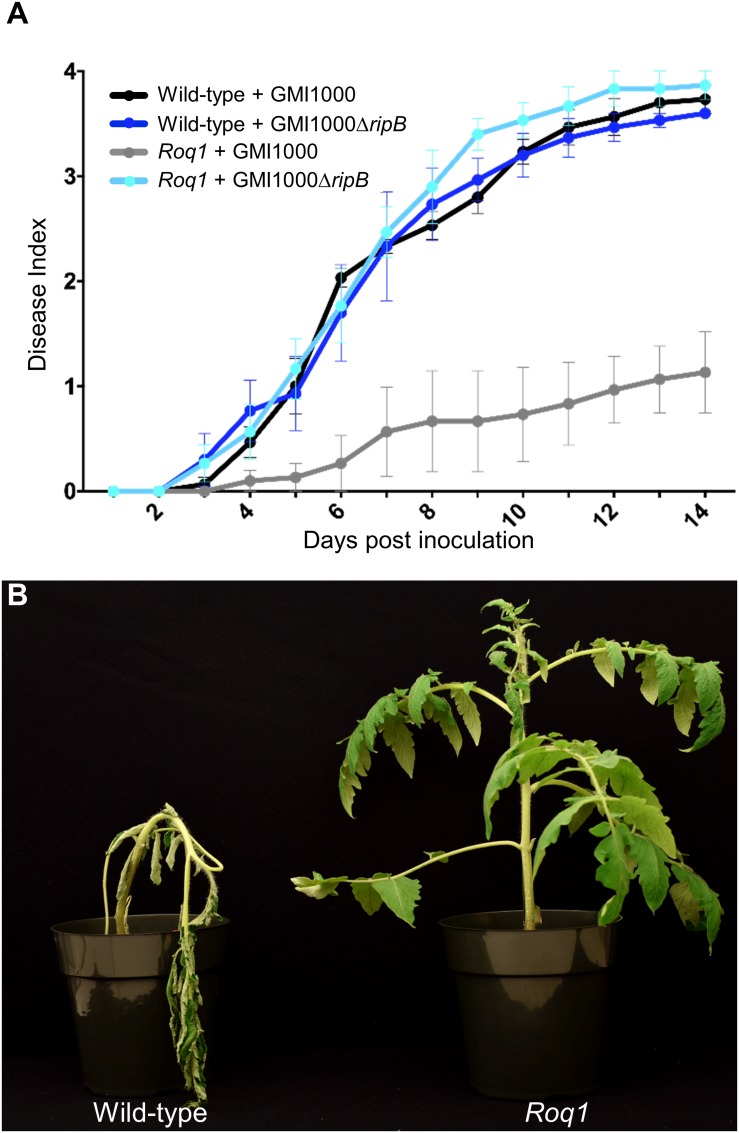
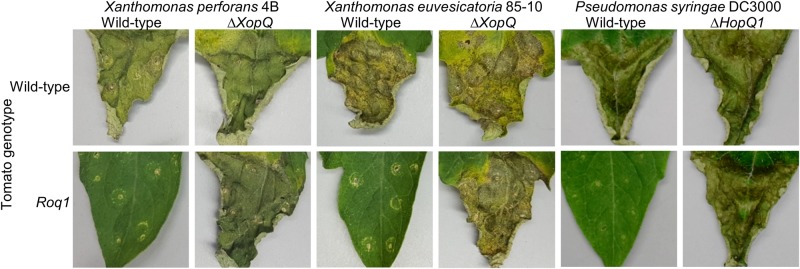
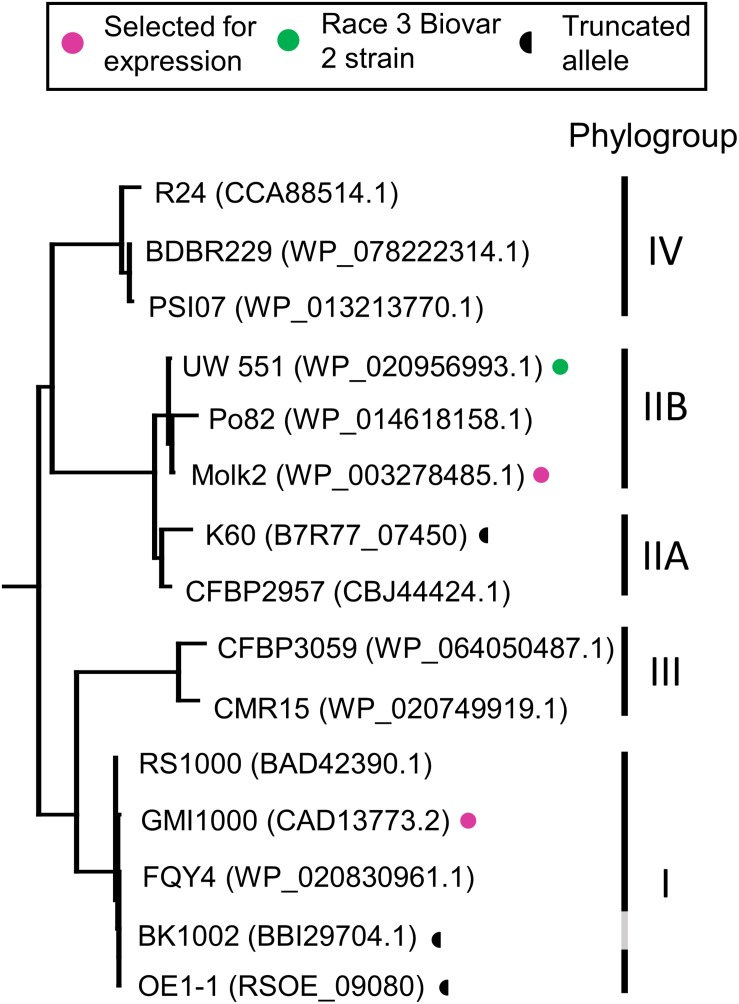
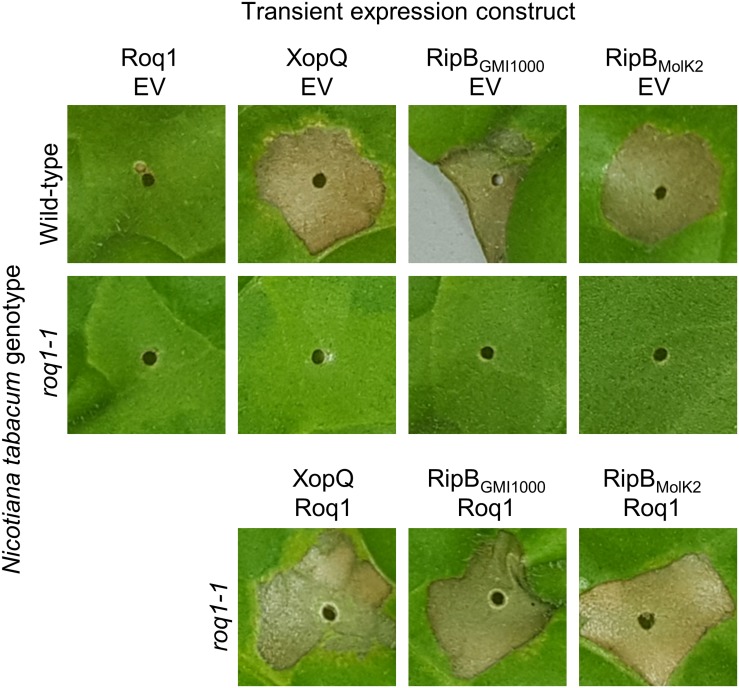
species, and species are bacterial plant pathogens that cause significant yield loss in many crop species. Generating disease-resistant crop varieties can provide a more sustainable solution to control yield loss compared to chemical methods. Plant immune receptors encoded by nucleotide-binding, leucine-rich repeat (NLR) genes typically confer resistance to pathogens that produce a cognate elicitor, often an effector protein secreted by the pathogen to promote virulence. The diverse sequence and presence/absence variation of pathogen effector proteins within and between pathogen species usually limits the utility of a single NLR gene to protecting a plant from a single pathogen species or particular strains. The NLR protein Recognition of XopQ 1 (Roq1) was recently identified from the plant and mediates perception of the effector proteins XopQ and HopQ1 from and respectively. Unlike most recognized effectors, alleles of XopQ/HopQ1 are highly conserved and present in most plant pathogenic strains of and . A homolog of XopQ/HopQ1, named RipB, is present in most strains. We found that Roq1 confers immunity to , , and when expressed in tomato. Strong resistance to was observed in three seasons of field trials with both natural and artificial inoculation. The gene can therefore be used to provide safe, economical, and effective control of these pathogens in tomato and other crop species and reduce or eliminate the need for traditional chemical controls.
物种,而这些物种是细菌性植物病原体,会在许多作物品种中导致显著的产量损失。与化学方法相比,培育抗病作物品种可为控制产量损失提供更可持续的解决方案。由核苷酸结合、富含亮氨酸重复序列(NLR)基因编码的植物免疫受体通常赋予对产生同源激发子的病原体的抗性,该激发子通常是病原体分泌的效应蛋白以促进毒力。病原体物种内部和之间病原体效应蛋白的多样序列和存在/缺失变异通常限制了单个NLR基因保护植物免受单个病原体物种或特定菌株侵害的效用。NLR蛋白XopQ识别蛋白1(Roq1)最近从植物中被鉴定出来,分别介导对来自[病原体名称1]和[病原体名称2]的效应蛋白XopQ和HopQ1的感知。与大多数已识别的效应蛋白不同,XopQ/HopQ1的等位基因高度保守,存在于[病原体名称1]和[病原体名称2]的大多数植物致病菌株中。XopQ/HopQ1的一个同源物,名为RipB,存在于大多数[病原体名称3]菌株中。我们发现,Roq1在番茄中表达时赋予对[病原体名称1]、[病原体名称2]和[病原体名称3]的免疫性。在自然和人工接种的三个季节田间试验中均观察到对[病原体名称1]的强抗性。因此,[基因名称]基因可用于在番茄及其他作物品种中安全、经济且有效地控制这些病原体,并减少或消除对传统化学防治的需求。