Park Soongho, Lee Juhyung, Kim Younggue, Lee Byeong Ha
School of Electrical Engineering and Computer Science, Gwangju Institute of Science and Technology, 123 Cheomdangwagi-ro, Buk-gu, Gwangju 61005, Korea.
Sensors (Basel). 2020 May 7;20(9):2665. doi: 10.3390/s20092665.
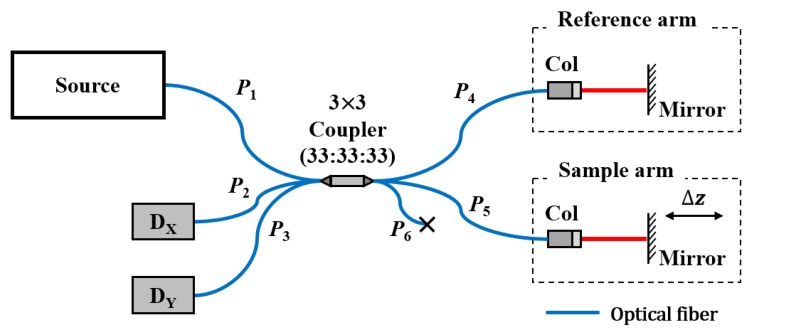
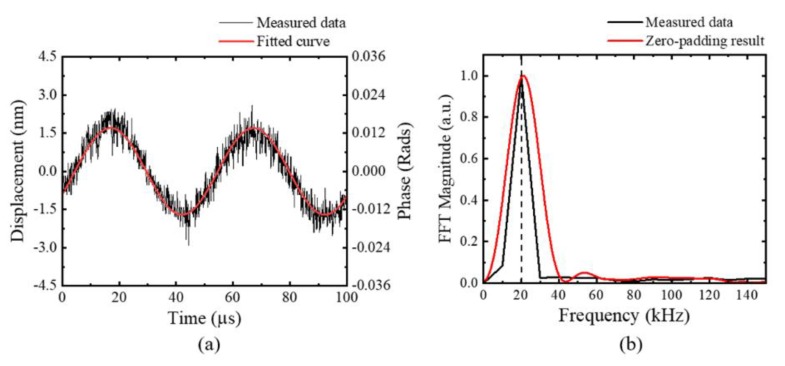
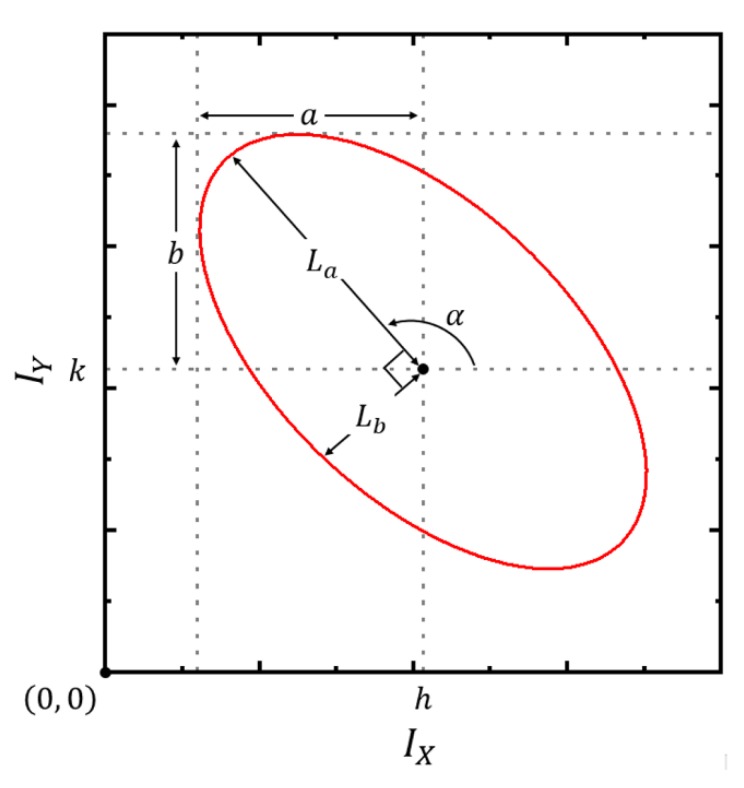
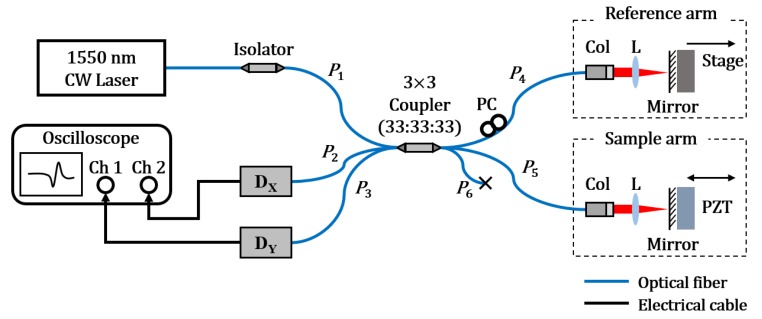
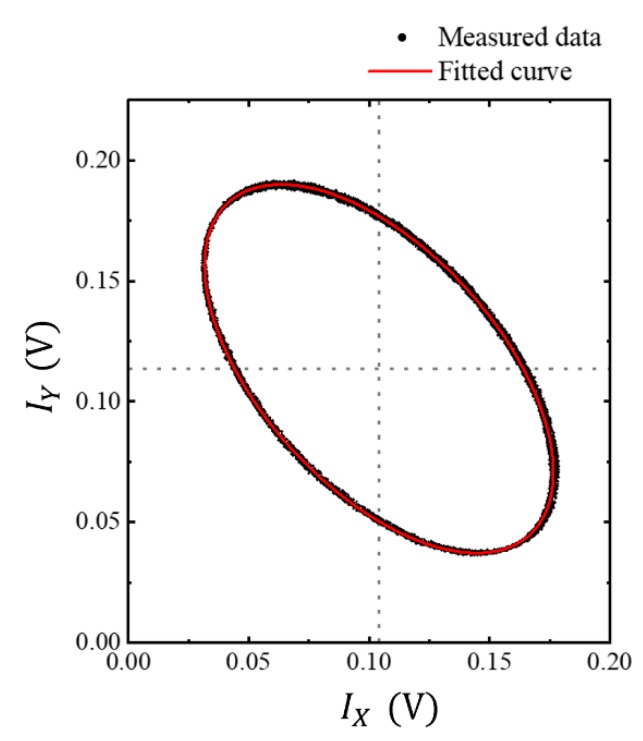
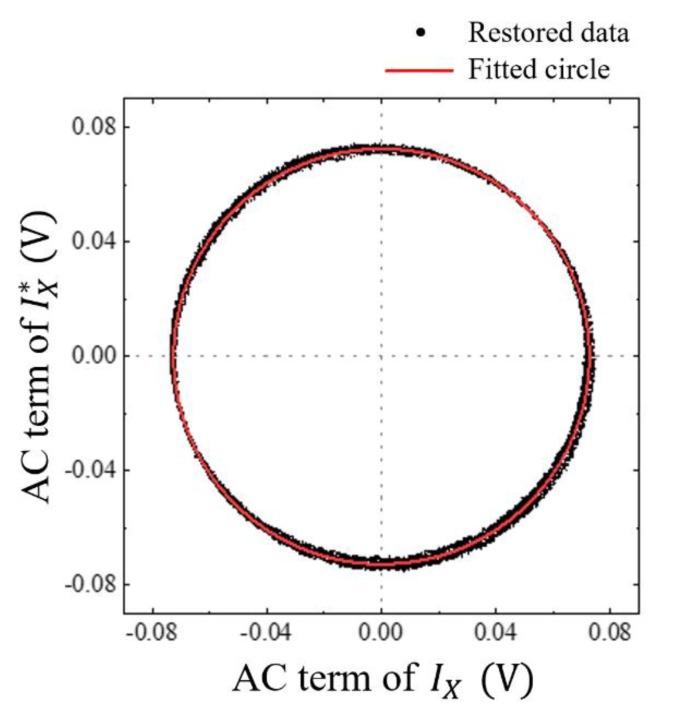
We propose a nanometer-scale displacement or vibration measurement system, using an optical quadrature interferometer and the post-processing technique that extracts the parameters necessary for characterizing the interferometric system. Using a 3 × 3 fiber-optic coupler, the entire complex interference signal could be reconstructed with two interference signals measured at two return ports of the coupler. The intrinsic phase difference between the return ports was utilized to obtain the quadratic part of the interference signal, which allowed one to reconstruct the entire complex interference signal. However, the two measured signals were appreciably affected by the unequal detector gains and non-uniform intrinsic phases of the coupler. Fortunately, we could find that the Lissajous curve plotted by the two signals of the interferometric system would form an ellipse. Therefore, by fitting the measured Lissajous curve to an ellipse, we could extract the parameters characterizing the actual system, which allowed the nanometer-scale measurement. Experimental results showed that a 20 kHz sinusoidal vibration with an amplitude of 1.5 nm could be measured with a standard deviation of 0.4 nm.
我们提出了一种纳米级位移或振动测量系统,该系统使用光学正交干涉仪和后处理技术来提取表征干涉测量系统所需的参数。利用一个3×3光纤耦合器,通过在耦合器的两个返回端口测量的两个干涉信号,可以重建整个复杂的干涉信号。利用返回端口之间的固有相位差来获得干涉信号的二次项,从而能够重建整个复杂的干涉信号。然而,这两个测量信号受到探测器增益不均和耦合器固有相位不均匀的显著影响。幸运的是,我们发现干涉测量系统的两个信号绘制的李萨如图形会形成一个椭圆。因此,通过将测量的李萨如图形拟合为椭圆,我们可以提取表征实际系统的参数,从而实现纳米级测量。实验结果表明,能够测量幅度为1.5 nm、频率为20 kHz的正弦振动,标准差为0.4 nm。