Gyeongnam Department of Environment & Toxicology, Korea Institute of Toxicology, 17 Jegok-gil, Munsan-eup 52834, Korea.
Department of Agronomy and Medicinal Plant Resources, Gyeongnam National University of Science and Technology, Jinju 52725, Korea.
Toxins (Basel). 2020 May 7;12(5):304. doi: 10.3390/toxins12050304.
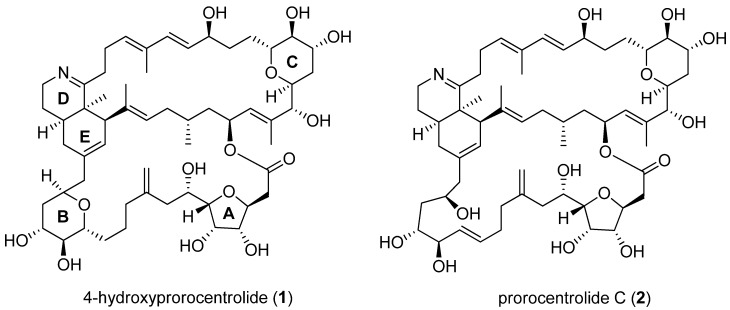
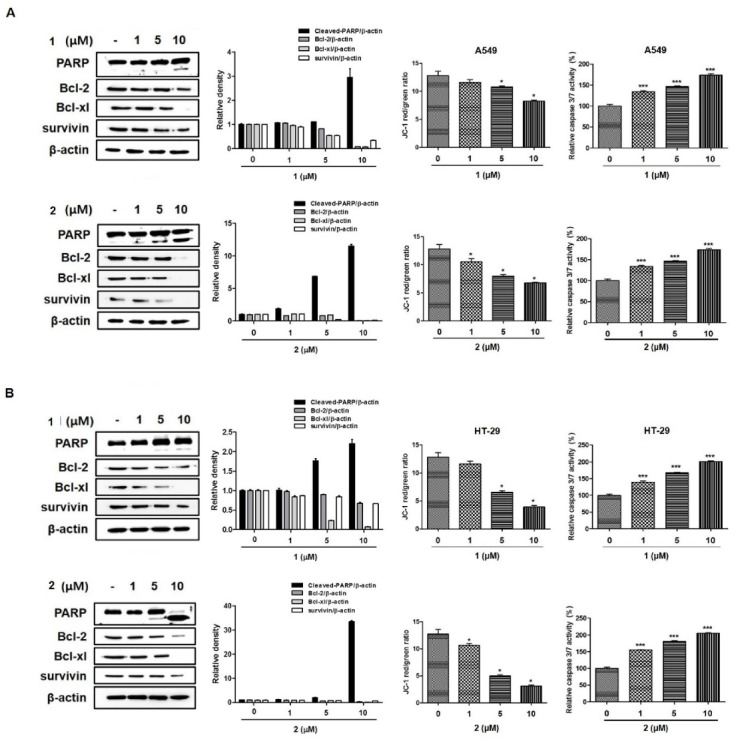
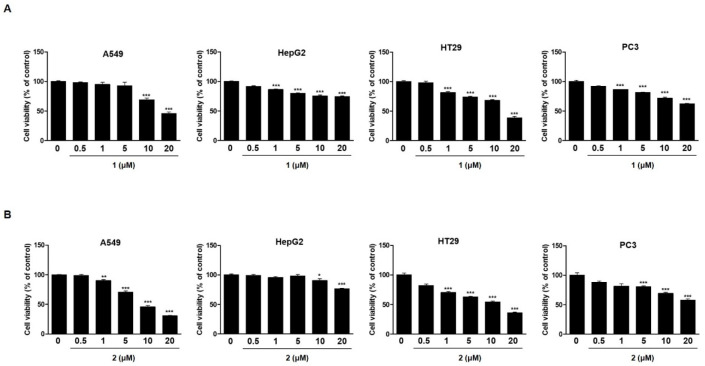
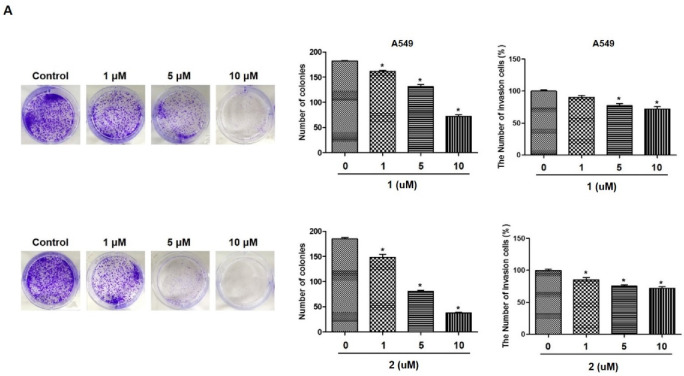
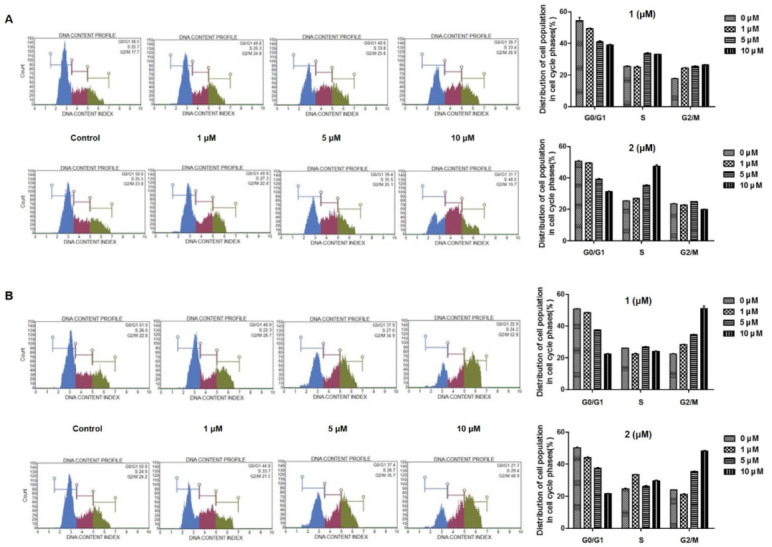
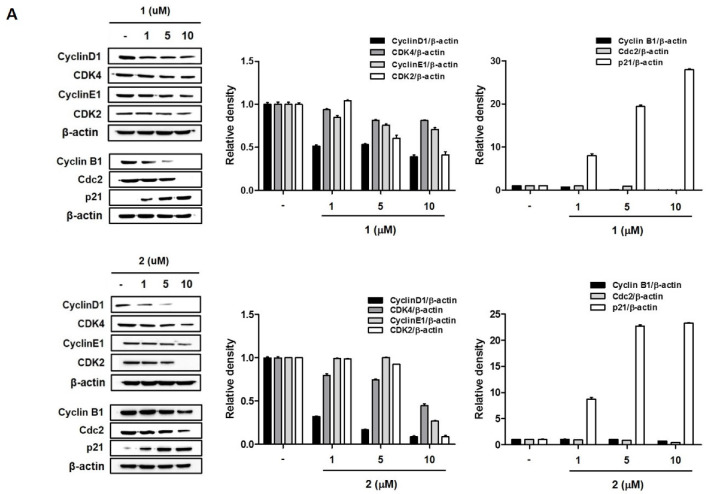
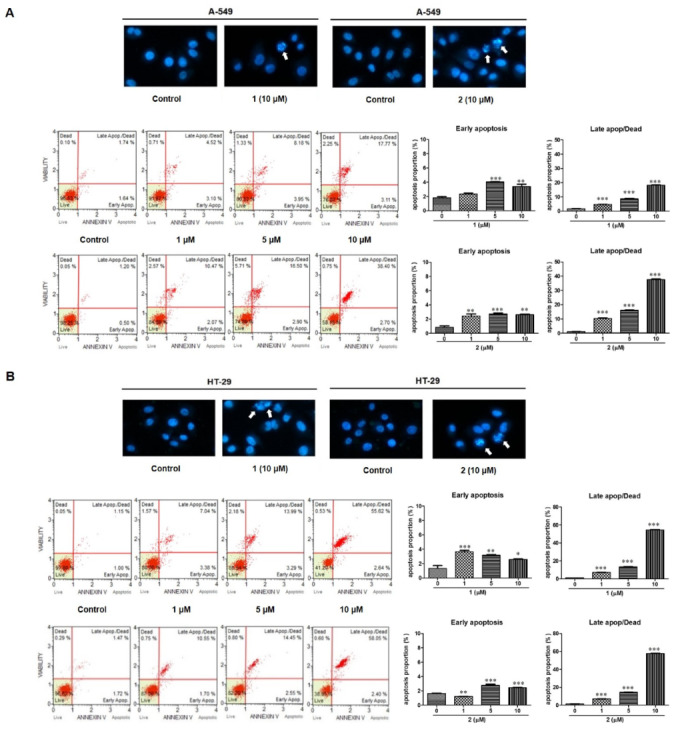
Prorocentrolide and its analogs, the novel naturally derived antitumor agents, have recently been identified in the dinoflagellate . In the current study, the underlying inhibitory mechanisms of 4-hydroxyprorocentrolide () and prorocentrolide C () on the proliferation of human carcinoma cells were determined. and arrested the cell cycle at the S phase in A549 cells and G2/M phase in HT-29 cells, leading to apoptotic cell death, as determined using fluorescence-activated cell sorting analysis with Annexin V/PI double staining. Apoptosis induced by these compounds was associated with alterations in the expression of cell cycle-regulating proteins (cyclin D1, cyclin E1, CDK2, and CDK4), as well as alterations in the levels of apoptosis-related proteins (PPAR, Bcl-2, Bcl-xl, and survivin). These findings provide new insights into the antitumor mechanisms of 4-hydroxyprorocentrolide and prorocentrolide C and a basis for future investigations assessing prorocentrolide analogs as prospective therapeutic drugs.
短链聚醚内酯及其类似物是从藻类中发现的新型天然抗肿瘤药物。本研究旨在探讨 4-羟基短链聚醚内酯()和短链聚醚内酯 C()对人癌细胞增殖的抑制作用机制。研究结果表明,和可将 A549 细胞周期阻滞于 S 期,将 HT-29 细胞周期阻滞于 G2/M 期,导致细胞凋亡,这一结果通过 Annexin V/PI 双染荧光激活细胞分选分析得到验证。这些化合物诱导的细胞凋亡与细胞周期调控蛋白(cyclin D1、cyclin E1、CDK2 和 CDK4)表达的改变以及与细胞凋亡相关蛋白(PPAR、Bcl-2、Bcl-xl 和 survivin)水平的改变有关。这些研究结果为 4-羟基短链聚醚内酯和短链聚醚内酯 C 的抗肿瘤机制提供了新的见解,并为评估短链聚醚内酯类似物作为潜在治疗药物的进一步研究提供了依据。