Informetrics Research Group, Ton Duc Thang University, Ho Chi Minh City 700000, Vietnam.
Faculty of Information Technology, Ton Duc Thang University, Ho Chi Minh City 700000, Vietnam.
Sensors (Basel). 2020 May 7;20(9):2668. doi: 10.3390/s20092668.
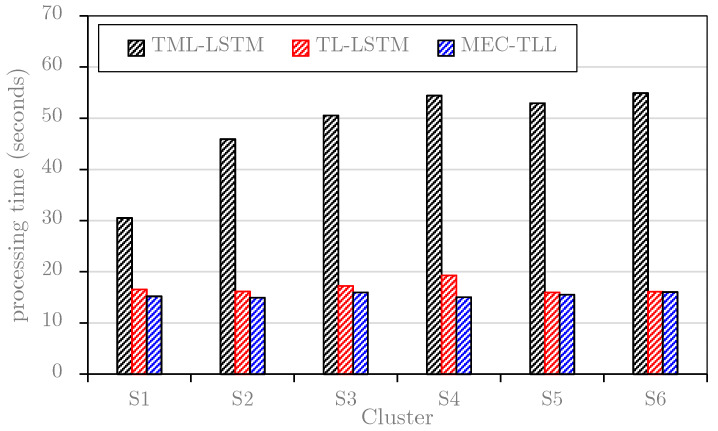
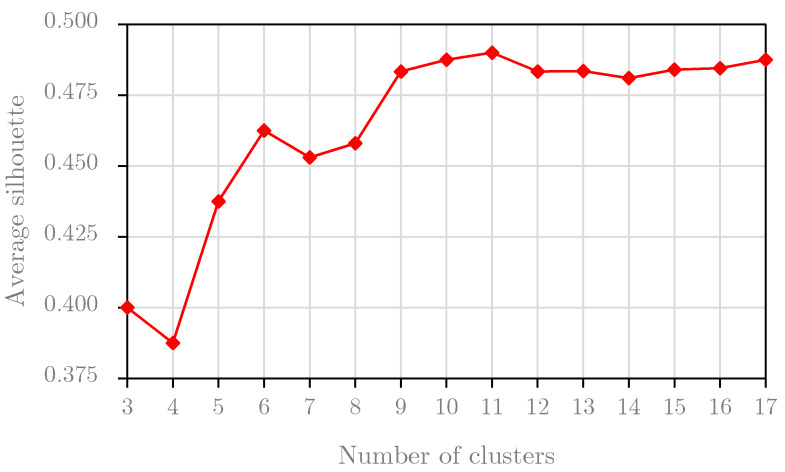
Electric energy consumption forecasting is an interesting, challenging, and important issue in energy management and equipment efficiency improvement. Existing approaches are predictive models that have the ability to predict for a specific profile, i.e., a time series of a whole building or an individual household in a smart building. In practice, there are many profiles in each smart building, which leads to time-consuming and expensive system resources. Therefore, this study develops a robust framework for the Multiple Electric Energy Consumption forecasting (MEC) of a smart building using Transfer Learning and Long Short-Term Memory (TLL), the so-called MEC-TLL framework. In this framework, we first employ a k-means clustering algorithm to cluster the daily load demand of many profiles in the training set. In this phase, we also perform analysis to specify the optimal number of clusters for the experimental datasets. Next, this study develops the MEC training algorithm, which utilizes a cluster-based strategy for transfer learning the Long Short-Term Memory models to reduce the computational time. Finally, extensive experiments are conducted to compare the computational time and different performance metrics for multiple electric energy consumption forecasting on two smart buildings in South Korea. The experimental results indicate that our proposed approach is capable of economical overheads while achieving superior performances. Therefore, the proposed approach can be applied effectively for intelligent energy management in smart buildings.
电能消耗预测是能源管理和设备效率提升中一个有趣、具有挑战性和重要的问题。现有的方法是预测模型,能够针对特定的档案进行预测,即智能建筑中的整个建筑物或单个家庭的时间序列。在实践中,每个智能建筑中都有许多档案,这导致系统资源耗费时间长且昂贵。因此,本研究使用迁移学习和长短时记忆(TLL)为智能建筑的多种电能消耗预测(MEC)开发了一个强大的框架,即所谓的 MEC-TLL 框架。在这个框架中,我们首先使用 k-means 聚类算法对训练集中的多个档案的每日负荷需求进行聚类。在这一阶段,我们还进行了分析,以确定实验数据集的最佳聚类数。接下来,本研究开发了 MEC 训练算法,该算法利用基于集群的策略来进行迁移学习长短期记忆模型,以减少计算时间。最后,我们在韩国的两座智能建筑上进行了广泛的实验,比较了多种电能消耗预测的计算时间和不同性能指标。实验结果表明,我们提出的方法能够在经济开销方面实现卓越的性能。因此,该方法可以有效地应用于智能建筑的智能能源管理。