Department of Endocrinology, Sun Yat-sen Memorial Hospital, Sun Yat-sen University, 107 Yanjiang West Road, Guangzhou, 510120, China.
BMC Endocr Disord. 2020 May 11;20(1):62. doi: 10.1186/s12902-020-0539-0.
Pregnancy-induced Cushing's syndrome (CS) with an adrenocortical adenoma overexpressing luteinizing hormone (LH)/human choriogonadotropin (hCG) receptors (LHCGR) has been rarely reported in the literatures. This peculiar condition challenges the canonical diagnosis and management of CS.
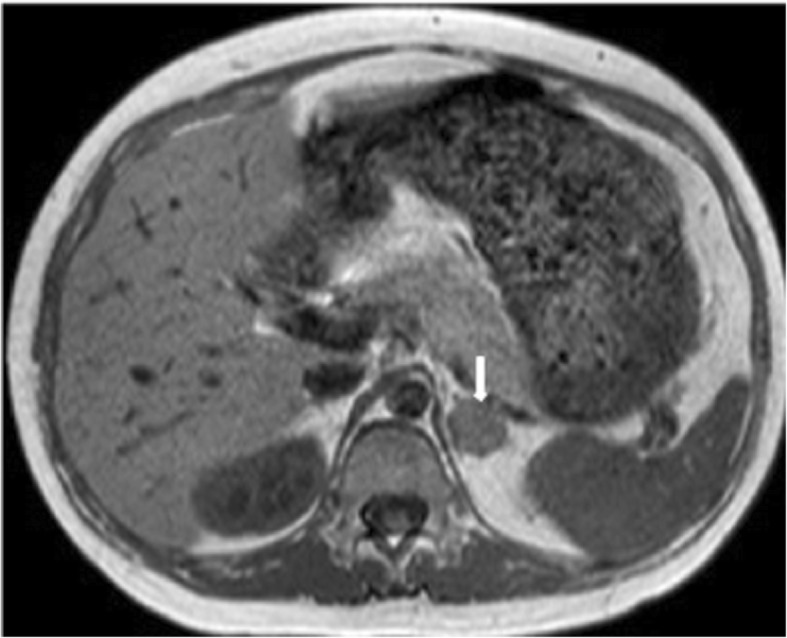
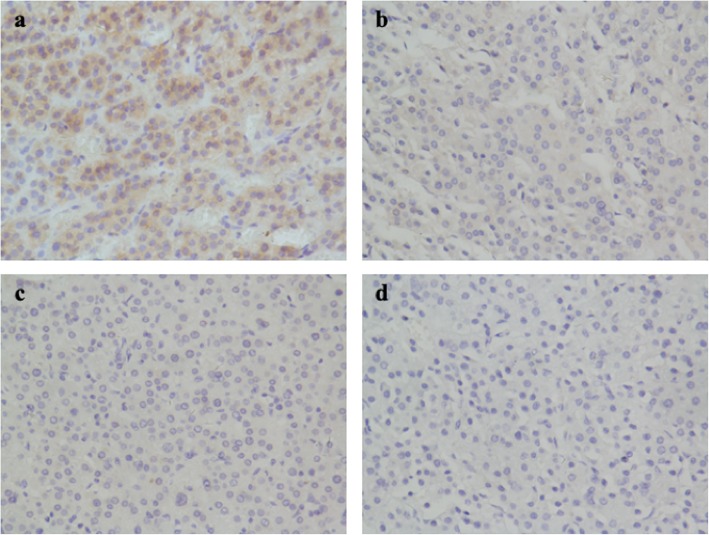
A 27-year-old woman (G2P0A1) presented at 20 weeks gestational age (GA) with overt Cushingoid clinical features. Adrenocorticotropic hormone (ACTH)-independent CS was diagnosed based on undetectable ACTH and unsuppressed cortisol levels by dexamethasone. Magnetic resonance imaging (MRI) scanning without contrast revealed a left adrenal nodule while pituitary MRI scanning was normal. A conservative treatment strategy of controlling Cushingoid comorbidities was conducted. At 36 weeks GA, a caesarean operation was performed and a live female infant was delivered. At 8 weeks after parturition, our patient achieved normalization of blood pressure, blood glucose, serum potassium, and urinary cortisol level spontaneously. During non-pregnancy period, stimulation testing with exogenous hCG significantly evoked a cortisol increase. The woman underwent resection of the adrenal tumor at 6 months after parturition. Immunohistochemistry (IHC) showed the tumor tissue that stained positive for luteinizing hormone (LH)/human choriogonadotropin (hCG) receptor (LHCGR), whereas negative for both melanocortin 2 receptor (MC2R) and G protein-coupled receptor-1 (GPER-1).
Stimulation test with exogenous hCG after parturition is necessary for the diagnosis of pregnancy-induced CS. LHCGR plays an essential role in the pathogenesis of this rare condition.
妊娠引起的促肾上腺皮质激素(CS)伴黄体生成素(LH)/人绒毛膜促性腺激素(hCG)受体(LHCGR)过度表达的肾上腺腺瘤在文献中很少报道。这种特殊情况对 CS 的典型诊断和治疗提出了挑战。
一名 27 岁女性(G2P0A1)在 20 周妊娠(GA)时出现明显库欣综合征的临床特征。根据促肾上腺皮质激素(ACTH)水平无法检测和地塞米松抑制试验不能抑制皮质醇水平,诊断为 ACTH 不依赖型 CS。未增强磁共振成像(MRI)扫描显示左侧肾上腺结节,而垂体 MRI 扫描正常。采用控制库欣综合征合并症的保守治疗策略。在 36 周 GA 时,进行剖宫产,分娩出一名活女婴。分娩后 8 周,患者血压、血糖、血钾和尿皮质醇水平自行恢复正常。在非妊娠期间,外源性 hCG 刺激试验显著引起皮质醇增加。分娩后 6 个月,该妇女接受了肾上腺肿瘤切除术。免疫组织化学(IHC)显示肿瘤组织对黄体生成素(LH)/人绒毛膜促性腺激素(hCG)受体(LHCGR)呈阳性,而对黑素皮质素 2 受体(MC2R)和 G 蛋白偶联受体-1(GPER-1)均呈阴性。
分娩后进行外源性 hCG 刺激试验对于诊断妊娠引起的 CS 是必要的。LHCGR 在这种罕见疾病的发病机制中起重要作用。