Howard Hughes Medical Institute, University of Wisconsin, Madison, WI 53706.
Laboratory of Molecular Biology, University of Wisconsin, Madison, WI 53706.
Proc Natl Acad Sci U S A. 2020 May 26;117(21):11589-11596. doi: 10.1073/pnas.2002092117. Epub 2020 May 11.
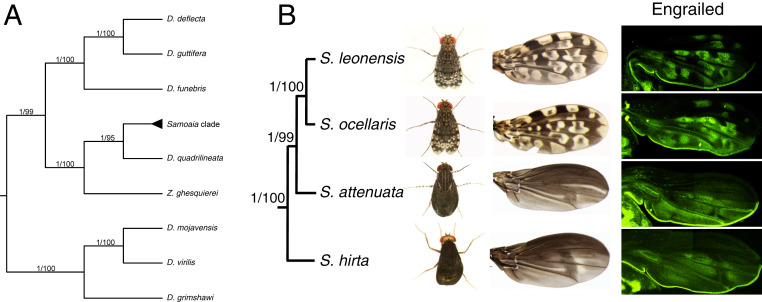
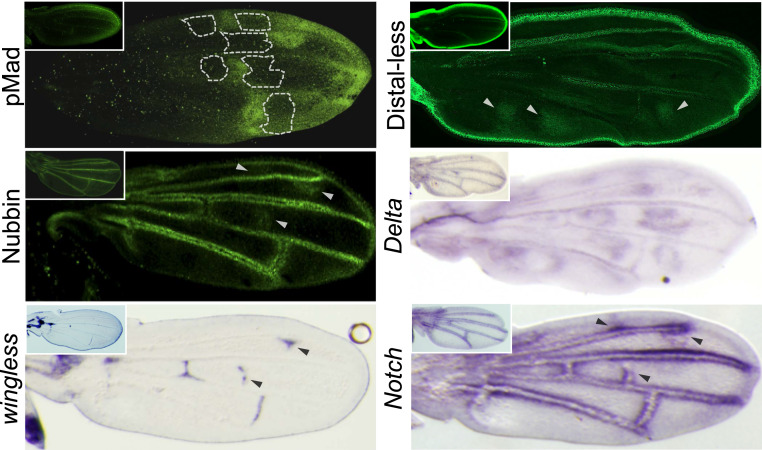
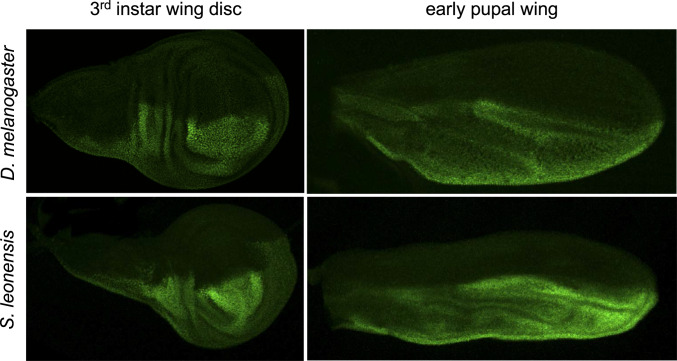
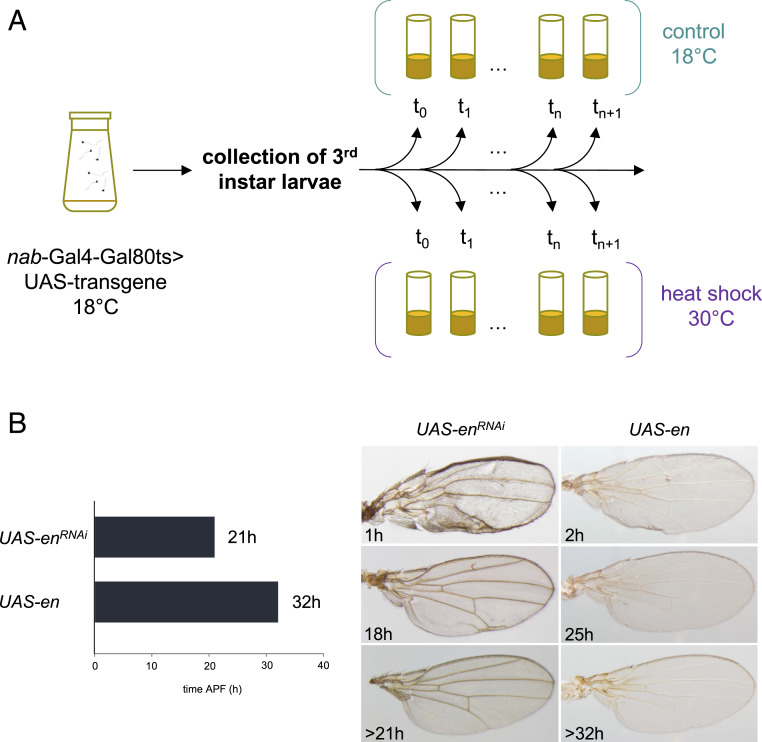
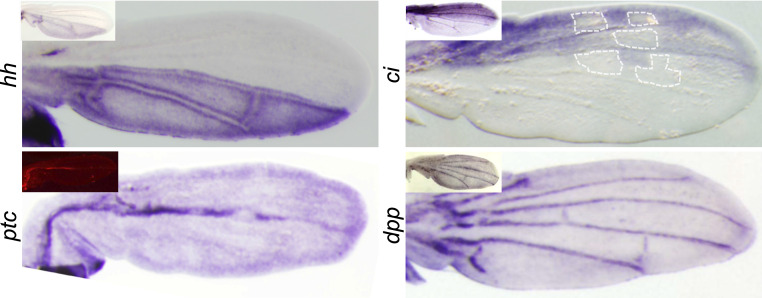
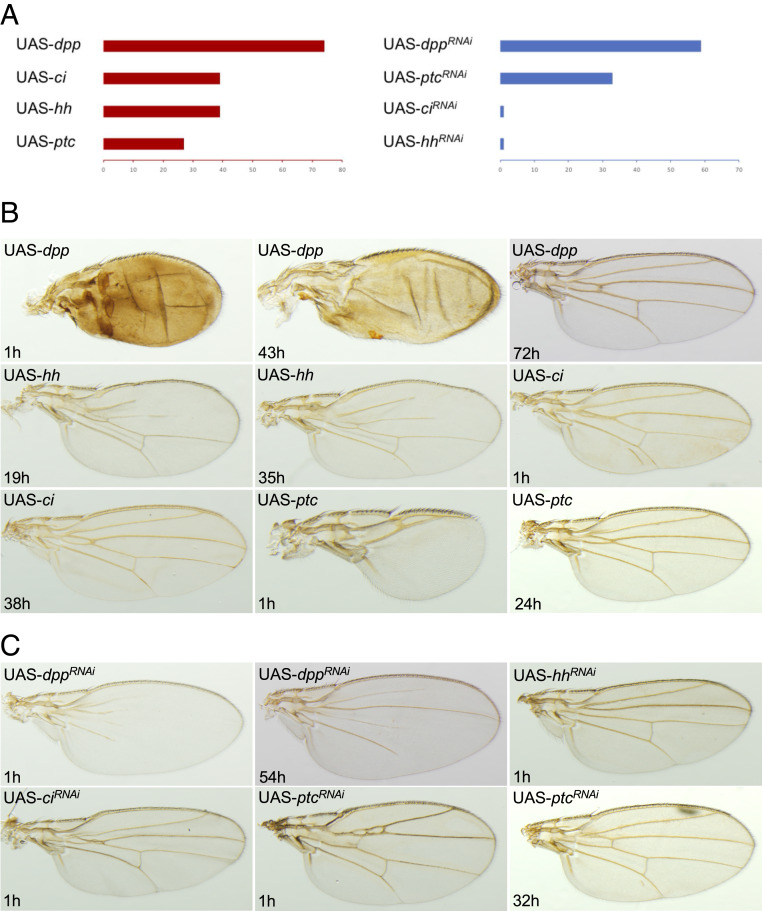
Organisms have evolved endless morphological, physiological, and behavioral novel traits during the course of evolution. Novel traits were proposed to evolve mainly by orchestration of preexisting genes. Over the past two decades, biologists have shown that cooption of gene regulatory networks (GRNs) indeed underlies numerous evolutionary novelties. However, very little is known about the actual GRN properties that allow such redeployment. Here we have investigated the generation and evolution of the complex wing pattern of the fly We show that the transcription factor Engrailed is recruited independently from the other players of the anterior-posterior specification network to generate a new wing pattern. We argue that partial cooption is made possible because 1) the anterior-posterior specification GRN is flexible over time in the developing wing and 2) this flexibility results from the fact that every single gene of the GRN possesses its own functional time window. We propose that the temporal flexibility of a GRN is a general prerequisite for its possible cooption during the course of evolution.
在进化过程中,生物进化出了无穷无尽的形态、生理和行为新特征。新特征被提出主要是通过预先存在的基因的协调进化而来。在过去的二十年中,生物学家已经表明,基因调控网络(GRNs)的共适应确实是许多进化新特征的基础。然而,对于允许这种重新配置的实际 GRN 特性,我们知之甚少。在这里,我们研究了苍蝇复杂翅膀图案的产生和进化。我们表明,转录因子 Engrailed 是从前后方位确定网络的其他参与者中独立招募来产生新的翅膀图案的。我们认为,部分共适应是可能的,原因有 1)在发育中的翅膀中,前后方位确定的 GRN 随时间具有灵活性,2)这种灵活性是因为 GRN 的每个单个基因都具有自己的功能时间窗口。我们提出,GRN 的时间灵活性是其在进化过程中可能共适应的一般前提。