Department of Biological Sciences, National University of Singapore, Singapore, 117543;
Department of Biological Sciences, National University of Singapore, Singapore, 117543.
Proc Natl Acad Sci U S A. 2022 Feb 22;119(8). doi: 10.1073/pnas.2108661119.
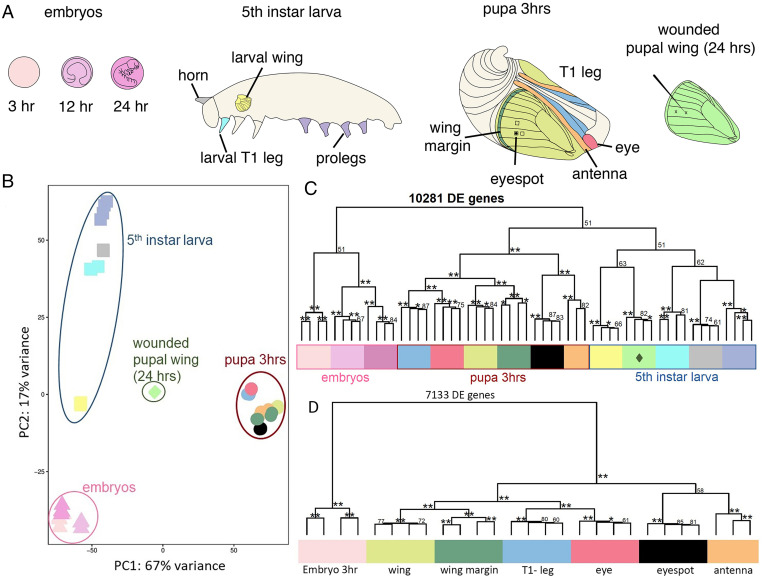
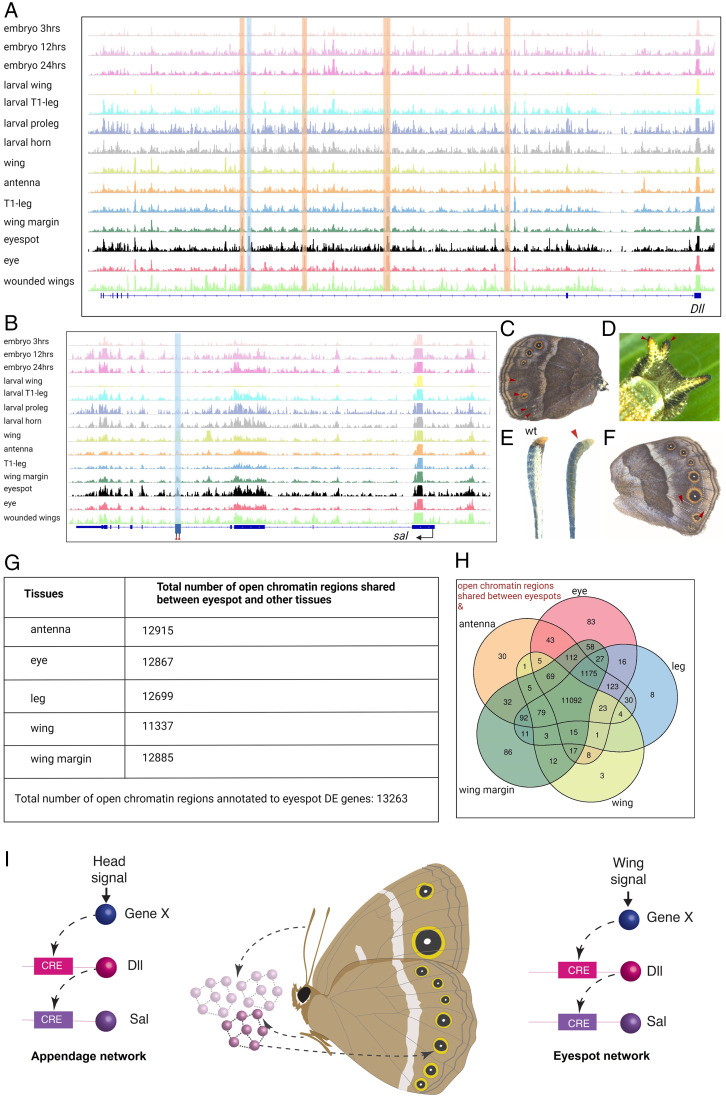
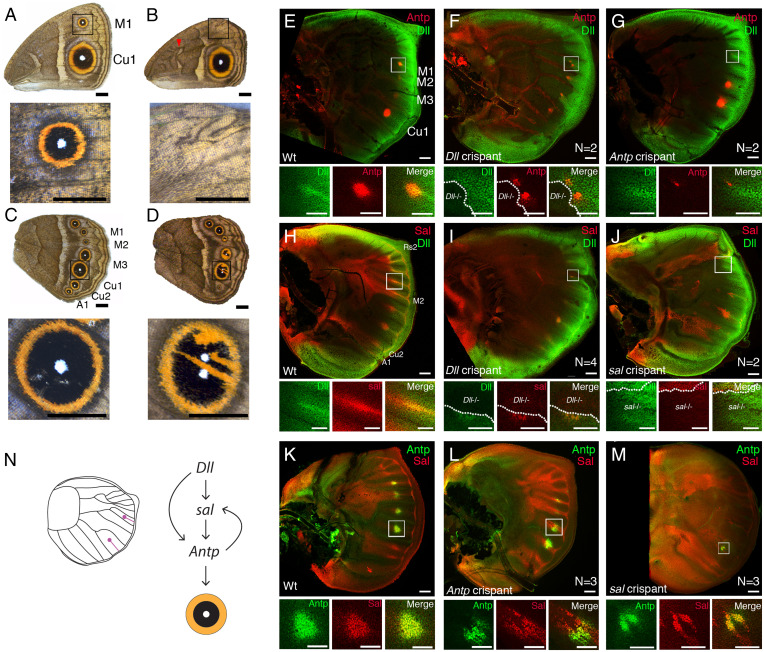
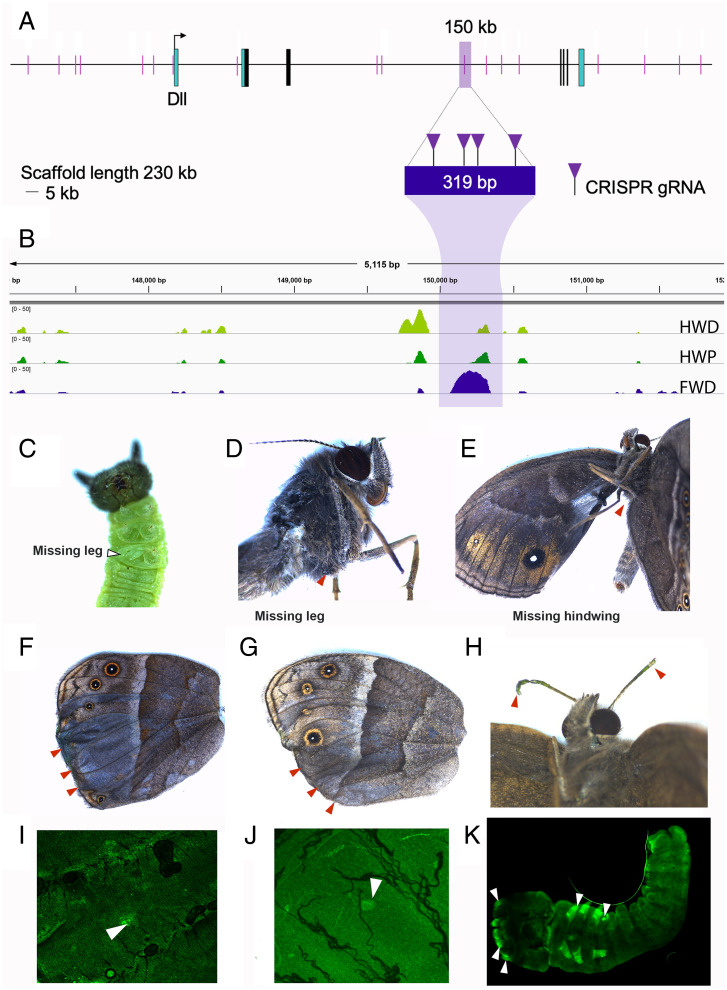
Butterfly eyespots are beautiful novel traits with an unknown developmental origin. Here we show that eyespots likely originated via cooption of parts of an ancestral appendage gene-regulatory network (GRN) to novel locations on the wing. Using comparative transcriptome analysis, we show that eyespots cluster most closely with antennae, relative to multiple other tissues. Furthermore, three genes essential for eyespot development, (), (), and (), share similar regulatory connections as those observed in the antennal GRN. CRISPR knockout of -regulatory elements (CREs) for and led to the loss of eyespots, antennae, legs, and also wings, demonstrating that these CREs are highly pleiotropic. We conclude that eyespots likely reused an ancient GRN for their development, a network also previously implicated in the development of antennae, legs, and wings.
蝴蝶眼斑是一种美丽的新颖特征,其发育起源未知。在这里,我们表明眼斑可能是通过将祖先附属物基因调控网络(GRN)的部分内容转移到翅膀上的新位置而产生的。通过比较转录组分析,我们发现眼斑与触角的聚类最为密切,而与其他多种组织相比则相对较远。此外,三个对眼斑发育至关重要的基因()、()和()与触角 GRN 中观察到的调控连接相似。CRISPR 敲除 和 的调控元件(CRE)导致眼斑、触角、腿甚至翅膀的缺失,表明这些 CRE 具有高度的多效性。我们得出的结论是,眼斑的发育可能重新利用了一个古老的 GRN,该网络之前也与触角、腿和翅膀的发育有关。