Richard Seidu A, Jia-Hao Zhou
Department of Neurosurgery, The Affiliated Hospital of Jiangsu University, Zhenjiang, Jiangsu Province, P.R. China.
Department of Medicine, Princefield University, Ho-Volta Region, Ghana, West Africa.
Oncol Rev. 2020 Apr 30;14(1):444. doi: 10.4081/oncol.2020.444. eCollection 2020 Feb 18.
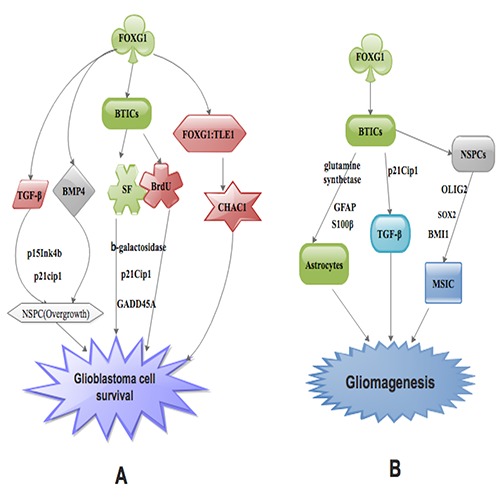
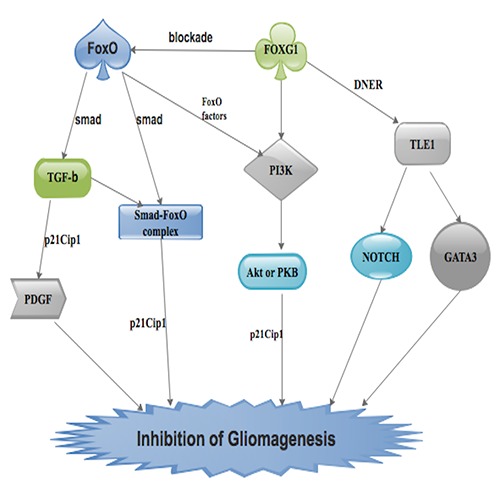
Glioblastoma (GB) is an extremely pugnacious brain cancer originating from neural stem (NS) cell-like cells. Forkhead box G1 (FOXG1; previously recognized as BF-1, qin, Chicken Brain Factor 1, or XBF-1 and renamed FOXG1 for mouse and human, and FoxG1 for other chordates) is an evolutionary preserved transcription factor driven from the forkhead box group of proteins FOXG1 modulates the speed of neurogenesis by maintaining progenitor cells in a proliferative mode as well as obstructing their differentiation into neurons during the initial periods of cortical formation. FOXG1 has been implicated in the formation of central nervous system (CNS) tumors and precisely GBs. Pathophysiologically, joint actions of FOXG1 and phosphatidylinositol- 3-kinases (PI3K) intermediate in intrinsic resistance of human GB cells to transforming growth factor-beta (TGF-β) stimulation of cyclin-dependent kinase inhibitor 1(p21Cip1) as well as growth inhibition. FOXG1 and NOTCH signaling pathways may functionally interrelate at different stages to facilitate gliomagenesis. Furthermore, FoxG1 actively contributed to the formation of transcription suppression complexes with corepressors of the Groucho/transducin-like Enhancer of split (Gro/TLEs). Also, FOXG1 was stimulated by Gro/TLE1 and abridged by Grg6. FOXG1 silencing in brain tumor-initiating cells (BTICs) also resulted in diminished secretion of markers characteristic undifferentiated natural neural stem/progenitor cells (NSPC) states, such as Oligodendrocyte transcription factor (OLIG2), (sex determining region Y)-box 2. (SOX2) and B lymphoma Mo-MLV insertion region 1 homolog (BMI1). This review therefore focuses on the pathogenic and biomarker potentials of FOXG1 in GB.
胶质母细胞瘤(GB)是一种起源于神经干细胞样细胞的极具侵袭性的脑癌。叉头框G1(FOXG1;以前被称为BF-1、qin、鸡脑因子1或XBF-1,在小鼠和人类中重新命名为FOXG1,在其他脊索动物中为FoxG1)是一种进化保守的转录因子,属于叉头框蛋白家族。FOXG1通过维持祖细胞的增殖模式以及在皮质形成初期阻碍其分化为神经元来调节神经发生的速度。FOXG1与中枢神经系统(CNS)肿瘤尤其是GB的形成有关。在病理生理学上,FOXG1和磷脂酰肌醇-3-激酶(PI3K)的联合作用介导了人类GB细胞对转化生长因子-β(TGF-β)刺激细胞周期蛋白依赖性激酶抑制剂1(p21Cip1)的内在抗性以及生长抑制。FOXG1和NOTCH信号通路可能在不同阶段在功能上相互关联以促进胶质瘤的发生。此外,FoxG1积极参与与Groucho/分裂样转导蛋白增强子(Gro/TLEs)的共抑制因子形成转录抑制复合物。而且,FOXG1受到Gro/TLE1的刺激并被Grg6缩短。在脑肿瘤起始细胞(BTICs)中沉默FOXG1也导致未分化的天然神经干细胞/祖细胞(NSPC)状态特征性标志物的分泌减少,如少突胶质细胞转录因子(OLIG2)、(性别决定区Y)-盒2(SOX2)和B淋巴瘤Mo-MLV插入区1同源物(BMI1)。因此,本综述重点关注FOXG1在GB中的致病和生物标志物潜力。