Bulstrode Harry, Johnstone Ewan, Marques-Torrejon Maria Angeles, Ferguson Kirsty M, Bressan Raul Bardini, Blin Carla, Grant Vivien, Gogolok Sabine, Gangoso Ester, Gagrica Sladjana, Ender Christine, Fotaki Vassiliki, Sproul Duncan, Bertone Paul, Pollard Steven M
Medical Research Council (MRC) Centre for Regenerative Medicine.
Edinburgh Cancer Research UK Cancer Centre, University of Edinburgh, Edinburgh EH16 4UU, United Kingdom.
Genes Dev. 2017 Apr 15;31(8):757-773. doi: 10.1101/gad.293027.116. Epub 2017 May 2.
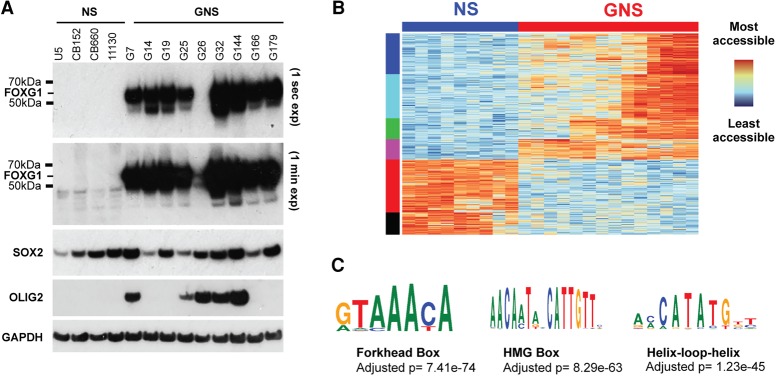
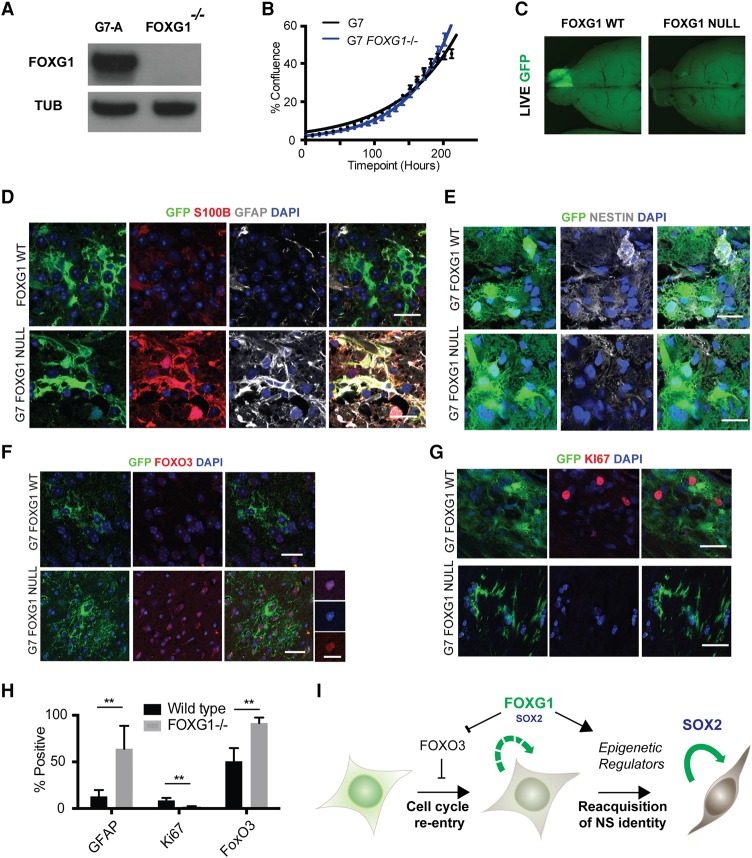
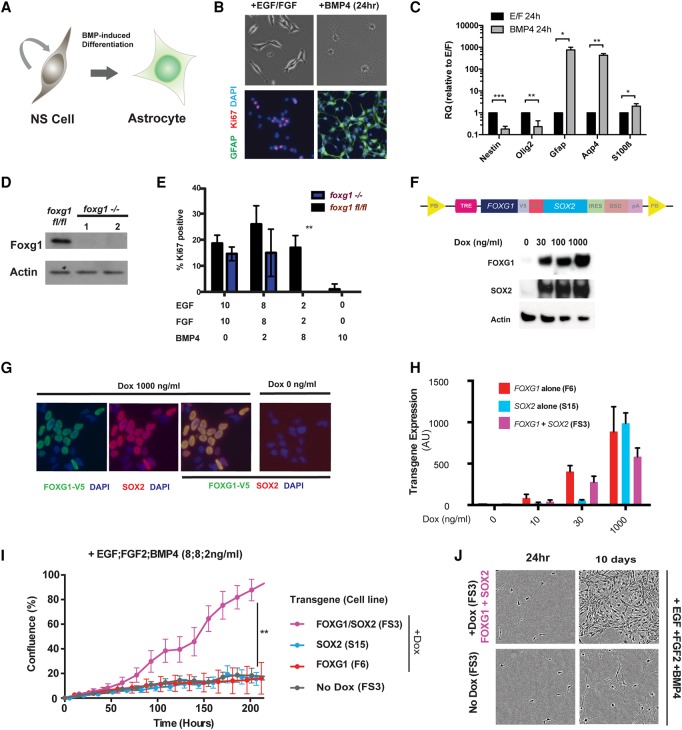
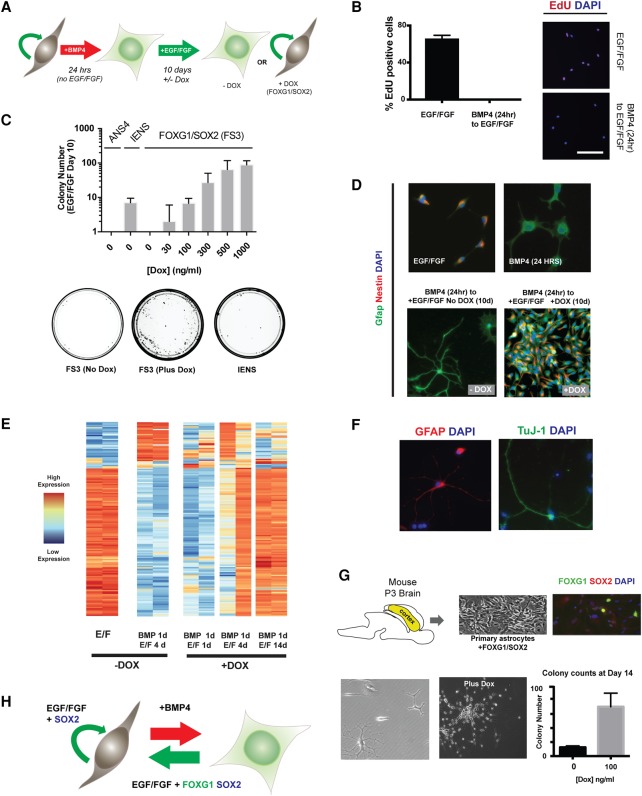
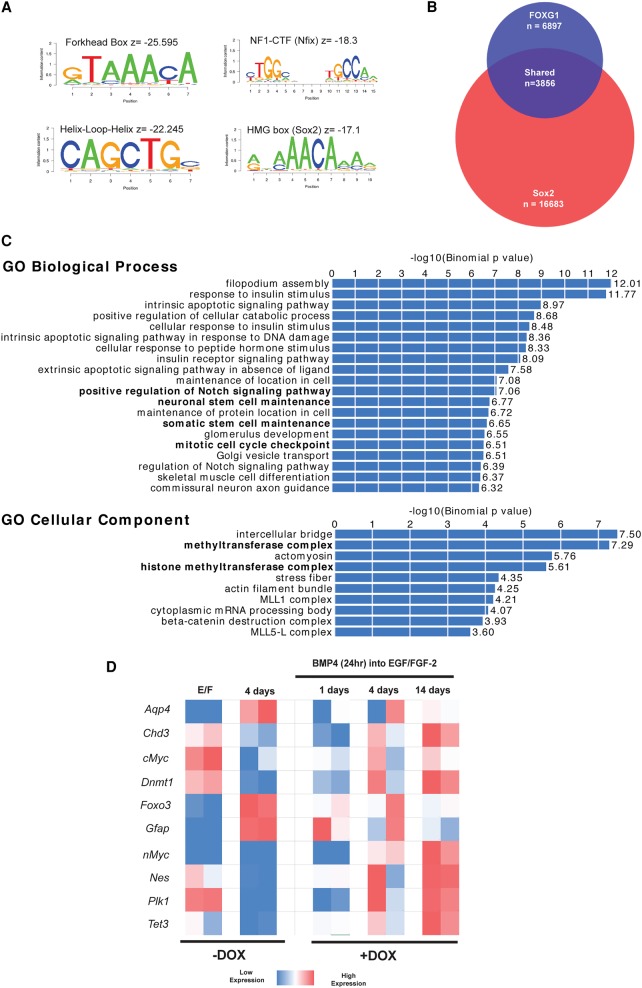
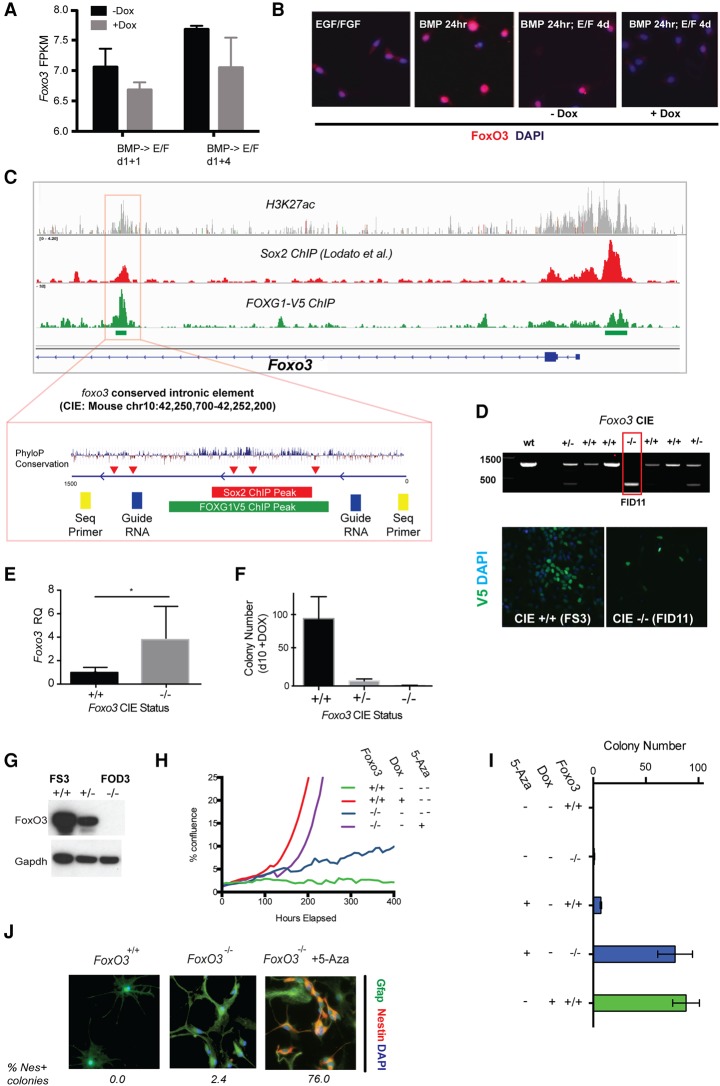
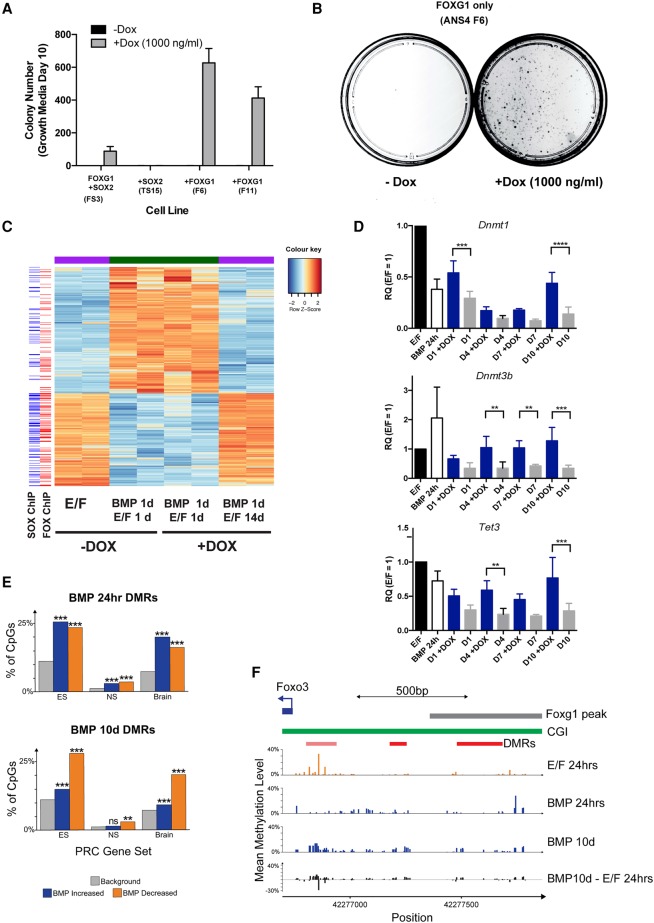
Glioblastoma multiforme (GBM) is an aggressive brain tumor driven by cells with hallmarks of neural stem (NS) cells. GBM stem cells frequently express high levels of the transcription factors FOXG1 and SOX2. Here we show that increased expression of these factors restricts astrocyte differentiation and can trigger dedifferentiation to a proliferative NS cell state. Transcriptional targets include cell cycle and epigenetic regulators (e.g., , , , , , and ). is a critical repressed downstream effector that is controlled via a conserved FOXG1/SOX2-bound -regulatory element. loss, combined with exposure to the DNA methylation inhibitor 5-azacytidine, enforces astrocyte dedifferentiation. DNA methylation profiling in differentiating astrocytes identifies changes at multiple polycomb targets, including the promoter of In patient-derived GBM stem cells, CRISPR/Cas9 deletion of does not impact proliferation in vitro; however, upon transplantation in vivo, -null cells display increased astrocyte differentiation and up-regulate FOXO3. In contrast, SOX2 ablation attenuates proliferation, and mutant cells cannot be expanded in vitro. Thus, FOXG1 and SOX2 operate in complementary but distinct roles to fuel unconstrained self-renewal in GBM stem cells via transcriptional control of core cell cycle and epigenetic regulators.
多形性胶质母细胞瘤(GBM)是一种侵袭性脑肿瘤,由具有神经干细胞(NS)特征的细胞驱动。GBM干细胞经常高水平表达转录因子FOXG1和SOX2。在此我们表明,这些因子表达的增加会限制星形胶质细胞分化,并可触发去分化为增殖性NS细胞状态。转录靶点包括细胞周期和表观遗传调节因子(例如, , , , ,和 )。 是一个关键的受抑制下游效应因子,其通过保守的FOXG1/SOX2结合的 -调节元件受到控制。 的缺失,结合DNA甲基化抑制剂5-氮杂胞苷的暴露,会促使星形胶质细胞去分化。分化中的星形胶质细胞的DNA甲基化谱分析确定了多个多梳靶点的变化,包括 的启动子。在患者来源的GBM干细胞中,CRISPR/Cas9介导的 的缺失在体外不影响增殖;然而,在体内移植后, 缺失的细胞显示出星形胶质细胞分化增加,并上调FOXO3。相反,SOX2的缺失会减弱增殖,突变细胞在体外无法扩增。因此,FOXG1和SOX2以互补但不同的作用方式,通过对核心细胞周期和表观遗传调节因子的转录控制,推动GBM干细胞不受限制的自我更新。