Biomedical Materials Science, School of Dentistry, University of Mississippi Medical Center, Jackson, Mississippi, USA.
J Biomed Mater Res B Appl Biomater. 2020 Oct;108(7):3022-3032. doi: 10.1002/jbm.b.34631. Epub 2020 May 12.
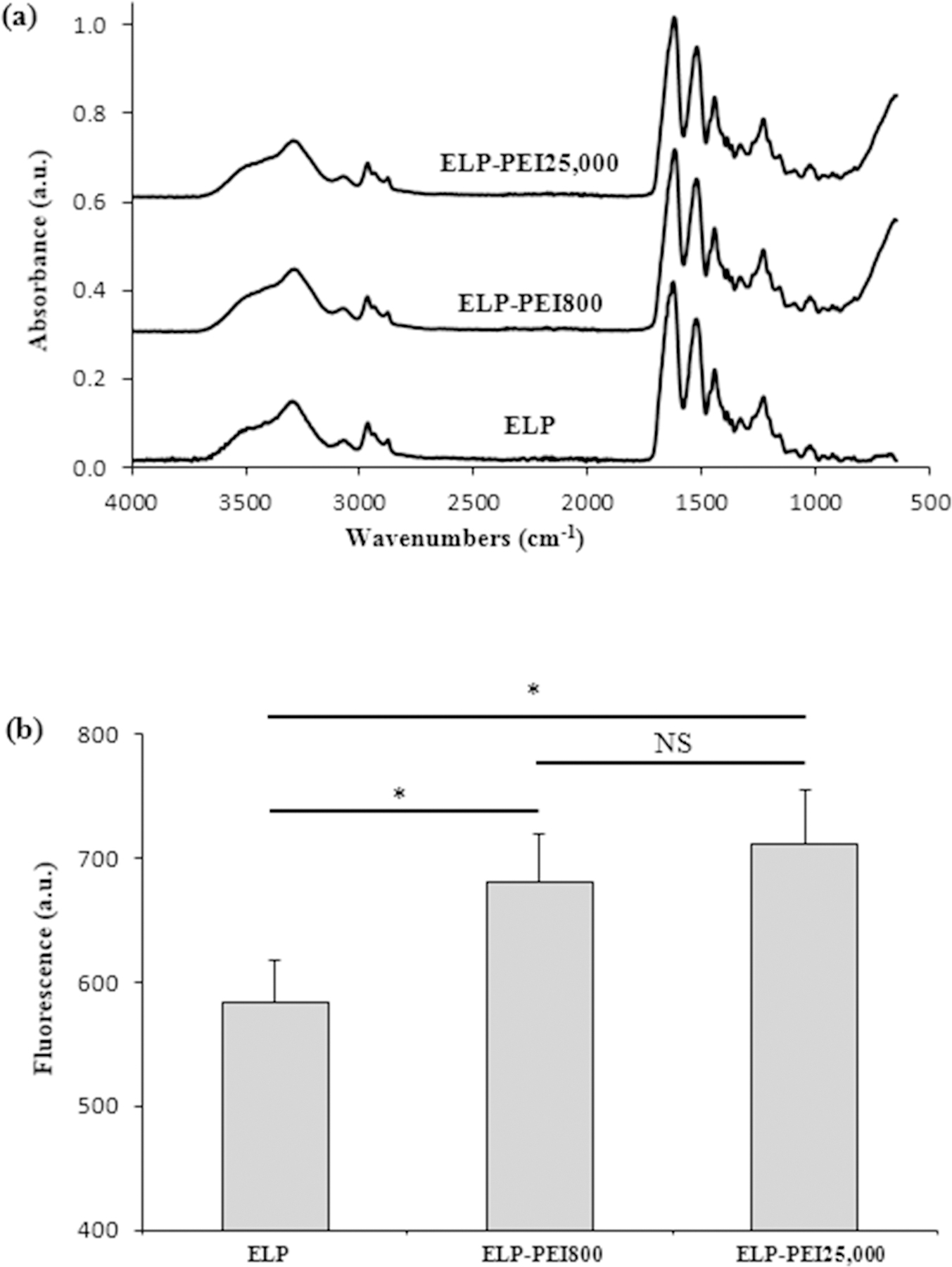
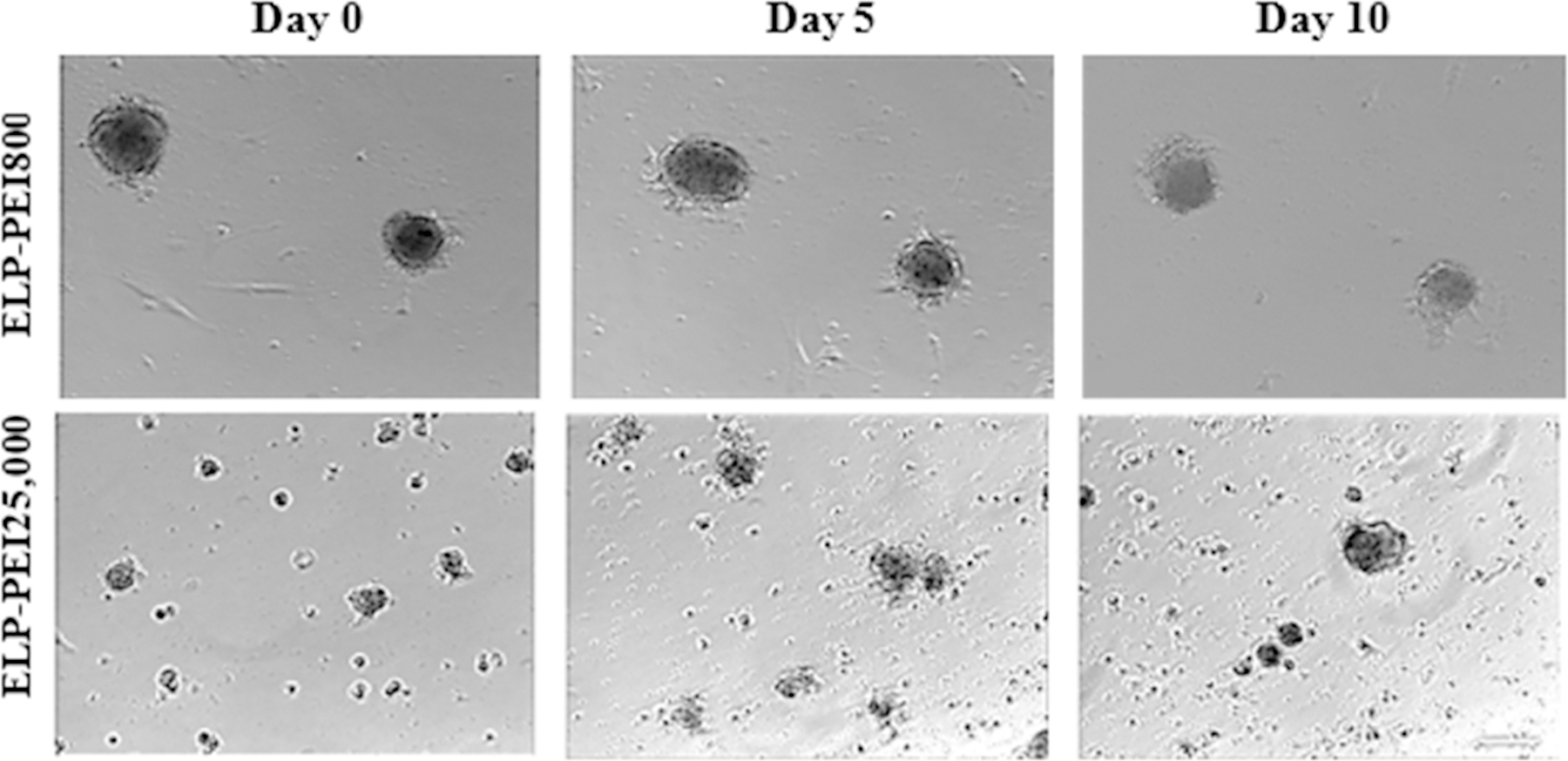
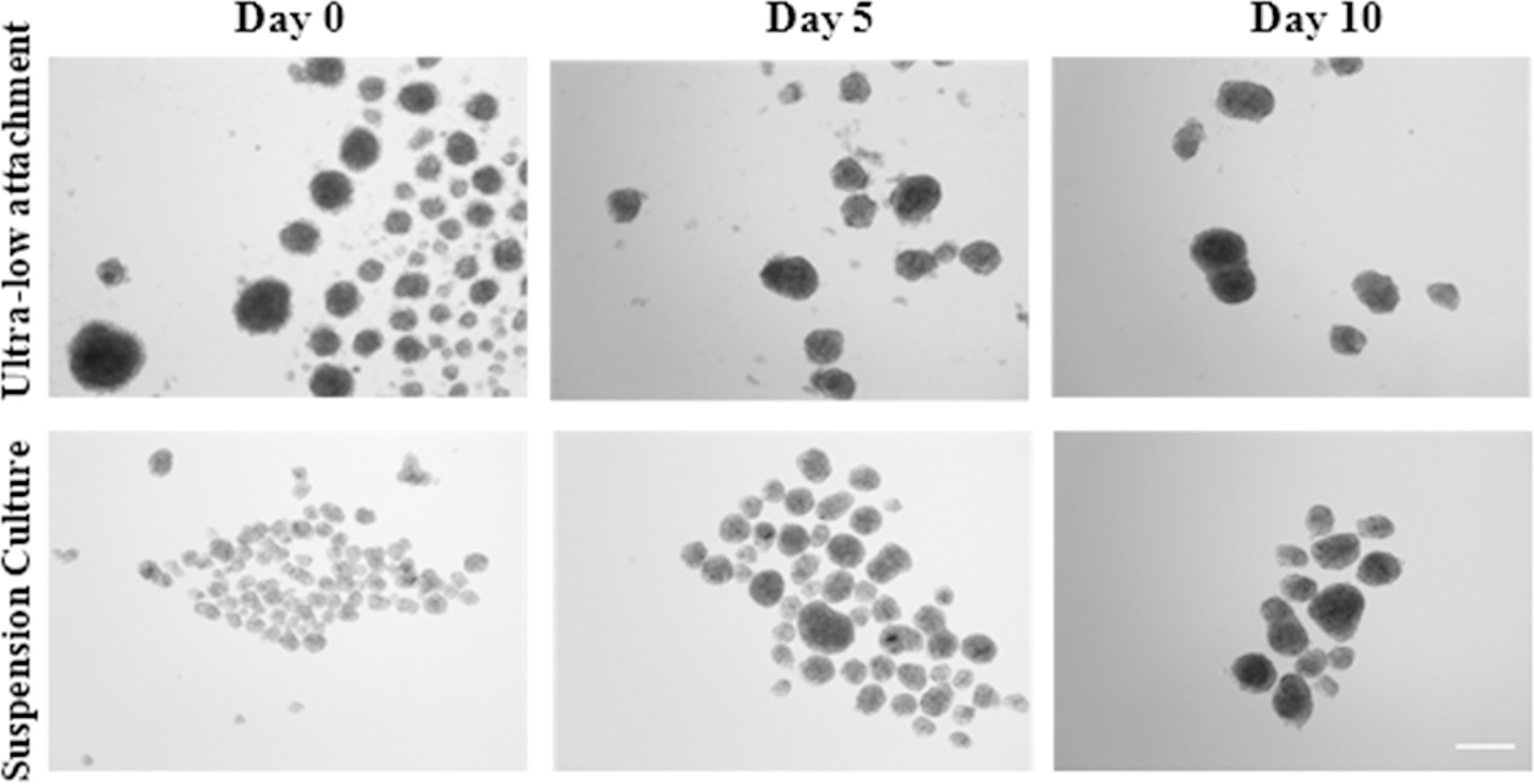
While three-dimensional spheroids outperform traditional two-dimensional monolayer culture for human adipose-derived stem cells (hASCs), there is not a consensus on the most successful method for enhancing their adipogenic differentiation and minimizing the loss of physiologically relevant, fatty spheroids during culture. To this end, we compared three culture methods, namely, elastin-like polypeptide-polyethyleneimine (ELP-PEI) coated surfaces, ultra-low attachment static culture, and suspension culture for their ability to form and retain productive hASC spheroids. The ELP-PEI coatings used the ELP conjugated to two molecular weights of PEI (800 or 25,000 g/mol). FTIR spectroscopy, atomic force microscopy, and contact angle goniometry revealed that the ELP-PEI coatings had similar chemical structures, surface topography, and hydrophobicity. Time-lapse microscopy showed that increasing the PEI molecular weight resulted in smaller spheroids. Measurement of triglyceride content showed that the three methods induced comparable differentiation of hASCs toward the adipogenic lineage. DNA content and morphometric analysis revealed merging of spheroids to form larger spheroids in the ultra-low attachment static culture and suspension culture methods. In contrast, the retention of hASC spheroid sizes and numbers with a regular spheroid size (~100 μm) were best atop the ELP-PEI800 coatings. Overall, this research shows that the spheroid culture atop the ELP-PEI coatings is a suitable cell culture model for future studies involving long-term, three-dimensional culture of mature adipocytes derived from hASCs.
虽然三维球体培养在人脂肪来源干细胞(hASCs)方面优于传统的二维单层培养,但对于如何最有效地增强其成脂分化并在培养过程中最小化生理相关的脂肪球体损失,尚未达成共识。为此,我们比较了三种培养方法,即弹性蛋白样多肽-聚乙烯亚胺(ELP-PEI)涂层表面、超低附着静态培养和悬浮培养,以评估它们形成和保留有活力的 hASC 球体的能力。所使用的 ELP-PEI 涂层是通过将 ELP 与两种分子量的 PEI(800 或 25,000 g/mol)偶联得到的。傅里叶变换红外光谱、原子力显微镜和接触角测量表明,ELP-PEI 涂层具有相似的化学结构、表面形貌和疏水性。延时显微镜显示,增加 PEI 分子量会导致球体变小。三酰甘油含量的测量表明,这三种方法均可诱导 hASCs 向成脂谱系进行类似的分化。DNA 含量和形态计量分析显示,超低附着静态培养和悬浮培养方法中,球体融合形成更大的球体。相比之下,在 ELP-PEI800 涂层上,hASC 球体的大小和数量得以保持,且球体大小规则(约 100 μm)。总体而言,这项研究表明,ELP-PEI 涂层上的球体培养是一种合适的细胞培养模型,可用于未来涉及 hASC 来源的成熟脂肪细胞的长期三维培养的研究。