Dermatology, Mie University, Graduate School of Medicine, Tsu, Mie 514-8507, Japan.
Dermatology, Shimane University Faculty of Medicine, Izumo, Shimane 693-8501, Japan.
Int J Mol Sci. 2020 May 9;21(9):3367. doi: 10.3390/ijms21093367.
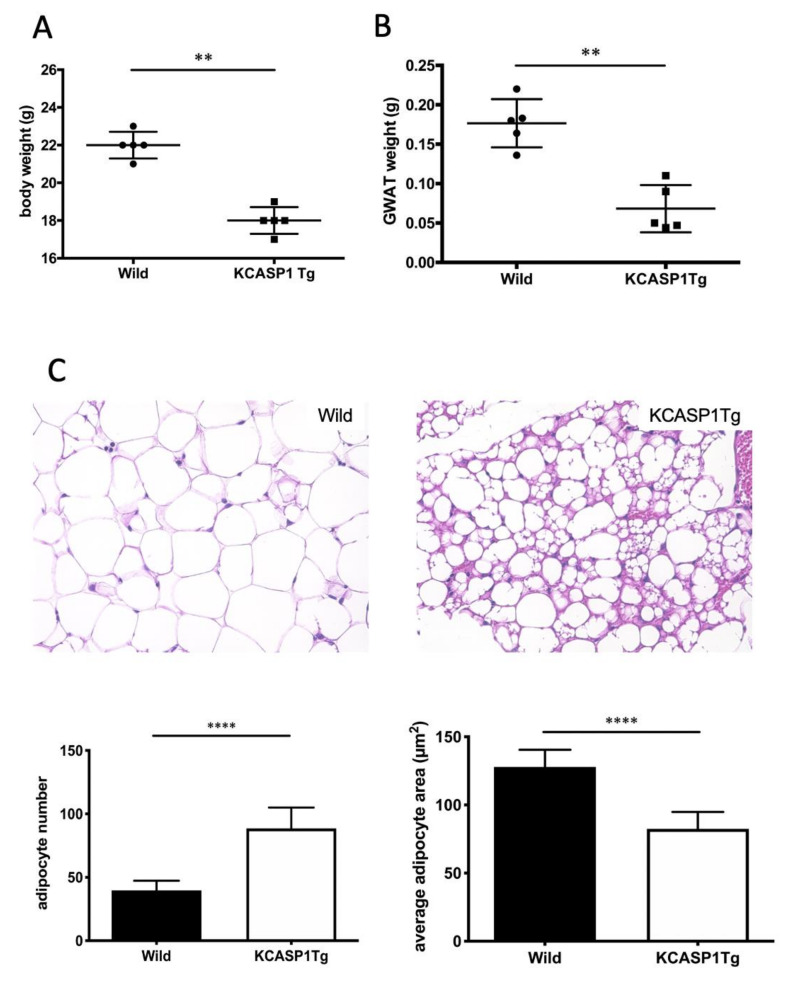
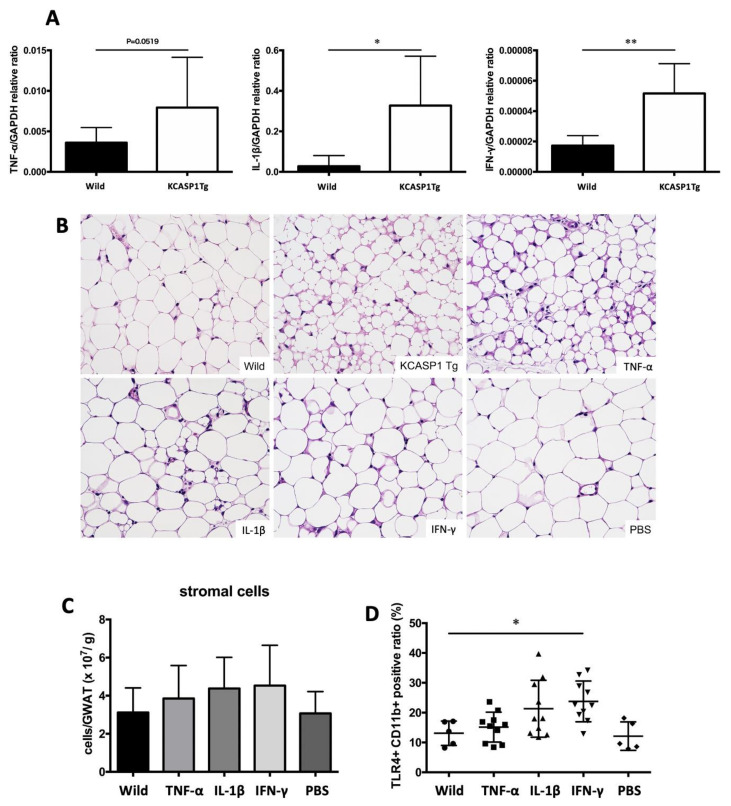
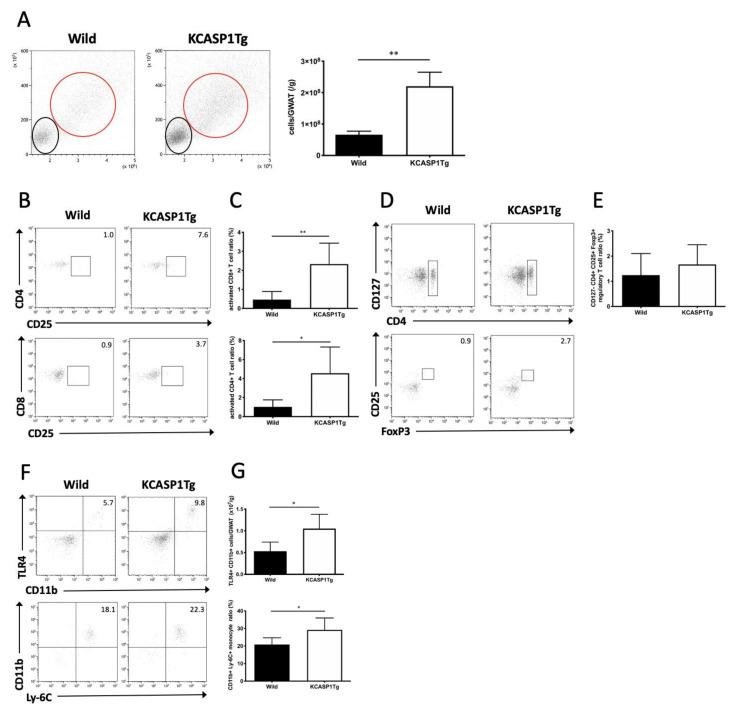
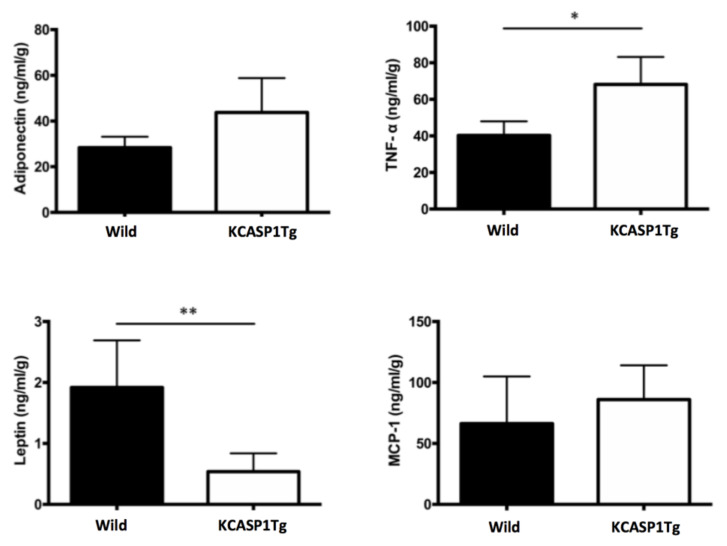
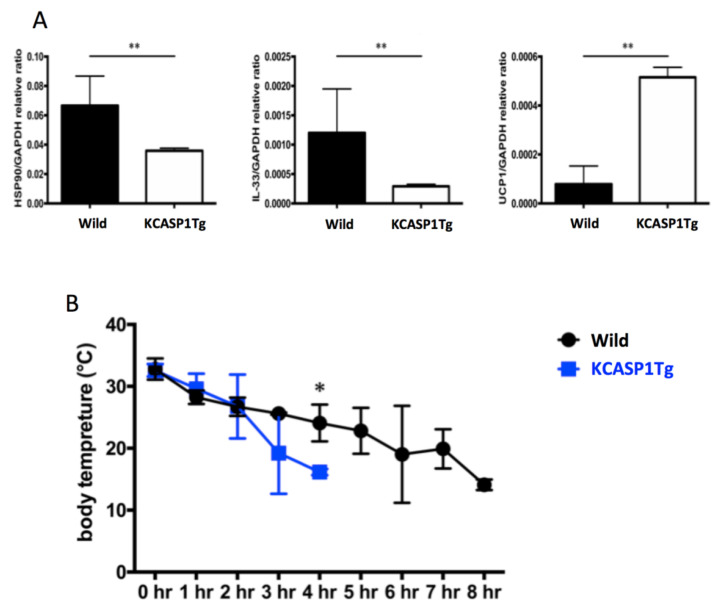
Adipose tissue (AT) is the largest endocrine organ, producing bioactive products called adipocytokines, which regulate several metabolic pathways, especially in inflammatory conditions. On the other hand, there is evidence that chronic inflammatory skin disease is closely associated with vascular sclerotic changes, cardiomegaly, and severe systemic amyloidosis in multiple organs. In psoriasis, a common chronic intractable inflammatory skin disease, several studies have shown that adipokine levels are associated with disease severity. Chronic skin disease is also associated with metabolic syndrome, including abnormal tissue remodeling; however, the mechanism is still unclear. We addressed this problem using keratin 14-specific caspase-1 overexpressing transgenic (KCASP1Tg) mice with severe erosive dermatitis from 8 weeks of age, followed by re-epithelization. The whole body and gonadal white AT (GWAT) weights were decreased. Each adipocyte was large in number, small in size and irregularly shaped; abundant inflammatory cells, including activated CD4+ or CD8+ T cells and toll-like receptor 4/CD11b-positive activated monocytes, infiltrated into the GWAT. We assumed that inflammatory cytokine production in skin lesions was the key factor for this lymphocyte/monocyte activation and AT dysregulation. We tested our hypothesis that the AT in a mouse dermatitis model shows an impaired thermogenesis ability due to systemic inflammation. After exposure to 4 °C, the mRNA expression of the thermogenic gene uncoupling protein 1 in adipocytes was elevated; however, the body temperature of the KCASP1Tg mice decreased rapidly, revealing an impaired thermogenesis ability of the AT due to atrophy. Tumor necrosis factor (TNF)-α, IL-1β and interferon (INF)-γ levels were significantly increased in KCASP1Tg mouse ear skin lesions. To investigate the direct effects of these cytokines, BL/6 wild mice were administered intraperitoneal TNF-α, IL-1β and INF-γ injections, which resulted in small adipocytes with abundant stromal cell infiltration, suggesting those cytokines have a synergistic effect on adipocytes. The systemic dermatitis model mice showed atrophy of AT and increased stromal cells. These findings were reproducible by the intraperitoneal administration of inflammatory cytokines whose production was increased in inflamed skin lesions.
脂肪组织(AT)是最大的内分泌器官,产生称为脂肪细胞因子的生物活性产物,调节几种代谢途径,特别是在炎症情况下。另一方面,有证据表明,慢性炎症性皮肤病与血管硬化变化、心脏增大和多个器官的严重系统性淀粉样变性密切相关。在银屑病等常见的慢性难治性炎症性皮肤病中,几项研究表明脂肪细胞因子水平与疾病严重程度相关。慢性皮肤病也与代谢综合征有关,包括组织异常重塑;然而,其机制尚不清楚。我们使用从 8 周龄开始出现严重糜烂性皮炎的角质形成细胞 14 特异性半胱氨酸蛋白酶-1 过表达转基因(KCASP1Tg)小鼠来解决这个问题,随后进行了再上皮化。全身和性腺白色脂肪组织(GWAT)的重量减轻。每个脂肪细胞数量多,体积小且形状不规则;大量炎症细胞,包括活化的 CD4+或 CD8+T 细胞和 Toll 样受体 4/CD11b 阳性活化单核细胞,浸润到 GWAT 中。我们假设皮肤病变中的炎症细胞因子产生是这种淋巴细胞/单核细胞激活和 AT 失调的关键因素。我们测试了我们的假设,即皮炎模型中的 AT 由于全身炎症而表现出受损的产热能力。暴露于 4°C 后,脂肪细胞中解偶联蛋白 1 的产热基因的 mRNA 表达升高;然而,KCASP1Tg 小鼠的体温迅速下降,表明由于萎缩,AT 的产热能力受损。肿瘤坏死因子(TNF)-α、白细胞介素(IL)-1β 和干扰素(INF)-γ 在 KCASP1Tg 小鼠耳部皮损中的水平显著升高。为了研究这些细胞因子的直接作用,将 BL/6 野生型小鼠给予 TNF-α、IL-1β 和 INF-γ 腹腔内注射,导致脂肪细胞体积小,基质细胞浸润丰富,表明这些细胞因子对脂肪细胞具有协同作用。全身性皮炎模型小鼠表现出 AT 萎缩和基质细胞增加。这些发现通过腹腔内给予炎症细胞因子得以重现,这些细胞因子在炎症皮肤病变中产生增加。