Department of Dermatology, Mie University Graduate School of Medicine, 2-174 Edobashi, Tsu 514-8507, Japan.
Imai Adult and Pediatric Dermatology Clinic, 5-1-1 Ebie, Fukushima, Osaka 553-0001, Japan.
Int J Mol Sci. 2023 Feb 7;24(4):3310. doi: 10.3390/ijms24043310.
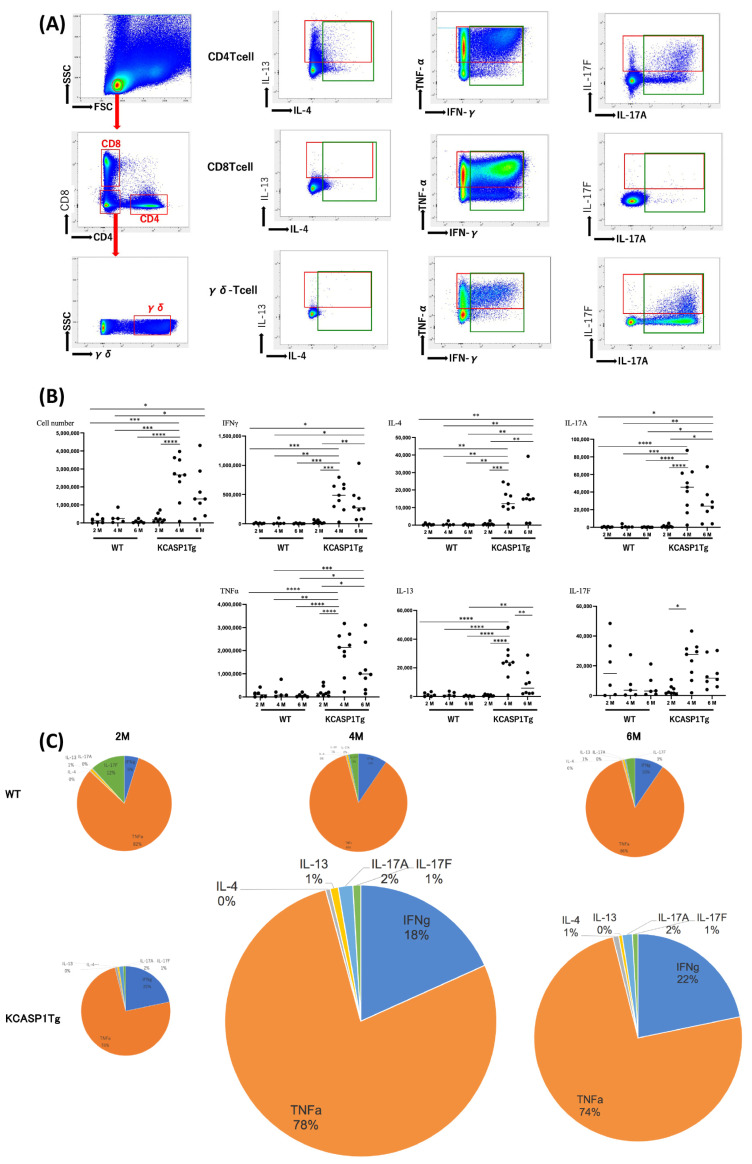
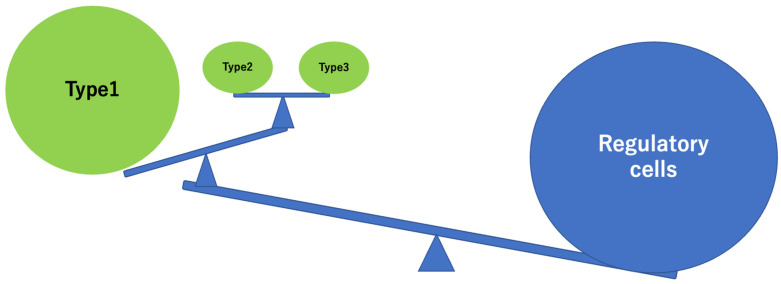
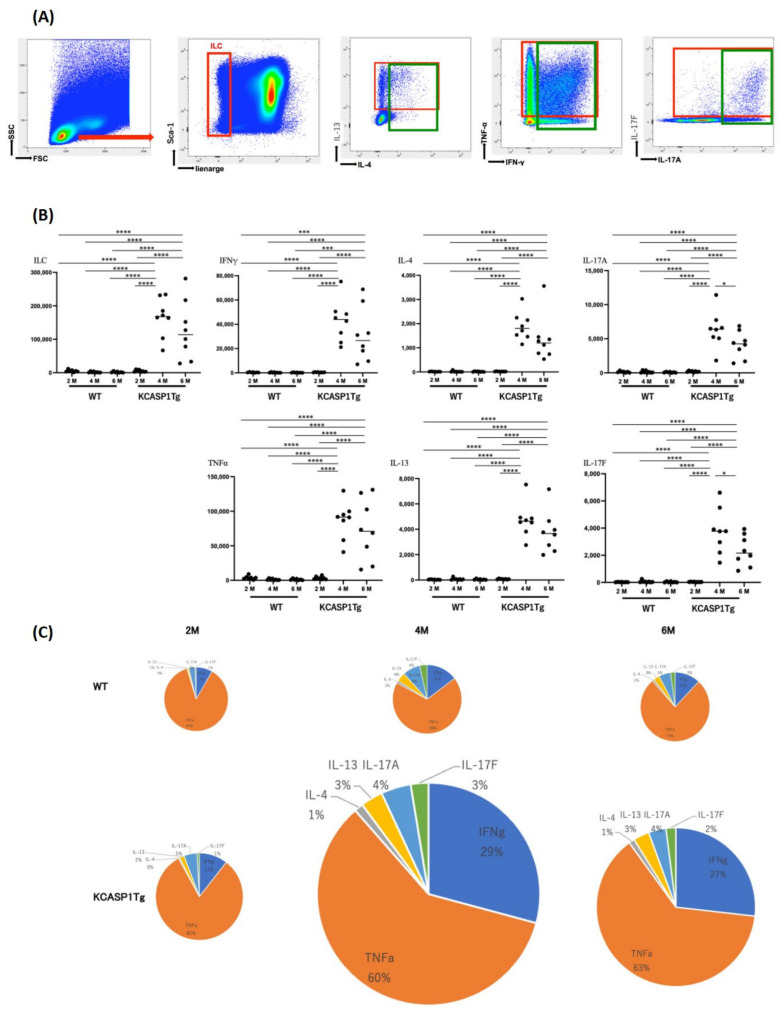
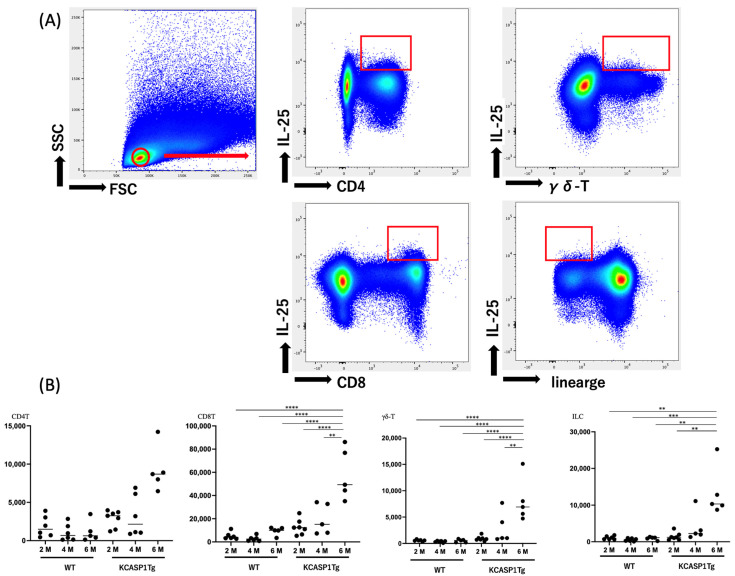
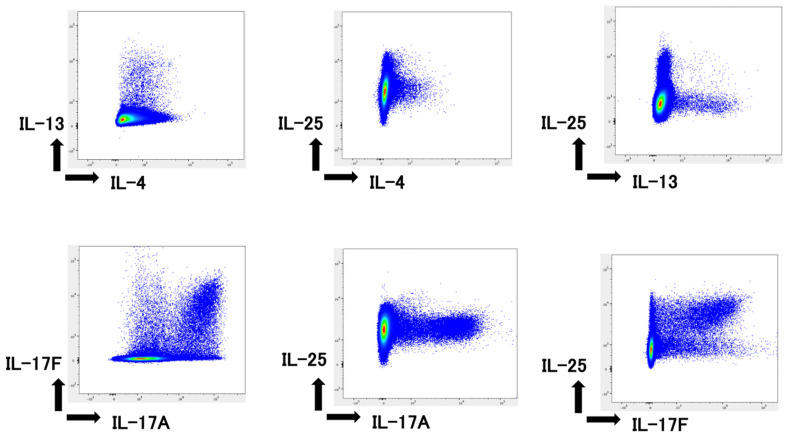
Atopic dermatitis (AD) is classified as a type 2 disease owing to the majority of type 2 lymphocytes that constitute the skin-infiltrating leukocytes. However, all of the type 1-3 lymphocytes intermingle in inflamed skin lesions. Here, using an AD mouse model where caspase-1 was specifically amplified under keratin-14 induction, we analyzed the sequential changes in type 1-3 inflammatory cytokines in lymphocytes purified from the cervical lymph nodes. Cells were cultured and stained for CD4, CD8, and γδTCR, followed by intracellular cytokines. Cytokine production in innate lymphocyte cells (ILCs) and the protein expression of type 2 cytokine IL-17E (IL-25) were investigated. We observed that, as inflammation progresses, the cytokine-producing T cells increased and abundant IL-13 but low levels of IL-4 are produced in CD4-positive T cells and ILCs. TNF-α and IFN-γ levels increased continuously. The total number of T cells and ILCs peaked at 4 months and decreased in the chronic phase. In addition, IL-25 may be simultaneously produced by IL-17F-producing cells. IL-25-producing cells increased in a time-dependent manner during the chronic phase and may work specifically for the prolongation of type 2 inflammation. Altogether, these findings suggest that inhibition of IL-25 may be a potential target in the treatment of inflammation.
特应性皮炎(AD)被归类为 2 型疾病,这是由于构成皮肤浸润白细胞的大多数 2 型淋巴细胞。然而,所有 1 型-3 型淋巴细胞都在炎症性皮肤损伤中混合存在。在这里,我们使用一种 AD 小鼠模型,其中半胱氨酸蛋白酶-1 在角蛋白 14 诱导下特异性扩增,分析了从颈淋巴结纯化的淋巴细胞中 1 型-3 型炎症细胞因子的顺序变化。对细胞进行培养和染色,用于 CD4、CD8 和 γδTCR,然后进行细胞内细胞因子染色。研究了先天淋巴细胞(ILCs)中的细胞因子产生和 2 型细胞因子 IL-17E(IL-25)的蛋白表达。我们观察到,随着炎症的进展,细胞因子产生 T 细胞增加,CD4 阳性 T 细胞和 ILCs 中产生大量的 IL-13,但 IL-4 水平较低。TNF-α 和 IFN-γ 水平持续增加。T 细胞和 ILCs 的总数在 4 个月时达到峰值,并在慢性期减少。此外,IL-25 可能由产生 IL-17F 的细胞同时产生。在慢性期,IL-25 产生细胞呈时间依赖性增加,可能专门用于延长 2 型炎症。总之,这些发现表明抑制 IL-25 可能是治疗炎症的一个潜在靶点。