Department of Life Sciences, National Cheng Kung University, Tainan, 701, Taiwan.
Orchid Research and Development Center, National Cheng Kung University, Tainan, 701, Taiwan.
BMC Plant Biol. 2020 May 12;20(1):212. doi: 10.1186/s12870-020-02402-7.
Phalaenopsis represents an important cash crop worldwide. Abundant flower colors observed in Phalaenopsis orchids range from red-purple, purple, purple-violet, violet, and violet-blue. However, violet-blue orchids are less bred than are those of other colors. Anthocyanin, vacuolar pH and metal ions are three major factors influencing flower color. This study aimed to identify the factors causing the violet-blue color in Phalaenopsis flowers and to analyze whether delphinidin accumulation and blue pigmentation formation can be achieved by transient overexpression of heterologous F3'5'H in Phalaenopsis.
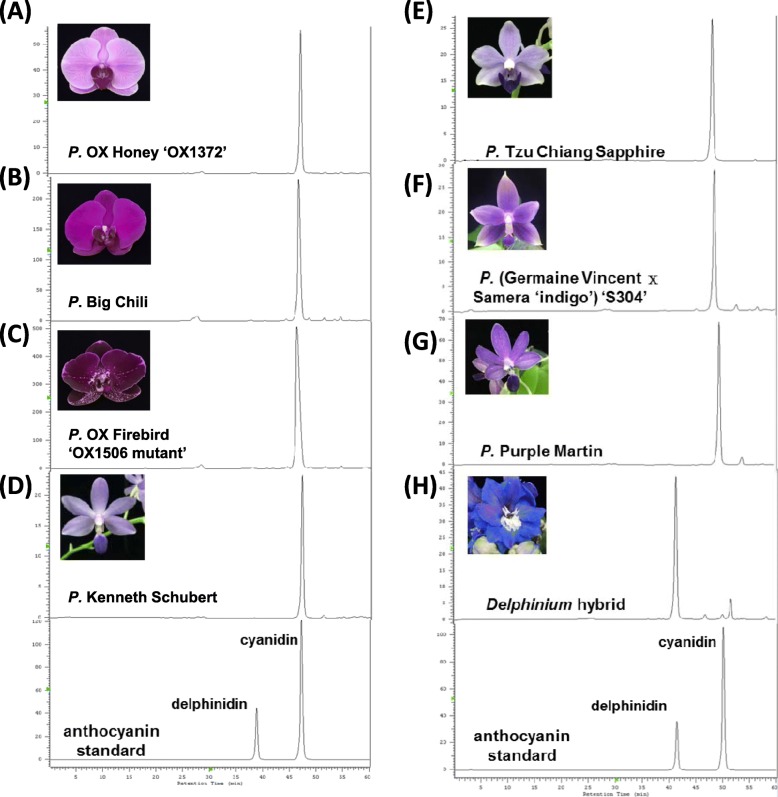
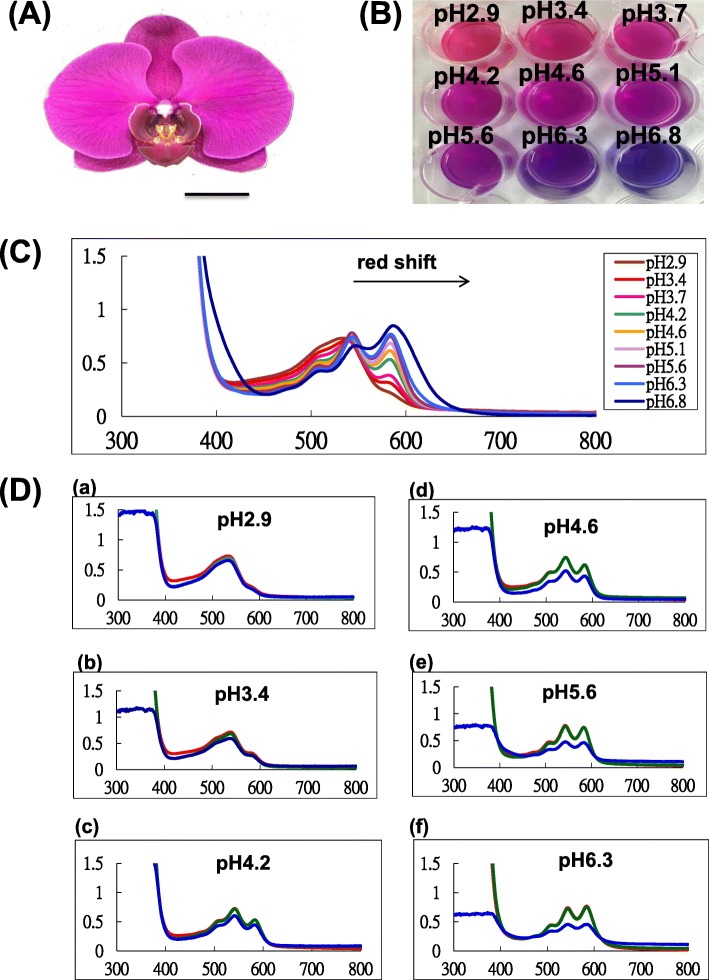
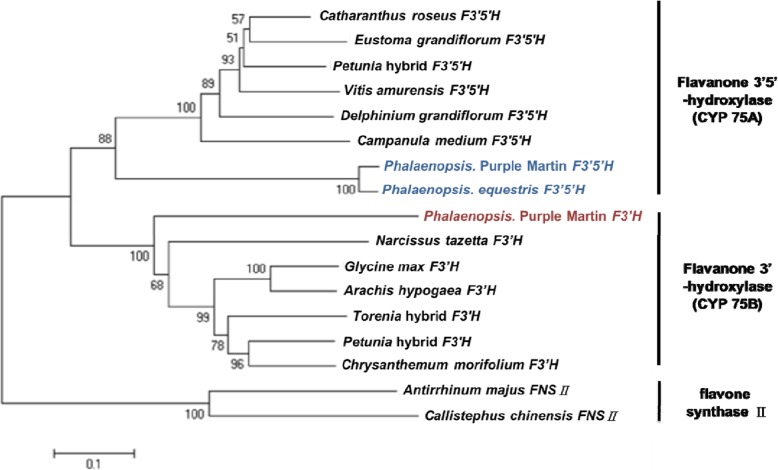
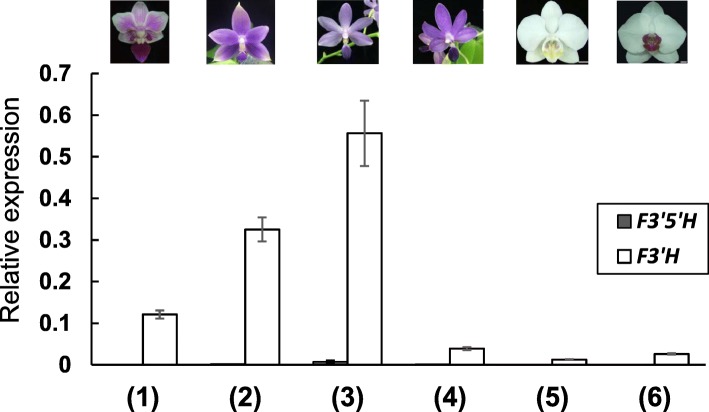
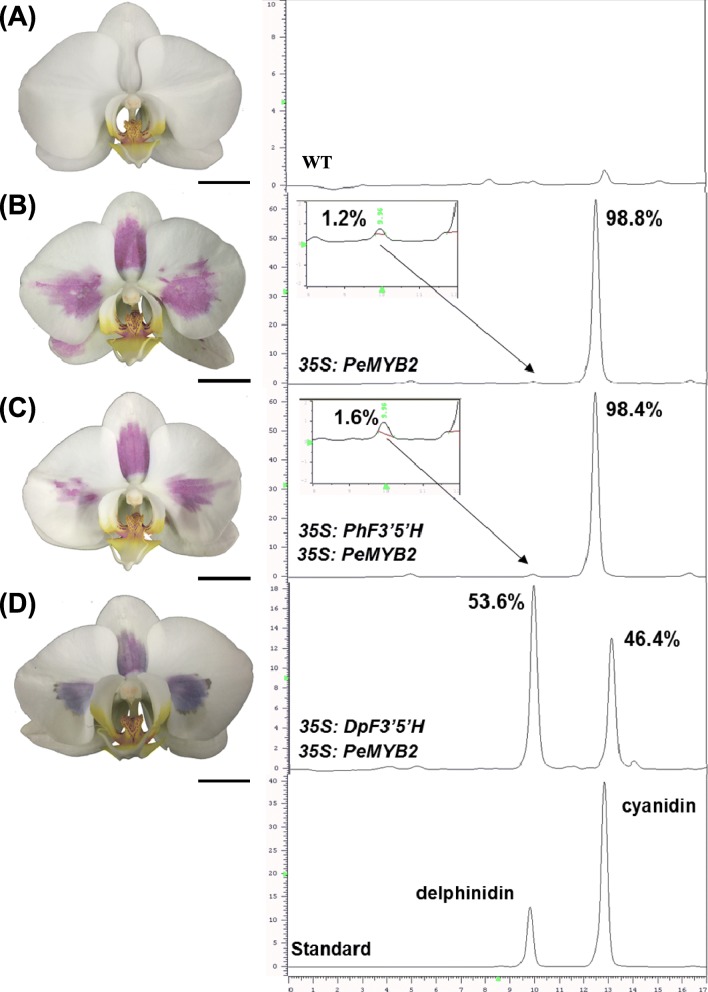
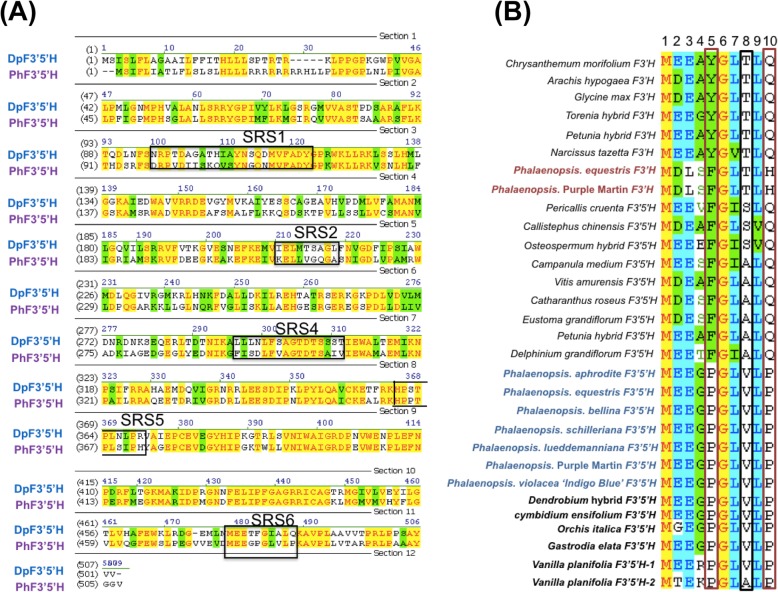
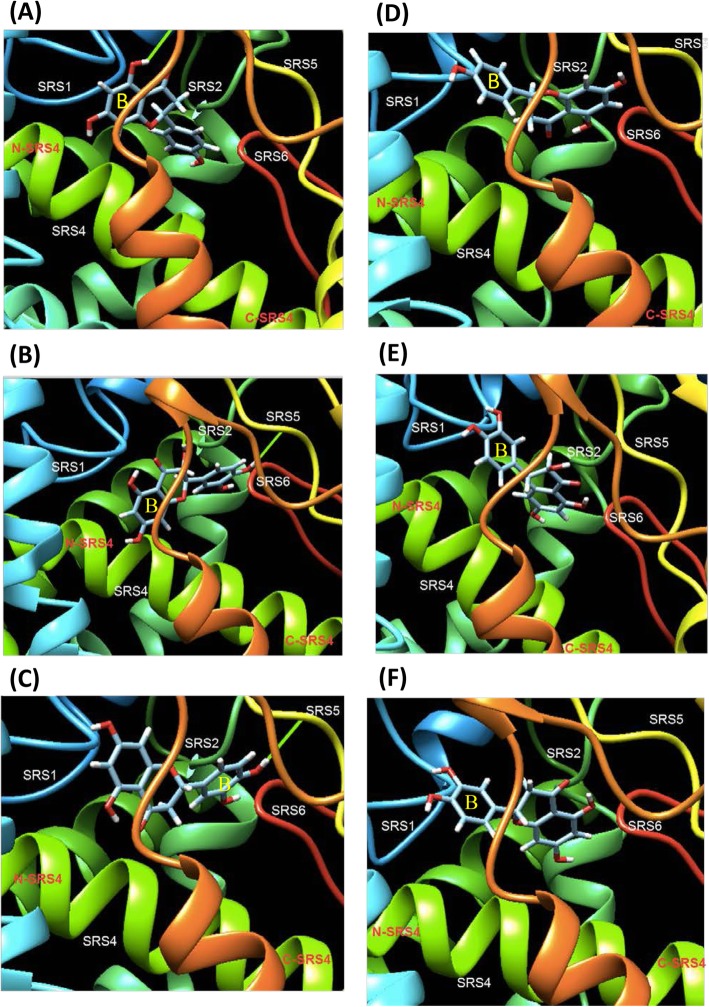
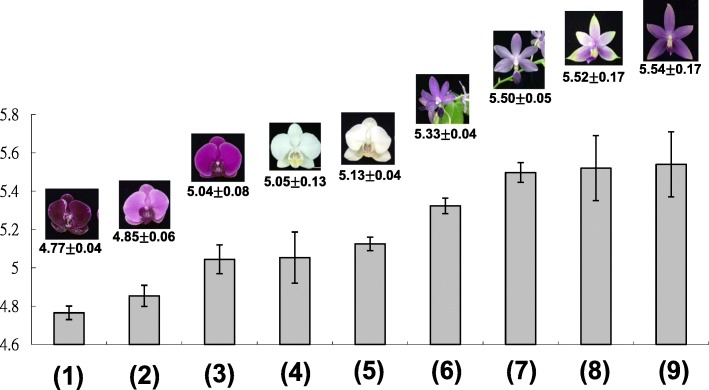
Cyanidin-based anthocyanin was highly accumulated in Phalaenopsis flowers with red-purple, purple, purple-violet, and violet to violet-blue color, but no true-blue color and no delphinidin was detected. Concomitantly, the expression of PeF3'H (Phalaenopsis equestrsis) was high, but that of PhF3'5'H (Phalaenopsis hybrid) was low or absent in various-colored Phalaenopsis flowers. Transient overexpression of DgF3'5'H (Delphinium grandiflorum) and PeMYB2 in a white Phalaenopsis cultivar resulted a 53.6% delphinidin accumulation and a novel blue color formation. In contrast, transient overexpression of both PhF3'5'H and PeMYB2 did not lead to delphinidin accumulation. Sequence analysis showed that the substrate recognition site 6 (SRS6) of PhF3'5'H was consistently different from DgF3'5'Hs at positions 5, 8 and 10. Prediction of molecular docking of the substrates showed a contrary binding direction of aromatic rings (B-ring) with the SRS6 domain of DgF3'5'H and PhF3'5'H. In addition, the pH values of violet-blue and purple Phalaenopsis flowers ranged from 5.33 to 5.54 and 4.77 to 5.04, respectively. Furthermore, the molar ratio of metal ions (including Al, Ca and Fe) to anthocyanin in violet-blue color Phalaenopsis was 190-, 49-, and 51-fold higher, respectively, than those in purple-color Phalaenopsis.
Cyanidin-based anthocyanin was detected in violet-blue color Phalaenopsis and was concomitant with a high pH value and high molar ratio of Al, Ca and Fe to anthocyanin content. Enhanced expression of delphinidin is needed to produce true-blue Phalaenopsis.
蝴蝶兰是全球重要的经济作物。蝴蝶兰花色丰富,有红紫色、紫色、紫红色、紫色、蓝紫色等。然而,与其他颜色的蝴蝶兰相比,蓝紫色蝴蝶兰的繁殖较少。花色主要受花色苷、液泡 pH 值和金属离子三个因素的影响。本研究旨在鉴定蝴蝶兰花呈蓝紫色的原因,并分析通过瞬时过表达异源 F3'5'H 是否可以在蝴蝶兰中积累飞燕草素并形成蓝色色素。
在具有红紫色、紫色、紫红色和紫罗兰色至蓝紫色的蝴蝶兰花中,积累了大量的基于矢车菊素的花色素苷,但未检测到真正的蓝色和飞燕草素。同时,PeF3'H(蝴蝶兰 equestrsis)的表达水平较高,而 PhF3'5'H(蝴蝶兰杂交种)在各种颜色的蝴蝶兰花中表达水平较低或不存在。在白色蝴蝶兰品种中瞬时过表达 DgF3'5'H(翠雀花)和 PeMYB2 可导致 53.6%的飞燕草素积累和新的蓝色形成。相比之下,瞬时过表达 PhF3'5'H 和 PeMYB2 并不导致飞燕草素的积累。序列分析表明,PhF3'5'H 的底物识别位点 6(SRS6)在位置 5、8 和 10 处与 DgF3'5'H 始终不同。对底物分子对接的预测表明,DgF3'5'H 和 PhF3'5'H 的 SRS6 结构域与芳香环(B 环)的结合方向相反。此外,蓝紫色和紫色蝴蝶兰花的 pH 值分别为 5.33 至 5.54 和 4.77 至 5.04。此外,在蓝紫色蝴蝶兰中,金属离子(包括 Al、Ca 和 Fe)与花色苷的摩尔比分别比紫色蝴蝶兰高 190 倍、49 倍和 51 倍。
在蓝紫色蝴蝶兰中检测到基于矢车菊素的花色素苷,同时具有较高的 pH 值和较高的 Al、Ca 和 Fe 与花色苷含量的摩尔比。需要增强飞燕草素的表达才能产生真正的蓝色蝴蝶兰。