Department of Epidemiology and Health Statistics, School of Public Health, Beijing Municipal Key Laboratory of Clinical Epidemiology, Capital Medical University, Beijing, 100069, China.
Geriatric Department, Emergency General Hospital, Beijing, 100028, China.
Transl Psychiatry. 2020 May 12;10(1):145. doi: 10.1038/s41398-020-0822-x.
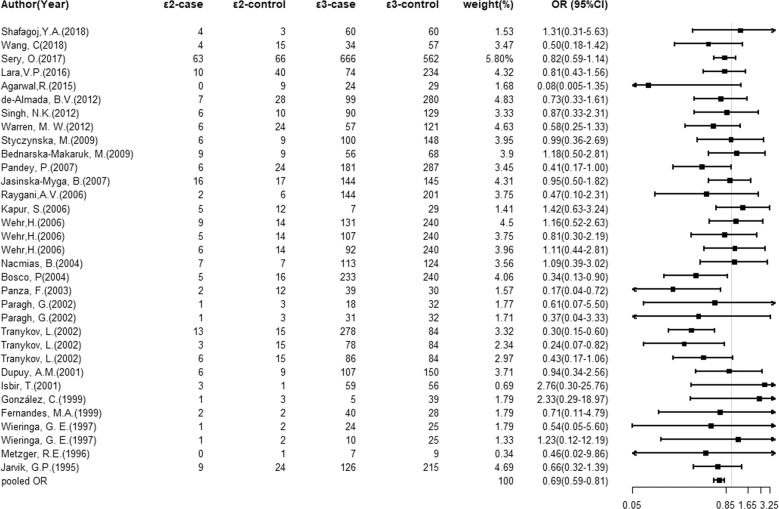
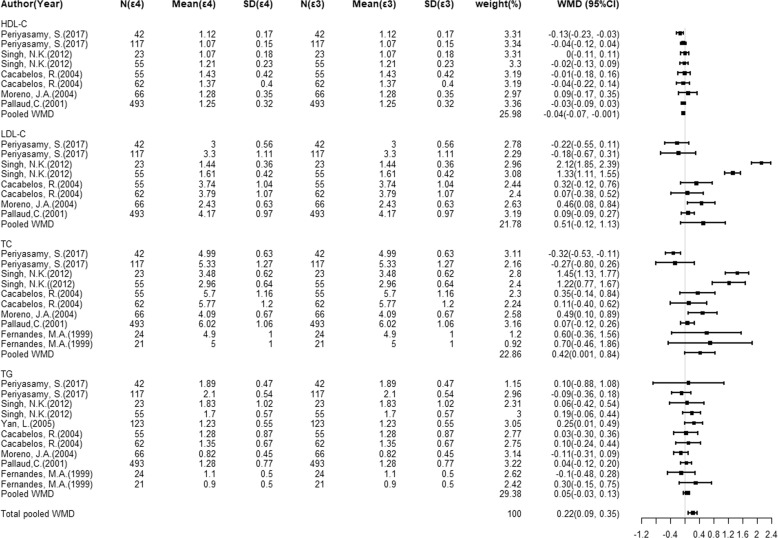
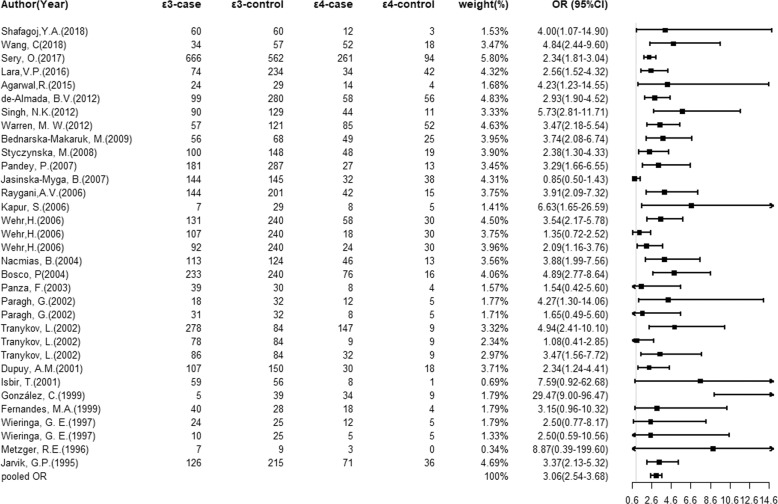
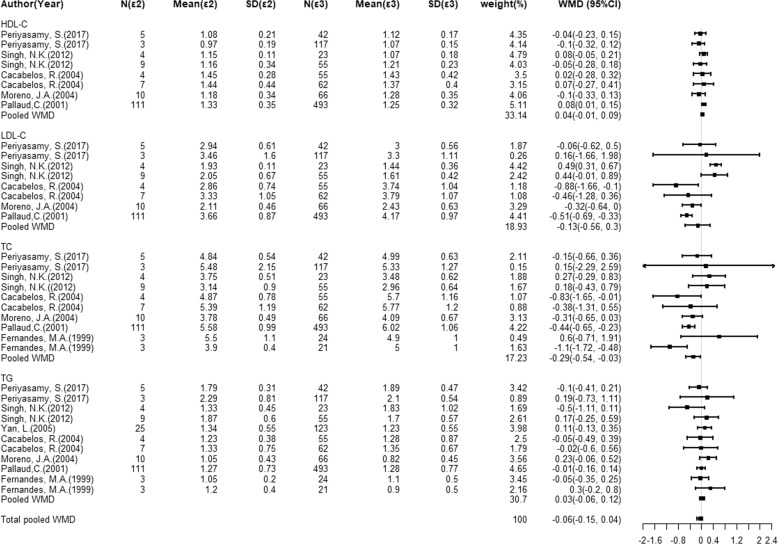
Prospective studies have shown that abnormally circulating cholesterol is associated with the risk of dementia. However, whether the association is causal or not remains unclear. We attempt to infer the causal association in a MR meta-analysis by using ApoE gene polymorphisms as instrument variables. Studies with dementia risk (27 studies) or circulating lipid levels (7 studies) were included, with totally 3136 dementia patients and 3103 healthy controls. The analyses showed that carriers of ε2 allele significantly were of decreased risk of AD (OR = 0.70; 95% CI: 0.58-0.84; P < 0.01), whereas carriers of ε4 allele were of increased risk of AD (OR = 3.62; 95% CI: 3.03-4.32; P < 0.05), compared to these of ε3 allele. Circulating TC was significantly reduced in carriers of ε2 allele (WMD = - 0.29 mmol/L; 95% CI: -0.54 to -0.03; P < 0.05) and increased in carriers of ε4 allele (WMD = 0.42 mmol/l; 95% CI: 0.001-0.84; P < 0.05). In addition, carriers of ε4 allele had reduction in circulating HDL-C (WMD = - 0.04 mmol/L; 95% CI: - 0.07 to -0.001; P < 0.05). In comparing allele ε2 with ε3, the predicted OR of having AD for 1 mg/dL increment in circulating TC was 0.97 (95% CI: 0.86-0.98; P < 0.05). Comparing allele ε4 with ε3, the predicted OR for a 1 mg/dL increment in TC was 1.08 (95% CI: 1.05-17.58; P < 0.05), and reduction in HDL-C was 2.30 (95% CI: 1.51-43.99; P < 0.05). Our findings demonstrate that high circulating TC and reduced HDL-C levels might be potential risk factors of the development of AD.
前瞻性研究表明,循环胆固醇异常与痴呆风险相关。然而,这种关联是否具有因果关系尚不清楚。我们试图通过使用载脂蛋白 E 基因多态性作为工具变量,在 MR 荟萃分析中推断因果关系。纳入了具有痴呆风险(27 项研究)或循环脂质水平(7 项研究)的研究,共纳入 3136 名痴呆患者和 3103 名健康对照者。分析结果显示,ε2 等位基因携带者患 AD 的风险显著降低(OR=0.70;95%CI:0.58-0.84;P<0.01),而 ε4 等位基因携带者患 AD 的风险增加(OR=3.62;95%CI:3.03-4.32;P<0.05),与 ε3 等位基因携带者相比。ε2 等位基因携带者的循环 TC 显著降低(WMD=-0.29mmol/L;95%CI:-0.54 至-0.03;P<0.05),而 ε4 等位基因携带者的循环 TC 升高(WMD=0.42mmol/L;95%CI:0.001-0.84;P<0.05)。此外,ε4 等位基因携带者的循环 HDL-C 降低(WMD=-0.04mmol/L;95%CI:-0.07 至-0.001;P<0.05)。比较等位基因 ε2 与 ε3,循环 TC 每增加 1mg/dL,AD 的预测 OR 为 0.97(95%CI:0.86-0.98;P<0.05)。比较等位基因 ε4 与 ε3,TC 每增加 1mg/dL,预测 OR 为 1.08(95%CI:1.05-17.58;P<0.05),HDL-C 降低 2.30(95%CI:1.51-43.99;P<0.05)。我们的研究结果表明,高循环 TC 和低 HDL-C 水平可能是 AD 发展的潜在危险因素。