Zhang Ming-duo, Gu Wei, Qiao Shi-bin, Zhu En-jun, Zhao Quan-ming, Lv Shu-zheng
Department of Cardiology, Beijing Anzhen Hospital, Capital Medical University, Beijing, China; Beijing Institute of Heart, Lung and Blood Vessel Diseases, Beijing, China.
Department of Cardiology, The Fourth Affiliated Hospital of Anhui Medical University, Anhui, China.
PLoS One. 2014 Apr 22;9(4):e95463. doi: 10.1371/journal.pone.0095463. eCollection 2014.
Numerous studies have evaluated the association between the apolipoprotein E (apoE) gene polymorphisms in coronary heart disease (CHD). However, the results remain uncertain. We carried out a meta-analysis to derive a more comprehensive estimation of the association in Chinese population.
Case-control studies in Chinese and English publications were identified by searching databases of PubMed, EMBASE, Web of Science, CNKI, CBM, Wanfang, VIP and hand searching of relevant journals and the reference lists of retrieved articles. Odds ratio (OR) and 95% confidence interval (CI) were applied to assess the strength of the associations. Subgroup analysis and sensitivity analysis were performed to explore the between-study heterogeneity.
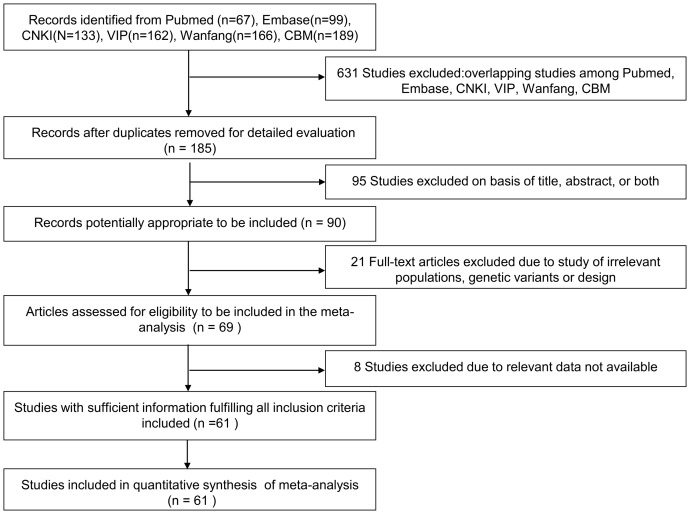
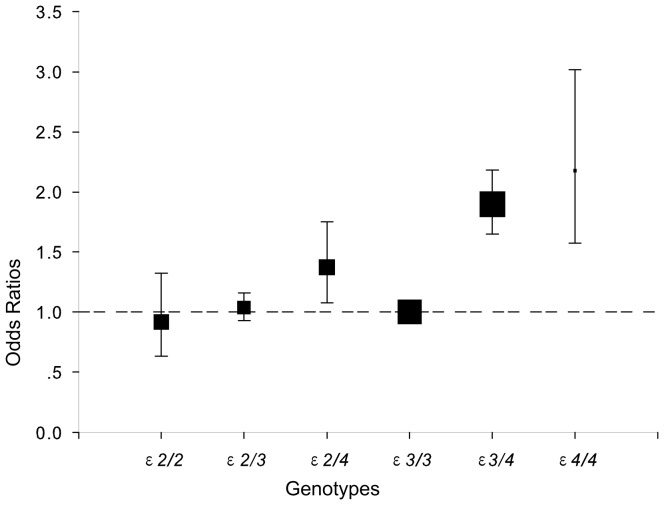
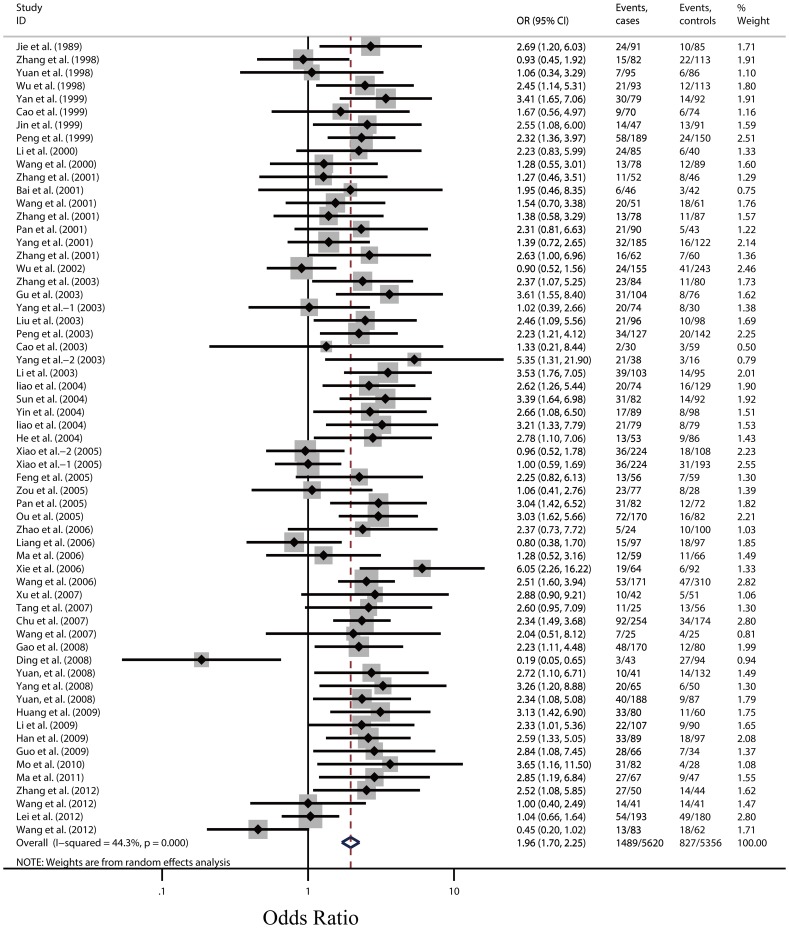
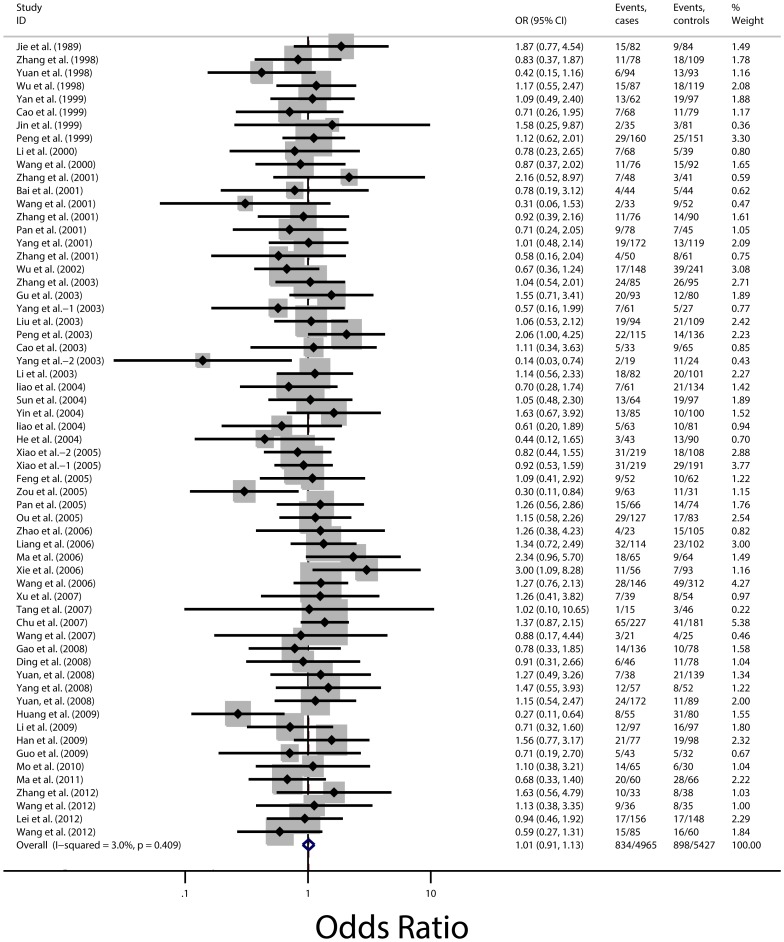
We finally identified 61 relevant studies which comprised 6634 case-patients and 6393 controls. The pooled OR for ε4 carriers was 96% higher than the ε3/3 genotype for CHD (OR, 1.96; 95% CI, 1.70 to 2.24; P<0.001). However, there was no evidence of statistically significant association between ε2 carriers and risk of CHD (OR, 1.02; 95% CI, 0.91 to 1.13; P = 0.729). In the subgroup analysis, different endpoints may partially account for the heterogeneity. No publication bias was found.
Our meta-analysis suggests that the apoE ε4 allele may be a risk factor for CHD in the Chinese population, however, ε2 allele has no significant association.
众多研究评估了载脂蛋白E(apoE)基因多态性与冠心病(CHD)之间的关联。然而,结果仍不明确。我们进行了一项荟萃分析,以更全面地评估中国人群中的这种关联。
通过检索PubMed、EMBASE、Web of Science、中国知网(CNKI)、中国生物医学文献数据库(CBM)、万方数据库、维普数据库等数据库,并手工检索相关期刊及检索文章的参考文献列表,确定中英文发表的病例对照研究。应用比值比(OR)和95%置信区间(CI)来评估关联强度。进行亚组分析和敏感性分析以探讨研究间的异质性。
我们最终纳入了61项相关研究,包括6634例病例患者和6393例对照。ε4携带者患冠心病的合并OR比ε3/3基因型高96%(OR,1.96;95%CI,1.70至2.24;P<0.001)。然而,没有证据表明ε2携带者与冠心病风险之间存在统计学显著关联(OR,1.02;95%CI,0.91至1.13;P = 0.729)。在亚组分析中,不同的终点可能部分解释了异质性。未发现发表偏倚。
我们的荟萃分析表明,apoE ε4等位基因可能是中国人群冠心病的一个危险因素,然而,ε2等位基因无显著关联。