Meagher David J, O'Connell Henry, Leonard Maeve, Williams Olugbenga, Awan Fahad, Exton Chris, Tenorio Michael, O'Connor Margaret, Dunne Colum P, Cullen Walter, McFarland John, Adamis Dimitrios
Cognitive Impairment Research Group, Graduate Entry Medical School, University of Limerick, Limerick V94 YVHO, Ireland.
Department of Computer Sciences, University of Limerick, Limerick V94 YVHO, Ireland.
World J Psychiatry. 2020 Apr 19;10(4):46-58. doi: 10.5498/wjp.v10.i4.46.
Efficient detection of delirium and comorbid delirium-dementia is a key diagnostic challenge. Development of new, efficient delirium-focused methods of cognitive assessment is a key challenge for improved detection of neurocognitive disorders in everyday clinical practice.
To compare the accuracy of two novel bedside tests of attention, vigilance and visuospatial function with conventional bedside cognitive tests in identifying delirium in older hospitalized patients.
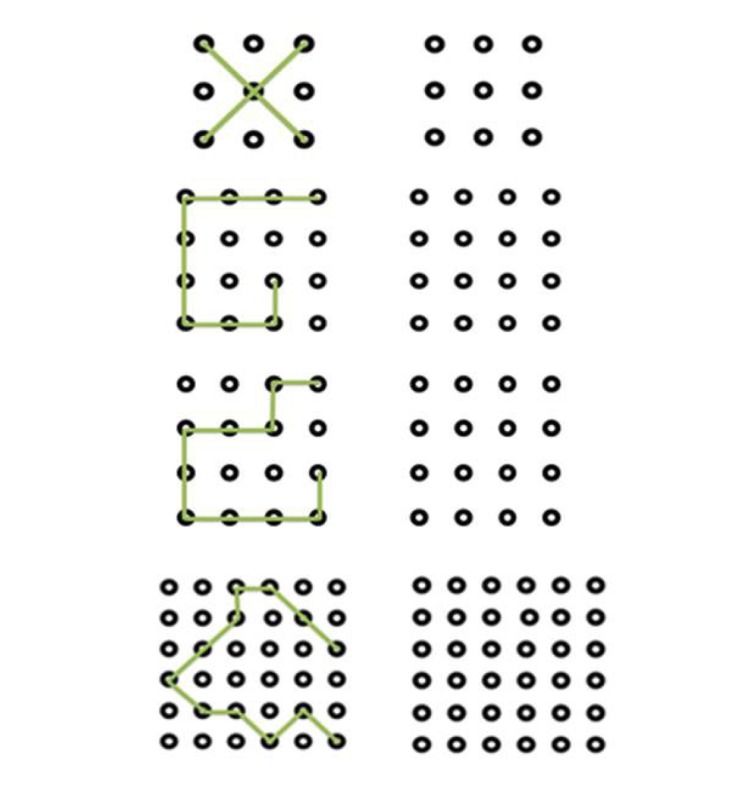
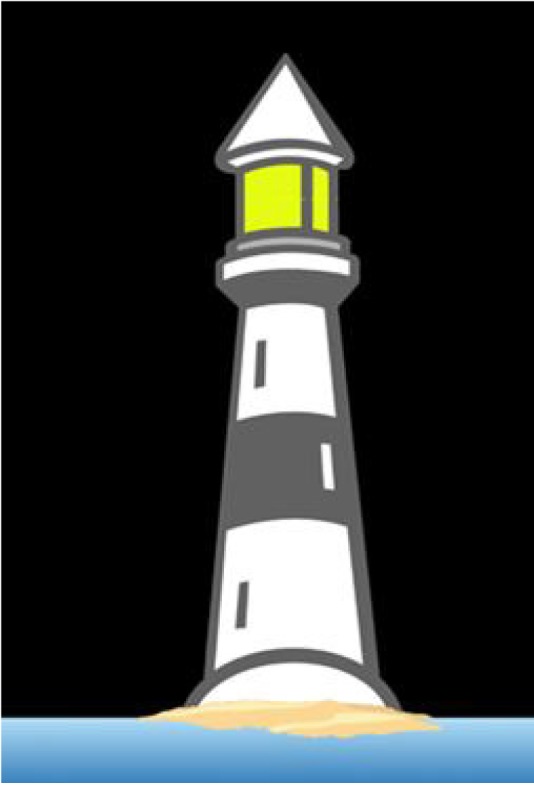
180 consecutive elderly medical inpatients (mean age 79.6 ± 7.2; 51% female) referred to a psychiatry for later life consultation-liaison service with delirium, dementia, comorbid delirium-dementia and cognitively intact controls. Participants were assessed cross-sectionally with conventional bedside cognitive tests [WORLD, Months Backward test (MBT), Spatial span, Vigilance A and B, Clock Drawing test and Interlocking Pentagons test] and two novel cognitive tests [Lighthouse test, Letter and Shape Drawing test (LSD)-4].
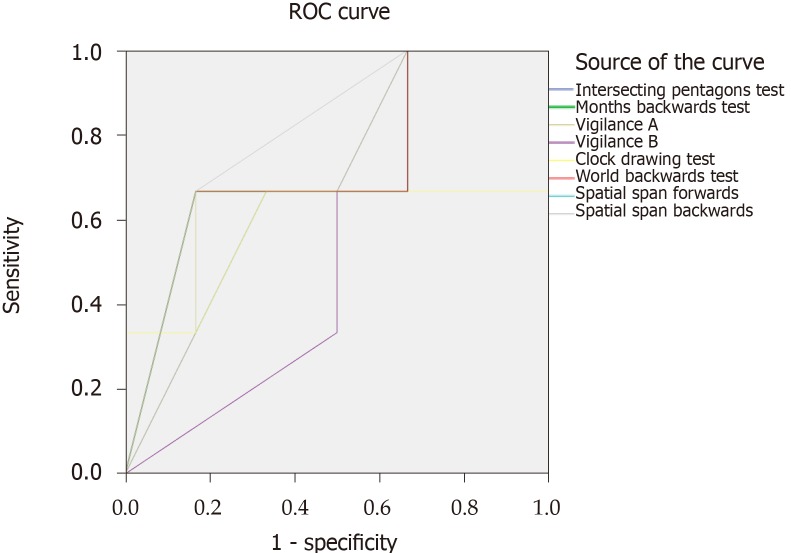
Neurocognitive diagnoses were delirium ( = 44), dementia ( = 30), comorbid delirium-dementia ( = 60) and no neurocognitive disorder ( = 46). All conventional tests had sensitivity of > 70% for delirium, with best overall accuracy for the Vigilance-B (78.3%), Vigilance-A (77.8%) and MBT (76.7%) tests. The sustained attention component of the Lighthouse test was the most distinguishing of delirium (sensitivity 84.6%; overall accuracy 75.6%). The LSD-4 had sensitivity of 74.0% and overall accuracy 74.4% for delirium identification. Combining tests allowed for enhanced sensitivity (> 90%) and overall accuracy (≥ 75%) with the highest overall accuracy for the combination of MBT-Vigilance A and the combined Vigilance A and B tests (both 78.3%). When analyses were repeated for those with dementia, there were similar findings with the MBT-Vigilance A the most accurate overall combination (80.0%). Combining the Lighthouse-SA with the LSD-4, a fail in either test had sensitivity for delirium of 91.4 with overall accuracy of 74.4%.
Bedside tests of attention, vigilance and visuospatial ability can help to distinguish neurocognitive disorders, including delirium, from other presentations. The Lighthouse test and the LSD-4 are novel tests with high accuracy for detecting delirium.
谵妄以及共病性谵妄 - 痴呆的有效检测是一项关键的诊断挑战。开发新的、以谵妄为重点的认知评估方法是在日常临床实践中改善神经认知障碍检测的关键挑战。
比较两种新型床边注意力、警觉性和视觉空间功能测试与传统床边认知测试在识别老年住院患者谵妄方面的准确性。
180名连续入住老年医学科的患者(平均年龄79.6±7.2岁;51%为女性)因谵妄、痴呆、共病性谵妄 - 痴呆及认知功能正常而被转介至精神科进行晚年会诊 - 联络服务。参与者接受了传统床边认知测试[世界定向测试(WORLD)、倒背月份测试(MBT)、空间广度测试、警觉性A和B测试、画钟测试及五边形套合测试]以及两种新型认知测试[灯塔测试、字母和形状绘制测试(LSD)-4]的横断面评估。
神经认知诊断包括谵妄(n = 44)、痴呆(n = 30)、共病性谵妄 - 痴呆(n = 60)以及无神经认知障碍(n = 46)。所有传统测试对谵妄的敏感性均>70%,其中警觉性 - B测试(78.3%)、警觉性 - A测试(77.8%)和MBT测试(76.7%)的总体准确性最佳。灯塔测试的持续注意力部分对谵妄的区分度最高(敏感性84.6%;总体准确性75.6%)。LSD - 4对谵妄识别的敏感性为74.0%,总体准确性为74.4%。联合测试可提高敏感性(>90%)和总体准确性(≥75%),MBT - 警觉性A组合以及警觉性A和B联合测试的总体准确性最高(均为78.3%)。对患有痴呆的患者重复进行分析时,结果相似,MBT - 警觉性A组合总体最准确(80.0%)。将灯塔 - 持续注意力测试与LSD - 4联合使用时,任一测试失败对谵妄的敏感性为91.4%,总体准确性为74.4%。
床边注意力、警觉性和视觉空间能力测试有助于将包括谵妄在内的神经认知障碍与其他表现区分开来。灯塔测试和LSD - 4是检测谵妄准确性较高的新型测试。