Department of Pathology, School of Basic Medical Sciences, Wuhan University, Wuhan, Hubei Province, P. R. China.
Department of Pathology, Maternal and Child Health Hospital of Hubei, Wuhan, Hubei Province, P. R. China.
PLoS One. 2020 May 13;15(5):e0232235. doi: 10.1371/journal.pone.0232235. eCollection 2020.
Altered expression of caveolin-1 (CAV1) and autophagy marker ATG4C is observed in various types of human cancers. However, the clinical significance of CAV1 and ATG4C expression in epithelial ovarian cancer (EOC) remains largely unknown. The present study aims to explore the clinicopathological value and prognostic significance of CAV1 and ATG4C expression in EOC.
The expression pattern and prognostic value of CAV1 and ATG4C mRNA in EOC were analyzed using data from the Cancer Genome Atlas (TCGA) database (N = 373). In addition, immunohistochemistry analysis was performed to detect and assay the expression of CAV1 and ATG4C proteins in tissue microarray of EOC.
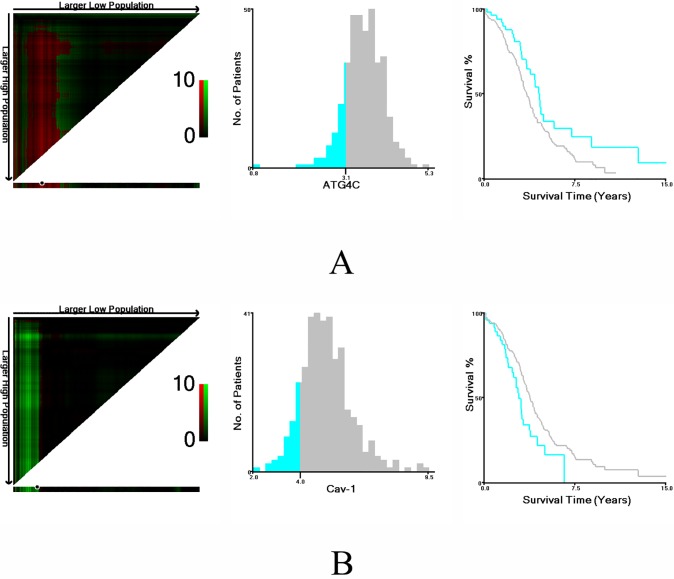
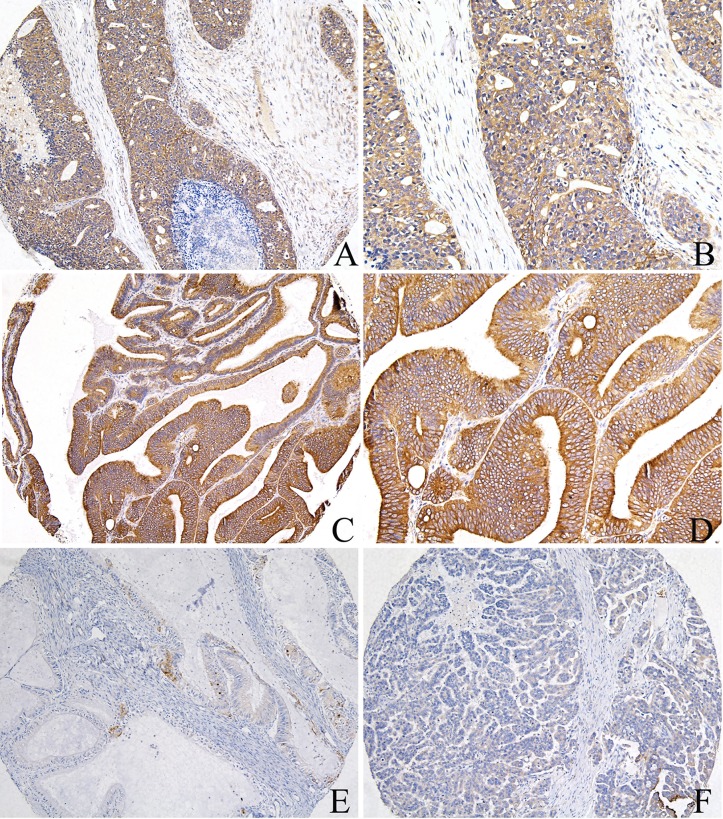
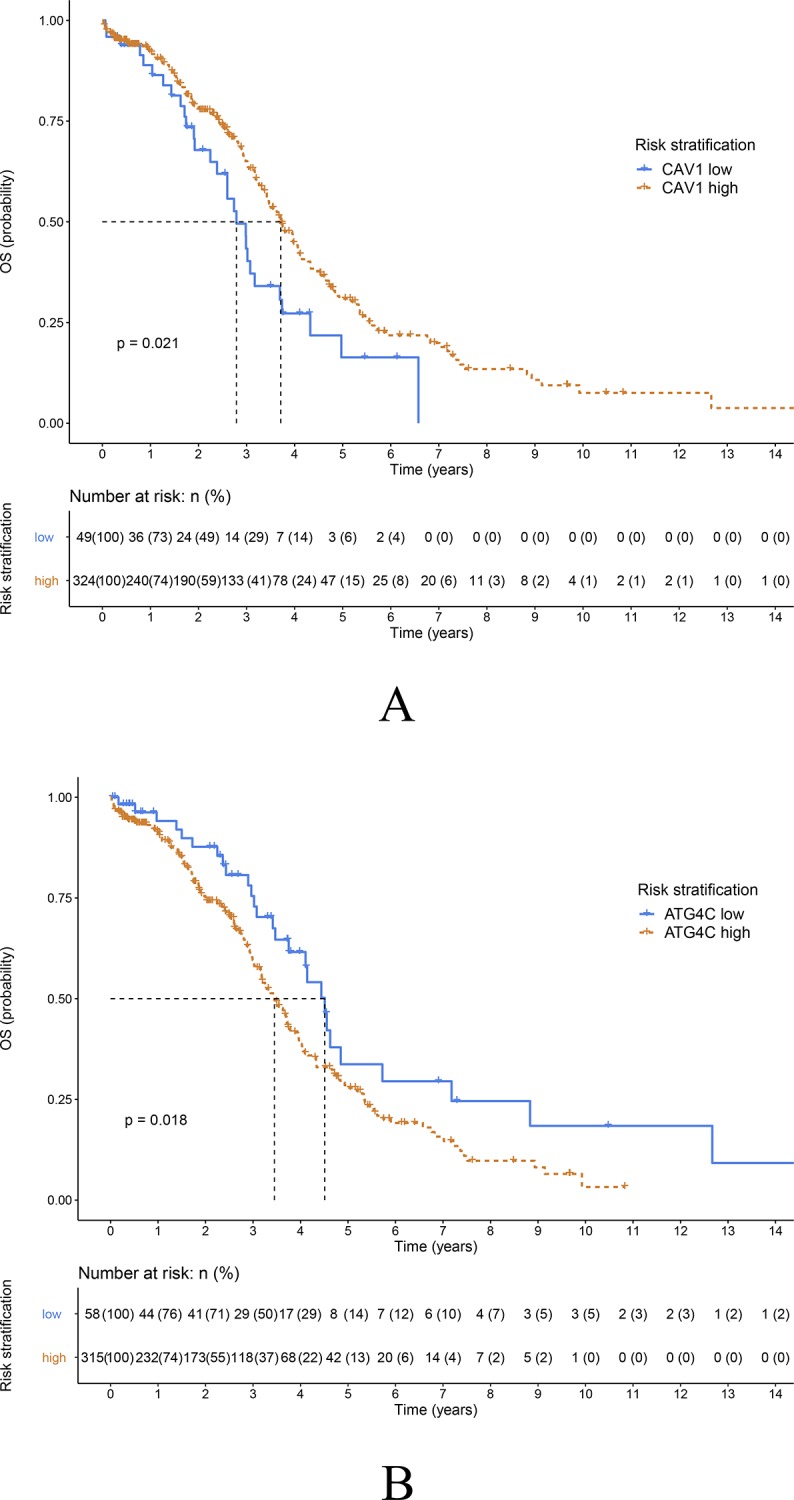
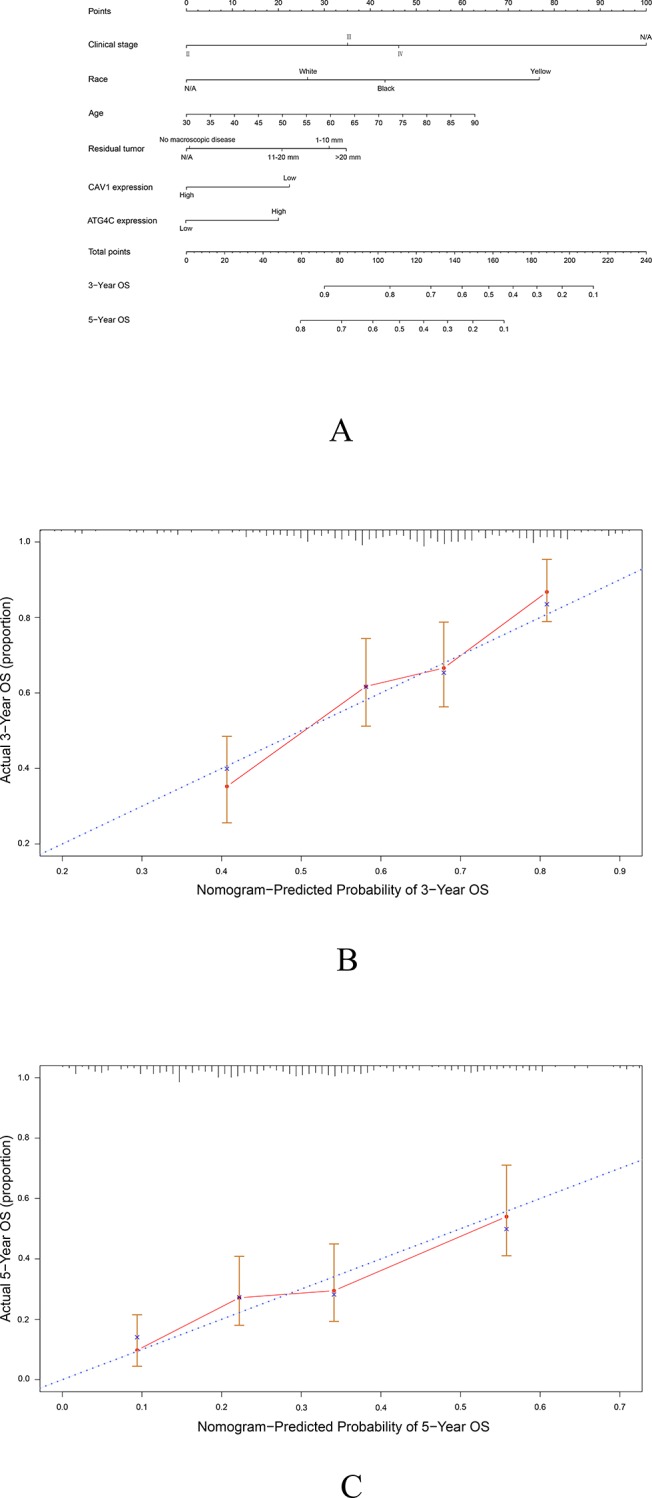
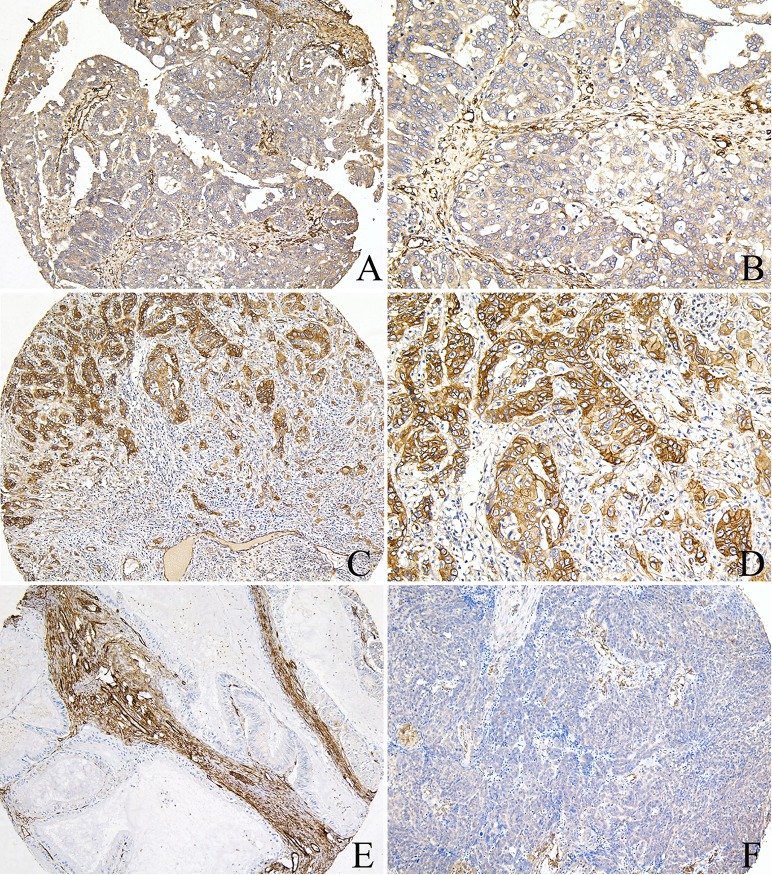
Based on TCGA data, Kaplan-Meier analysis indicated that patients with low CAV1 mRNA (p = 0.021) and high ATG4C mRNA (p = 0.018) expression had a significantly shorter overall survival (OS). Cox regression analysis demonstrated that the expression levels of CAV1 (p = 0.023) and ATG4C mRNA (p = 0.040) were independent prognostic factors for OS in EOC. In addition, the Concordance Index of the nomogram for OS prediction was 0.660. Immunohistochemical analysis showed the expression levels of stromal CAV1 and cancerous ATG4C proteins, and high expression of both CAV1 and ATG4C protein in the stroma were found to significantly correlate with the histologic subtypes of EOC, especially with serous subtype.
Decreased expression of CAV1 mRNA and increased expression of ATG4C mRNA in EOC can predict poor overall survival. The expression levels of CAV1 protein in stromal cells and ATG4C protein in cancer cells are significantly associated with histologic subtypes of EOC. These findings suggest that CAV1 and ATG4C serve as useful prognostic biomarkers and candidate therapeutic targets in EOC.
在各种人类癌症中观察到窖蛋白-1(CAV1)和自噬标志物 ATG4C 的表达改变。然而,CAV1 和 ATG4C 在卵巢上皮性癌(EOC)中的表达的临床意义在很大程度上仍然未知。本研究旨在探讨 CAV1 和 ATG4C 在 EOC 中的表达模式及其对临床病理的影响和预后意义。
利用癌症基因组图谱(TCGA)数据库(N = 373)中的数据,分析 CAV1 和 ATG4C mRNA 在 EOC 中的表达模式和预后价值。此外,还进行了免疫组织化学分析,以检测和检测 EOC 组织微阵列中 CAV1 和 ATG4C 蛋白的表达。
基于 TCGA 数据,Kaplan-Meier 分析表明,CAV1 mRNA 低表达(p = 0.021)和 ATG4C mRNA 高表达(p = 0.018)的患者总生存(OS)显著缩短。Cox 回归分析表明,CAV1 表达水平(p = 0.023)和 ATG4C mRNA 表达水平(p = 0.040)是 EOC 患者 OS 的独立预后因素。此外,OS 预测列线图的一致性指数为 0.660。免疫组织化学分析显示,基质 CAV1 和癌性 ATG4C 蛋白的表达水平,以及基质中 CAV1 和 ATG4C 蛋白的高表达均与 EOC 的组织学亚型显著相关,尤其是与浆液性亚型。
EOC 中 CAV1 mRNA 表达下调和 ATG4C mRNA 表达上调可预测总体生存率差。基质细胞中 CAV1 蛋白和癌细胞中 ATG4C 蛋白的表达水平与 EOC 的组织学亚型显著相关。这些发现表明,CAV1 和 ATG4C 可作为有用的预后生物标志物和 EOC 的候选治疗靶点。