Gong Yan, Yang Yuhan, Tian Sufang, Chen Honglei
Department of Pathology, Zhongnan Hospital of Wuhan University, Wuhan, P. R. China.
Department of Pathology, School of Basic Medical Science, Wuhan University, Wuhan, P. R. China.
Asian Pac J Cancer Prev. 2019 Nov 1;20(11):3259-3268. doi: 10.31557/APJCP.2019.20.11.3259.
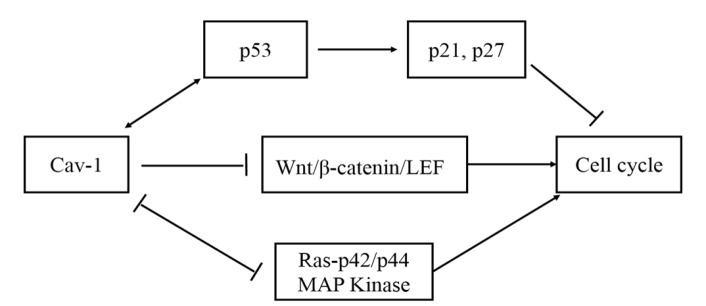
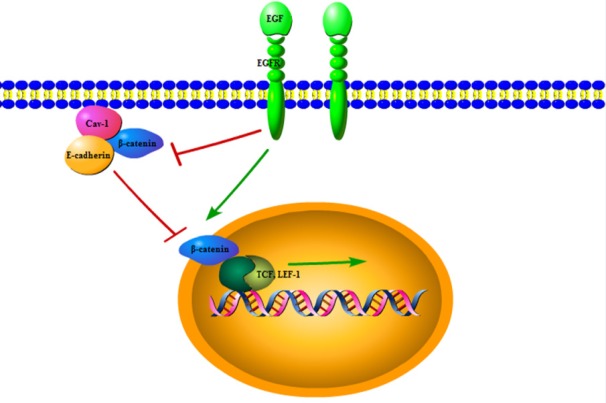
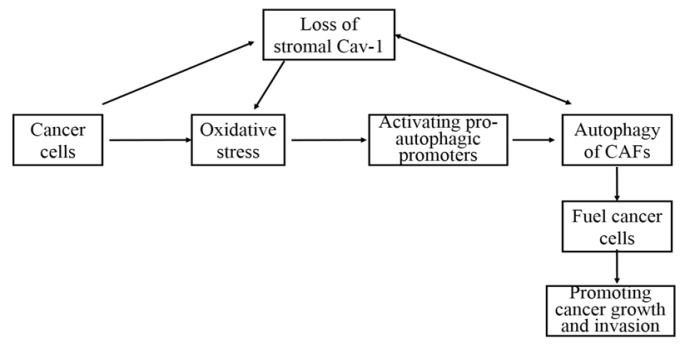
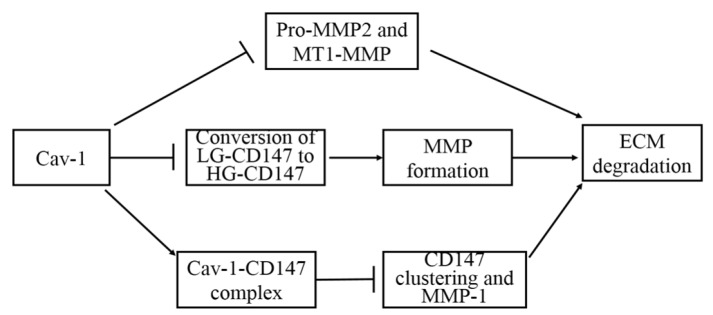
Caveolin-1 (Cav-1), an integral membrane protein, is a principal component of caveolae and has been reported to play a promoting or inhibiting role in cancer progression. Gynecologic tumor is a group of tumors that affect the tissue and organs of the female reproductive system, especially cervical cancer. Cervical cancer, as one of the most common cancers, severely affects female health in developing countries in particular because of its high morbidity and mortality. This review summarizes some mechanisms of Cav-1 in the development and progression of gynecological tumors. The role of Cav-1 in tumorigenesis, including dysregulation of cell cycle, apoptosis and autophagy, adhesion, invasion, and metastasis, such as the formation of invadopodia and matrix metalloproteinase degradation are presented in detail. In addition, Cav-1 modulates autophagy and the formation of invadopodia and target regulated by miRNAs to affect tumor progress. Taken together, we find that, no matter Cav-1 expression in the tumor or stromal cells , Cav-1 has paradoxical role in different types of gynecological tumors in vivo or in vitro and even in the same tumor from the same organ.
小窝蛋白-1(Cav-1)是一种整合膜蛋白,是小窝的主要成分,据报道在癌症进展中发挥促进或抑制作用。妇科肿瘤是一组影响女性生殖系统组织和器官的肿瘤,尤其是宫颈癌。宫颈癌作为最常见的癌症之一,因其高发病率和死亡率,尤其严重影响发展中国家的女性健康。本综述总结了Cav-1在妇科肿瘤发生发展中的一些机制。详细介绍了Cav-1在肿瘤发生中的作用,包括细胞周期失调、凋亡和自噬、黏附、侵袭和转移,如侵袭性伪足的形成和基质金属蛋白酶降解等。此外,Cav-1调节自噬以及侵袭性伪足的形成,并受微小RNA调控的靶点影响肿瘤进展。综上所述,我们发现,无论Cav-1在肿瘤细胞还是基质细胞中的表达情况如何,Cav-1在体内或体外不同类型的妇科肿瘤中,甚至在同一器官的同一肿瘤中都具有矛盾的作用。