Neurosurgery, Hainan Cancer Hospital, Haikou, China.
Radiotherapy Department, Hainan Cancer Hospital, Haikou, China.
Mol Med. 2020 May 13;26(1):43. doi: 10.1186/s10020-020-00171-5.
Radiation therapy is the primary method of treatment for glioblastoma (GBM). Therefore, the suppression of radioresistance in GBM cells is of enormous significance. Ribophorin II (RPN2), a protein component of an N-oligosaccharyl transferase complex, has been associated with chemotherapy drug resistance in multiple cancers, including GBM. However, it remains unclear whether this also plays a role in radiation therapy resistance in GBM.
We conducted a bioinformatic analysis of RPN2 expression using the UCSC Cancer Genomics Browser and GEPIA database and performed an immunohistochemical assessment of RPN2 expression in biopsy specimens from 34 GBM patients who had received radiation-based therapy. We also studied the expression and function of RPN2 in radiation-resistant GBM cells.
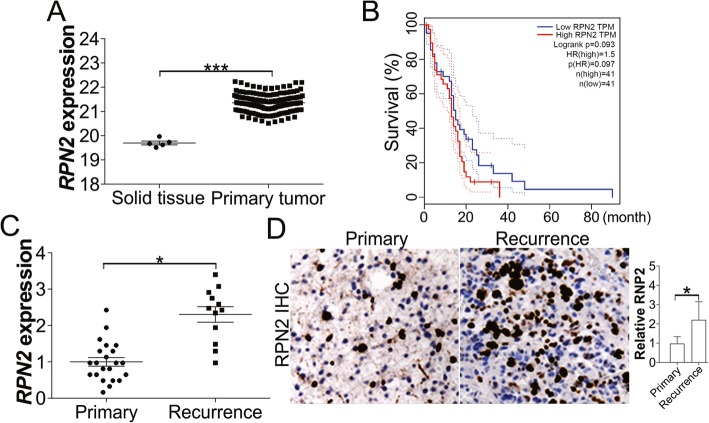
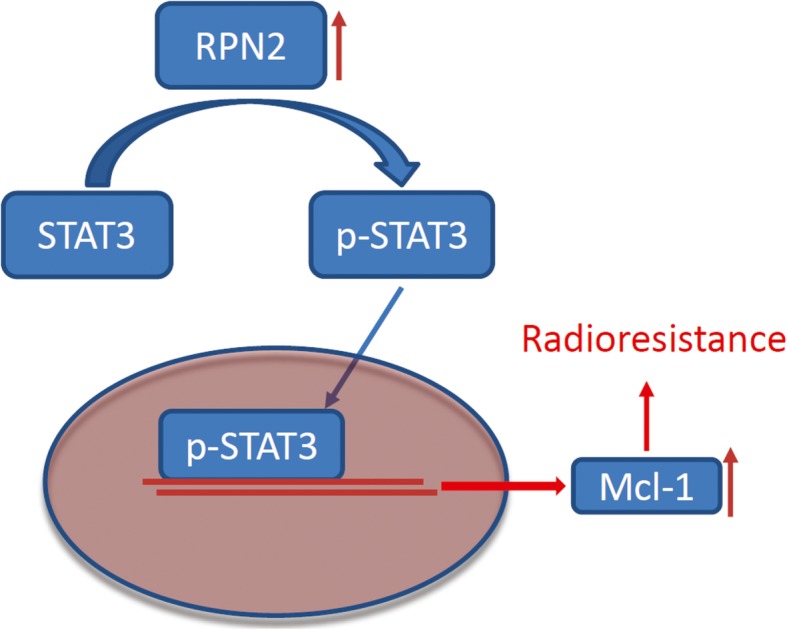
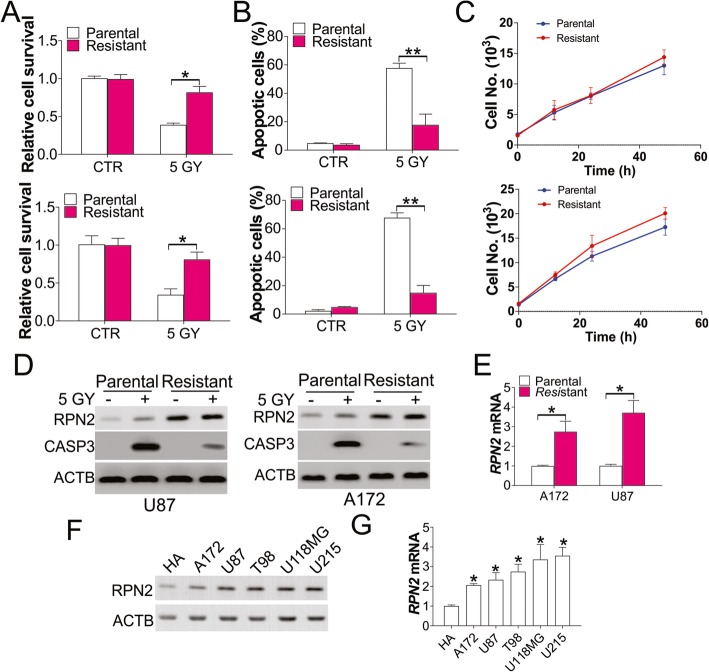
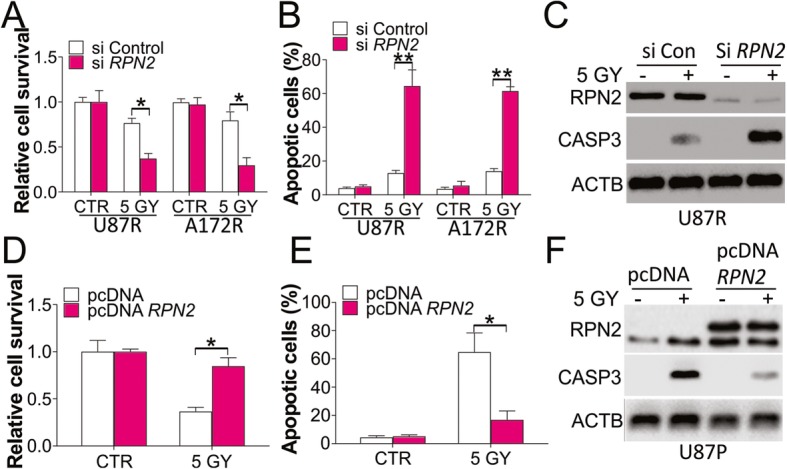
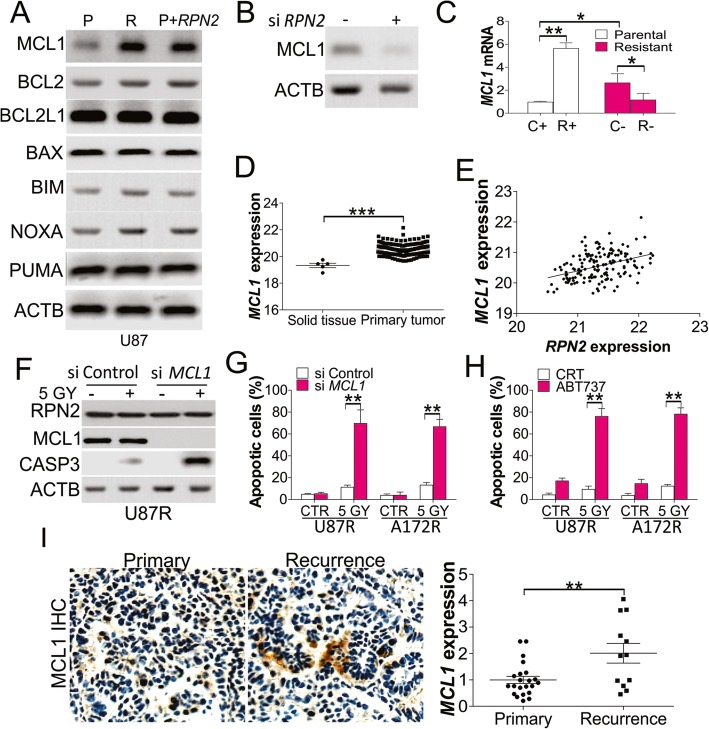
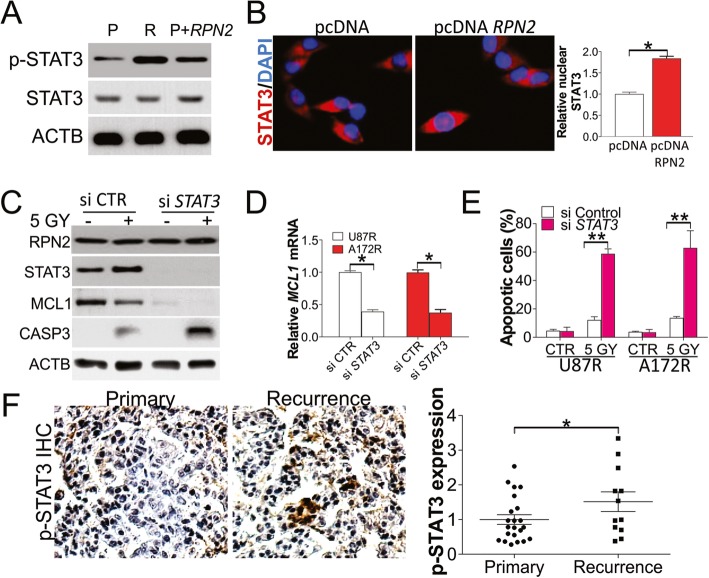
We found that RPN2 expression was upregulated in GBM tumors and correlated with poor survival. The expression of RPN2 was also higher in GBM patients with tumor recurrence, who were classified to be resistant to radiation therapy. In the radiation-resistant GBM cells, the expression of RPN2 was also higher than in the parental cells. Depletion of RPN2 in resistant cells can sensitize these cells to radiation-induced apoptosis, and overexpression of RPN2 had the reverse effect. Myeloid cell leukemia 1 (MCL1) was found to be the downstream target of RPN2, and contributed to radiation resistance in GBM cells. Furthermore, STAT3 was found to be the regulator of MCL1, which can be activated by RPN2 dysregulation.
Our study has revealed a novel function of RPN2 in radiation-resistant GBM, and has shown that MCL1 depletion or suppression could be a promising method of therapy to overcome the resistance promoted by RPN2 dysregulation.
放射疗法是治疗胶质母细胞瘤(GBM)的主要方法。因此,抑制 GBM 细胞的放射抗性具有重要意义。核糖核苷酸还原酶 II(RPN2)是一种 N-寡糖基转移酶复合物的蛋白组成部分,与多种癌症(包括 GBM)的化疗药物耐药性有关。然而,目前尚不清楚它是否也在 GBM 的放射治疗抵抗中起作用。
我们使用 UCSC 癌症基因组浏览器和 GEPIA 数据库进行了 RPN2 表达的生物信息学分析,并对 34 名接受基于放射治疗的 GBM 患者的活检标本进行了 RPN2 表达的免疫组织化学评估。我们还研究了 RPN2 在放射抗性 GBM 细胞中的表达和功能。
我们发现 RPN2 在 GBM 肿瘤中的表达上调,并与不良预后相关。在肿瘤复发的 GBM 患者中,RPN2 的表达也更高,这些患者被归类为对放射治疗耐药。在放射抗性 GBM 细胞中,RPN2 的表达也高于亲本细胞。在耐药细胞中敲低 RPN2 可以使这些细胞对放射诱导的细胞凋亡敏感,而过表达 RPN2 则有相反的效果。髓样细胞白血病 1(MCL1)被发现是 RPN2 的下游靶标,它有助于 GBM 细胞的放射抗性。此外,STAT3 被发现是 MCL1 的调节剂,它可以被 RPN2 失调激活。
我们的研究揭示了 RPN2 在放射抗性 GBM 中的新功能,并表明 MCL1 耗竭或抑制可能是克服由 RPN2 失调促进的耐药性的一种有前途的治疗方法。