Ou Alexander, Ott Martina, Fang Dexing, Heimberger Amy B
Department of Neuro-Oncology, University of Texas M.D. Anderson Cancer Center, 1515 Holcombe Blvd., Houston, TX 77030, USA.
Department of Neurosurgery, University of Texas M.D. Anderson Cancer Center, 1515 Holcombe Blvd., Houston, TX 77030, USA.
Cancers (Basel). 2021 Jan 24;13(3):437. doi: 10.3390/cancers13030437.
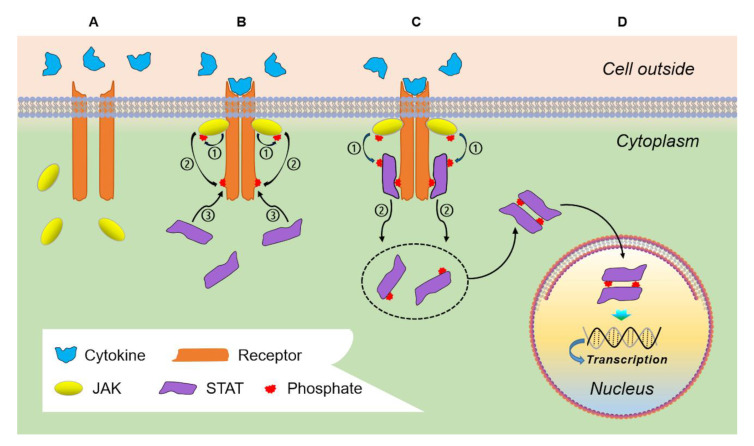
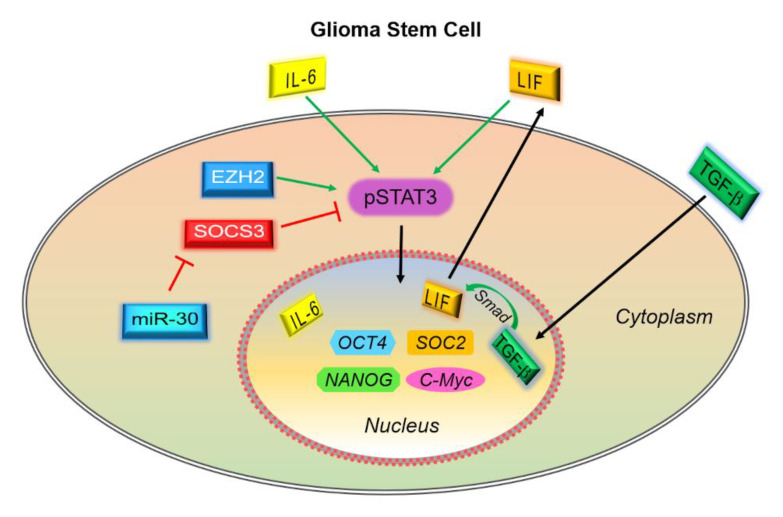
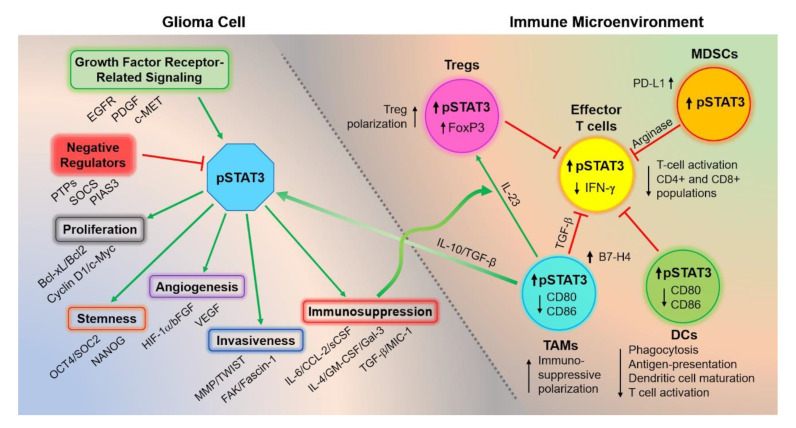
Glioblastoma remains one of the deadliest and treatment-refractory human malignancies in large part due to its diffusely infiltrative nature, molecular heterogeneity, and capacity for immune escape. The Janus kinase/signal transducer and activator of transcription (JAK/STAT) signaling pathway contributes substantively to a wide variety of protumorigenic functions, including proliferation, anti-apoptosis, angiogenesis, stem cell maintenance, and immune suppression. We review the current state of knowledge regarding the biological role of JAK/STAT signaling in glioblastoma, therapeutic strategies, and future directions for the field.
胶质母细胞瘤仍然是最致命且难治的人类恶性肿瘤之一,这在很大程度上归因于其弥漫浸润性、分子异质性以及免疫逃逸能力。Janus激酶/信号转导及转录激活因子(JAK/STAT)信号通路在多种促肿瘤功能中发挥着重要作用,包括增殖、抗凋亡、血管生成、干细胞维持和免疫抑制。我们综述了目前关于JAK/STAT信号在胶质母细胞瘤中的生物学作用、治疗策略以及该领域未来方向的知识现状。