Eppley Institute for Research in Cancer and Allied Diseases, University of Nebraska Medical Center, Omaha, Nebraska.
Fred and Pamela Buffett Cancer Center, University of Nebraska Medical Center, Omaha, Nebraska.
Mol Cancer Ther. 2020 Aug;19(8):1670-1681. doi: 10.1158/1535-7163.MCT-20-0033. Epub 2020 May 13.
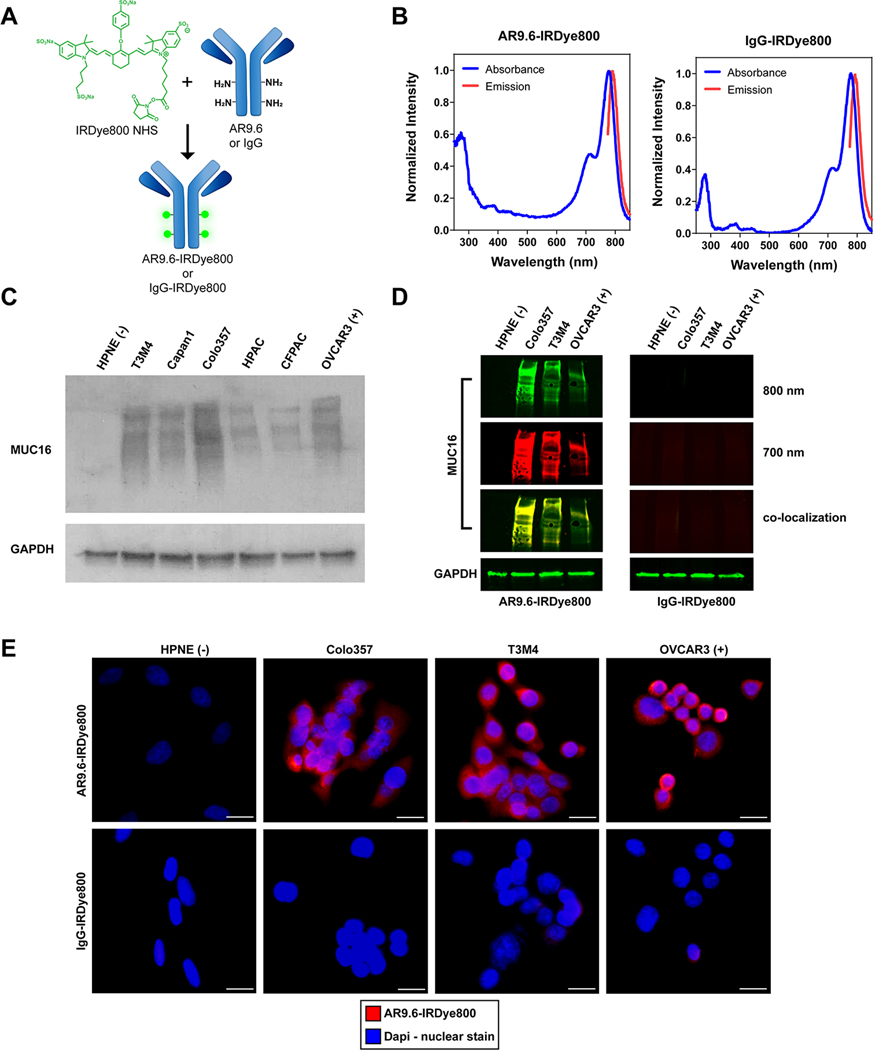
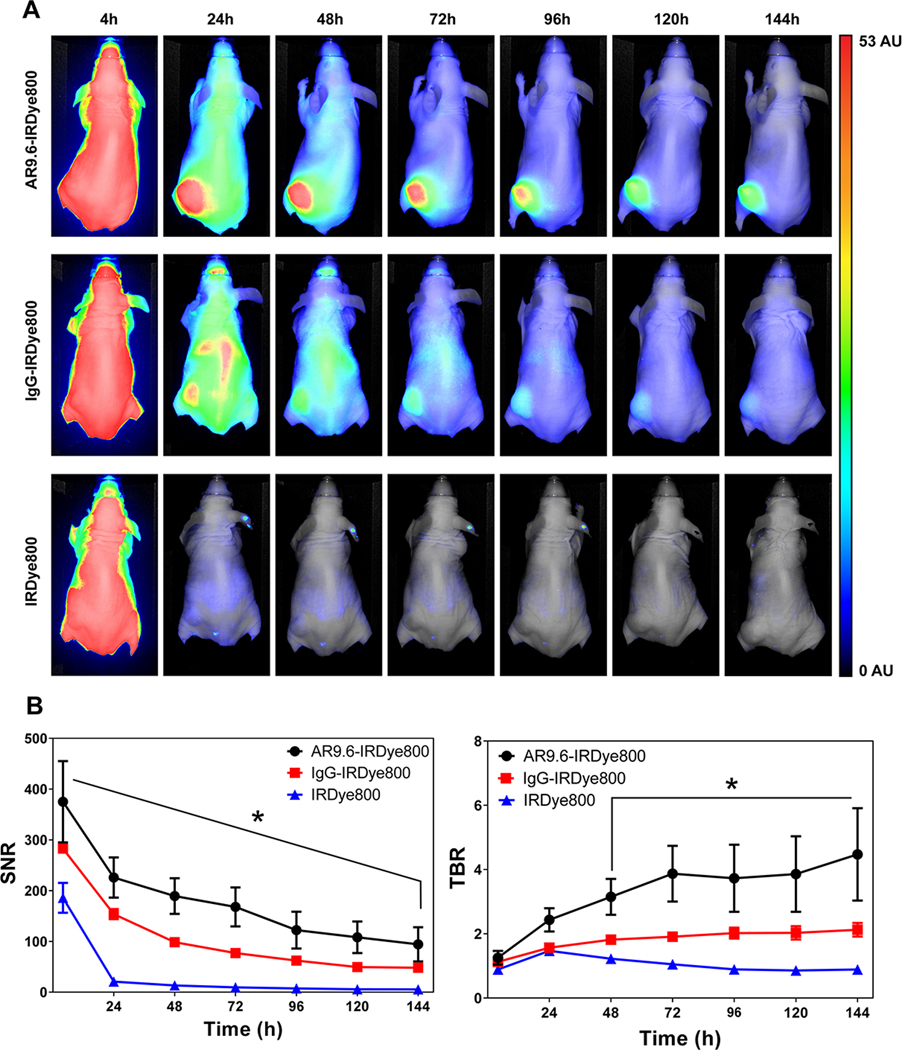
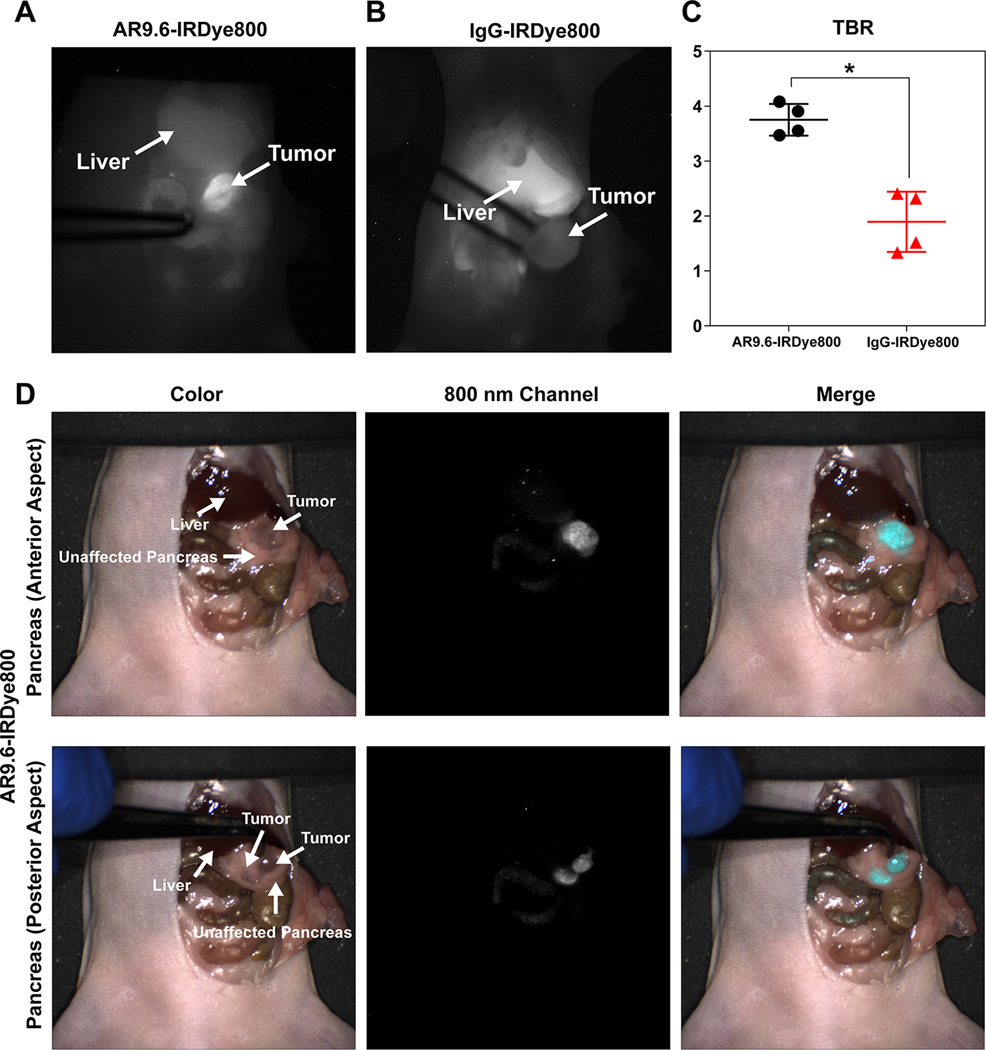
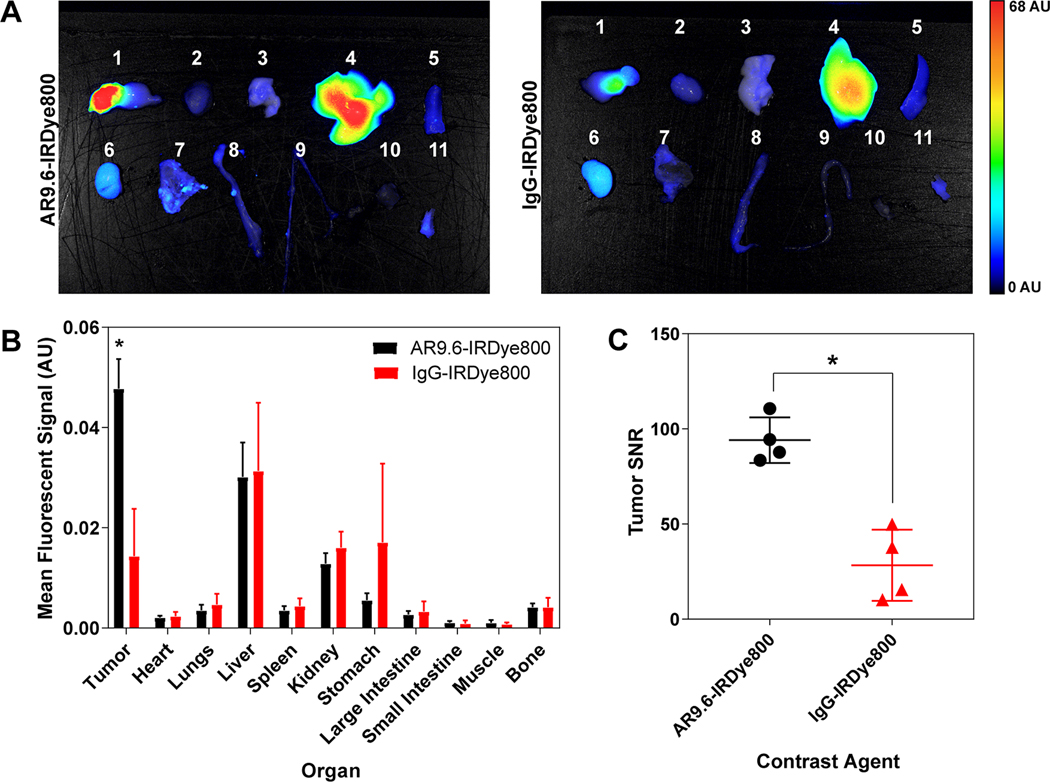
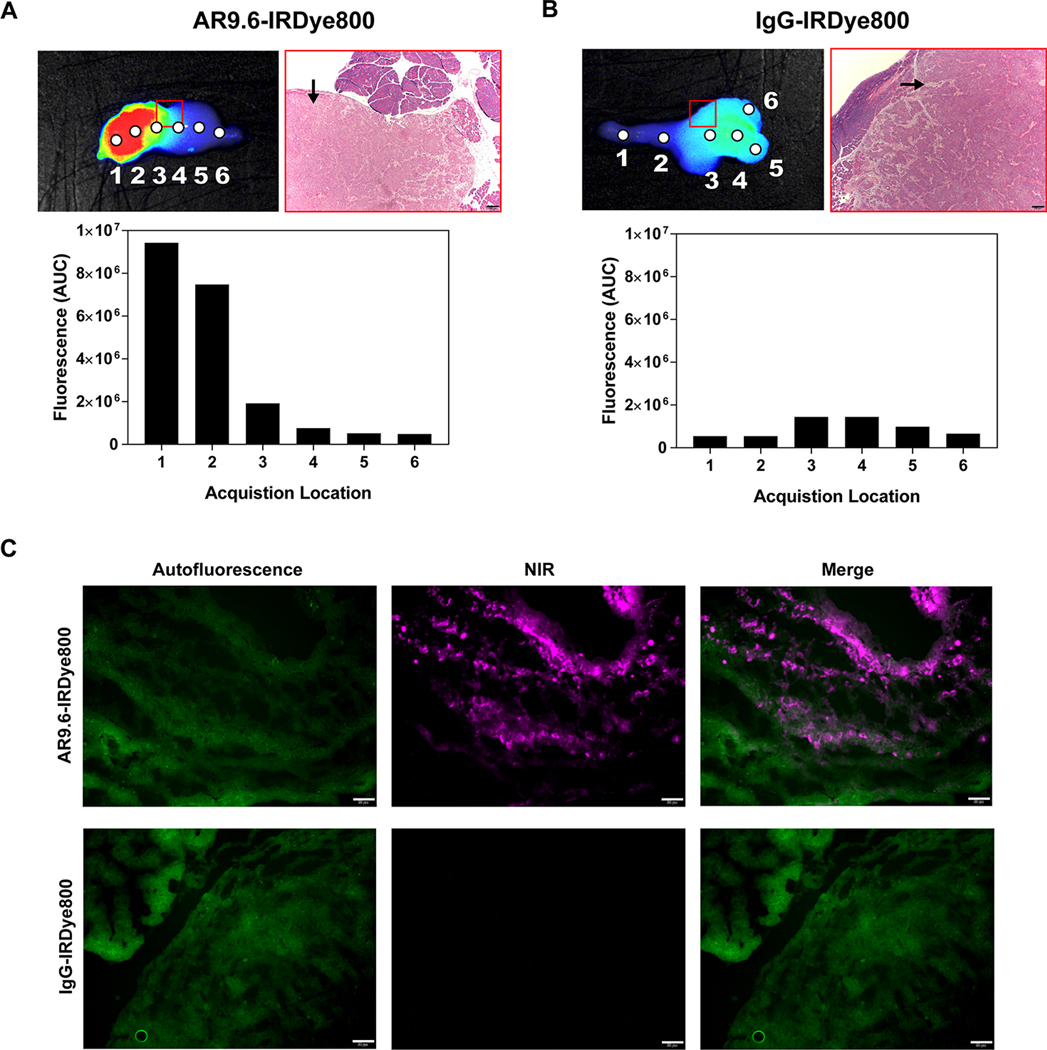
Surgical resection is currently the only potentially curative option for patients with pancreatic cancer. However, the 5-year survival rate after resection is only 25%, due in part to high rates of R1 resections, in which cells are left behind at the surgical margin, resulting in disease recurrence. Fluorescence-guided surgery (FGS) has emerged as a method to reduce incomplete resections and improve intraoperative assessment of cancer. Mucin-16 (MUC16), a protein biomarker highly overexpressed in pancreatic cancer, is a potential target for FGS. In this study, we developed a fluorescent MUC16-targeted antibody probe, AR9.6-IRDye800, for image-guided resection of pancreatic cancer. We demonstrated the efficacy of this probe to bind human pancreatic cancer cell lines and In an orthotopic xenograft model, AR9.6-IRDye800 exhibited superior fluorescence enhancement of tumors and lower signal in critical background organs in comparison to a nonspecific IgG control. The results of this study suggest that AR9.6-IRDye800 has potential for success as a probe for FGS in pancreatic cancer patients, and MUC16 is a feasible target for intraoperative imaging.
手术切除目前是胰腺癌患者唯一潜在的治愈选择。然而,切除后的 5 年生存率仅为 25%,部分原因是 R1 切除率较高,即在手术切缘处残留细胞,导致疾病复发。荧光引导手术(FGS)已成为一种减少不完全切除和改善术中评估癌症的方法。粘蛋白 16(MUC16)是一种在胰腺癌中高度过表达的蛋白质生物标志物,是 FGS 的潜在靶点。在这项研究中,我们开发了一种荧光 MUC16 靶向抗体探针 AR9.6-IRDye800,用于引导胰腺癌的切除。我们证明了该探针能够结合人类胰腺癌细胞系和在原位异种移植模型中,与非特异性 IgG 对照相比,AR9.6-IRDye800 对肿瘤的荧光增强效果更好,对关键背景器官的信号更低。这项研究的结果表明,AR9.6-IRDye800 有可能成功用作胰腺癌患者 FGS 的探针,并且 MUC16 是术中成像的可行靶点。