Department of Pharmacology, University of Oxford, Mansfield Road, Oxford, OX1 3QT, UK.
Nuffield Department of Clinical Neurosciences, University of Oxford, OMPI-G, South Parks Road, Oxford, OX1 3RE, UK.
Mol Psychiatry. 2021 Sep;26(9):5252-5265. doi: 10.1038/s41380-020-0769-6. Epub 2020 May 13.
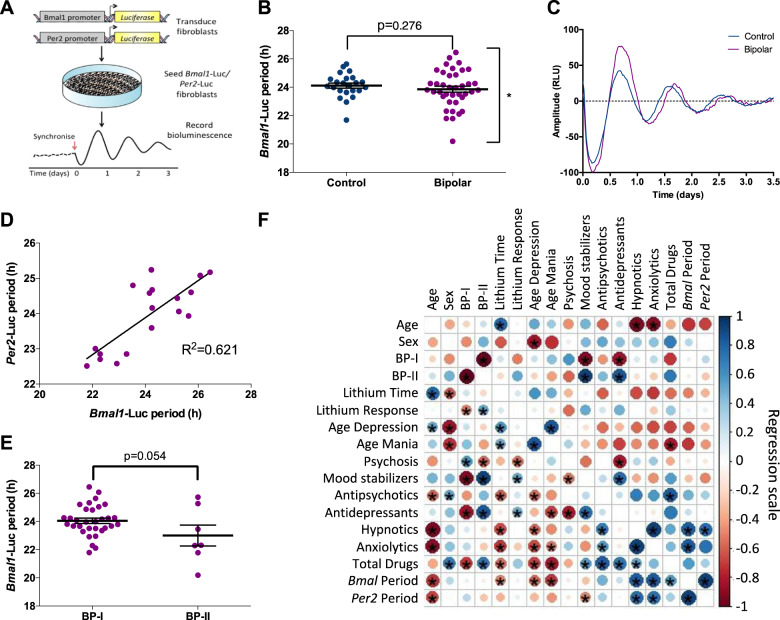
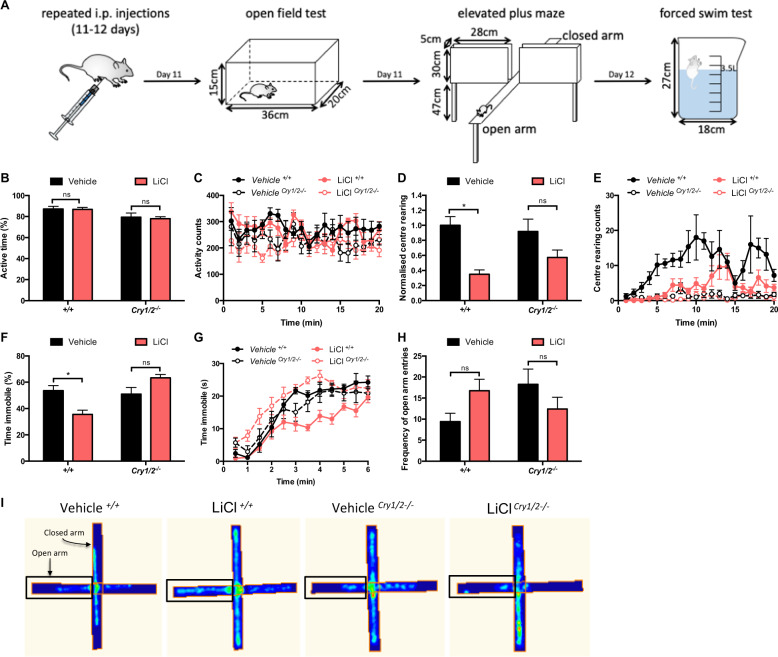
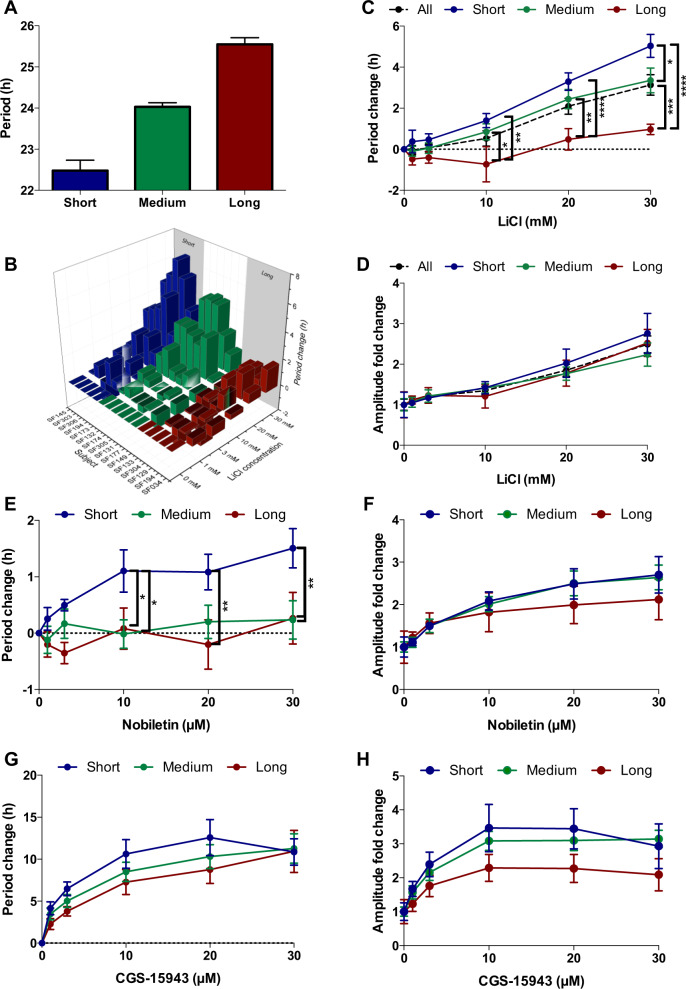
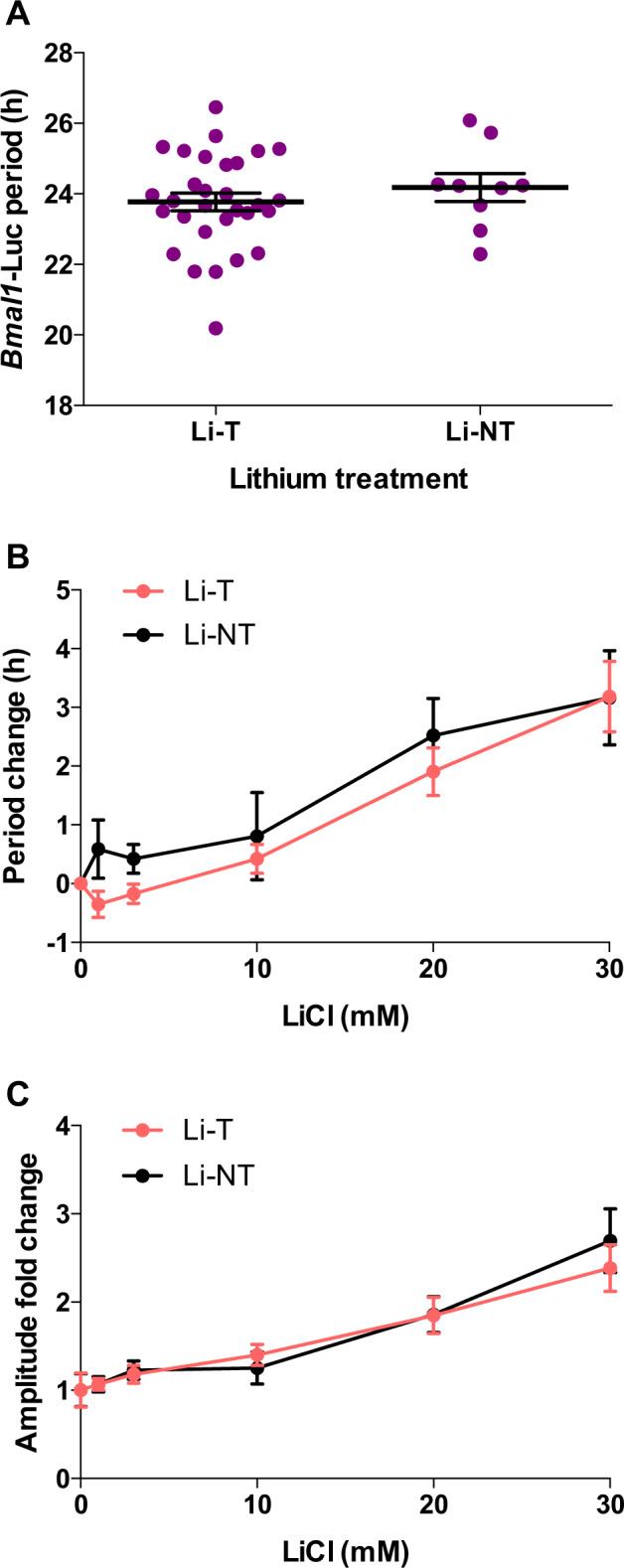
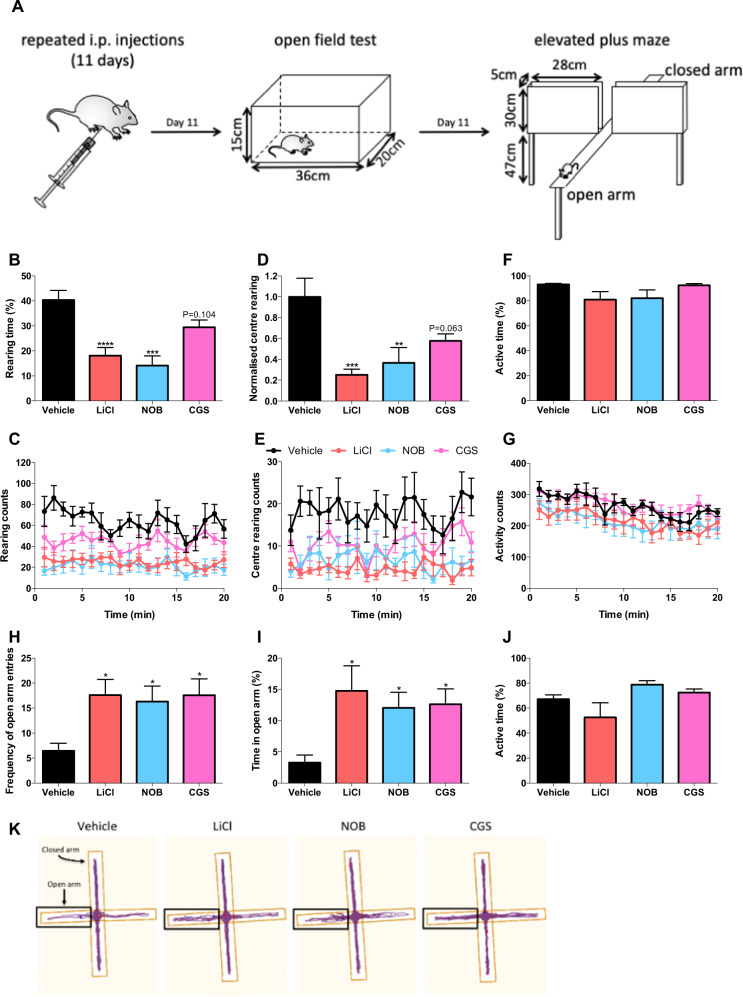
Bipolar disorder is a chronic neuropsychiatric condition associated with mood instability, where patients present significant sleep and circadian rhythm abnormalities. Currently, the pathophysiology of bipolar disorder remains elusive, but treatment with lithium continues as the benchmark pharmacotherapy, functioning as a potent mood stabilizer in most, but not all patients. Lithium is well documented to induce period lengthening and amplitude enhancement of the circadian clock. Based on this, we sought to investigate whether lithium differentially impacts circadian rhythms in bipolar patient cell lines and crucially if lithium's effect on the clock is fundamental to its mood-stabilizing effects. We analyzed the circadian rhythms of bipolar patient-derived fibroblasts (n = 39) and their responses to lithium and three further chronomodulators. Here we show, relative to controls (n = 23), patients exhibited a wider distribution of circadian period (p < 0.05), and that patients with longer periods were medicated with a wider range of drugs, suggesting lower effectiveness of lithium. In agreement, patient fibroblasts with longer periods displayed muted circadian responses to lithium as well as to other chronomodulators that phenocopy lithium. These results show that lithium differentially impacts the circadian system in a patient-specific manner and its effect is dependent on the patient's circadian phenotype. We also found that lithium-induced behavioral changes in mice were phenocopied by modulation of the circadian system with drugs that target the clock, and that a dysfunctional clock ablates this response. Thus, chronomodulatory compounds offer a promising route to a novel treatment paradigm. These findings, upon larger-scale validation, could facilitate the implementation of a personalized approach for mood stabilization.
双相情感障碍是一种与情绪不稳定相关的慢性神经精神疾病,患者表现出明显的睡眠和昼夜节律异常。目前,双相情感障碍的病理生理学仍然难以捉摸,但锂的治疗仍然是基准的药物治疗,作为大多数患者的有效情绪稳定剂,但不是所有患者。锂被充分证明可以延长昼夜节律钟的周期并增强其振幅。基于此,我们试图研究锂是否会对双相情感障碍患者细胞系的昼夜节律产生不同的影响,以及锂对时钟的影响是否是其稳定情绪作用的基础。我们分析了来自双相情感障碍患者的成纤维细胞(n=39)的昼夜节律及其对锂和另外三种时间调节剂的反应。在这里,我们显示与对照组(n=23)相比,患者表现出更宽的昼夜周期分布(p<0.05),并且具有较长周期的患者接受了更广泛的药物治疗,表明锂的疗效较低。一致地,具有较长周期的患者成纤维细胞对锂以及其他模拟锂的时间调节剂的昼夜节律反应减弱。这些结果表明,锂以患者特异性的方式对昼夜节律系统产生不同的影响,其作用取决于患者的昼夜节律表型。我们还发现,通过药物调节时钟,锂在小鼠中引起的行为变化可以模拟昼夜节律系统,并且功能失调的时钟会消除这种反应。因此,时间调节剂化合物为一种新的治疗模式提供了有希望的途径。这些发现,在更大规模的验证后,可以促进稳定情绪的个性化方法的实施。