Pedersen Henrik D, Galsgaard Elisabeth D, Christoffersen Berit Ø, Cirera Susanna, Holst Dorte, Fredholm Merete, Latta Markus
Ellegaard Göttingen Minipigs A/S, Dalmose, Denmark.
Department of Veterinary and Animal Sciences, University of Copenhagen, Denmark.
J Clin Exp Hepatol. 2020 May-Jun;10(3):211-221. doi: 10.1016/j.jceh.2019.09.004. Epub 2019 Sep 21.
Owing to the human-like physiology, a minipig model of nonalcoholic steatohepatitis (NASH) could be valuable. Pigs, however, rarely develop substantial hepatic steatosis, even when fed diets with high fat, fructose, and cholesterol (FFC) content. The potential of choline-deficient, amino acid-defined high-fat diets (CDAHFD) was therefore evaluated in Göttingen Minipigs.
Castrated male Göttingen Minipigs were fed either chow (n = 5) or one of the three NASH diets: FFC (n = 5), CDAHFD with sucrose (CDAHFD-S; n = 4), or fructose (CDAHFD-F; n = 4) for 8 weeks. Liver and blood samples were collected after 2 weeks and at termination.
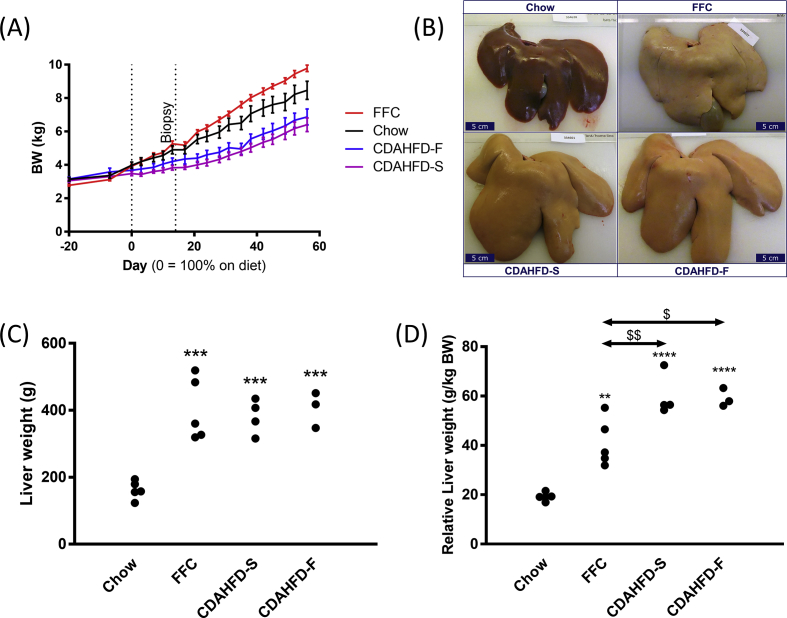
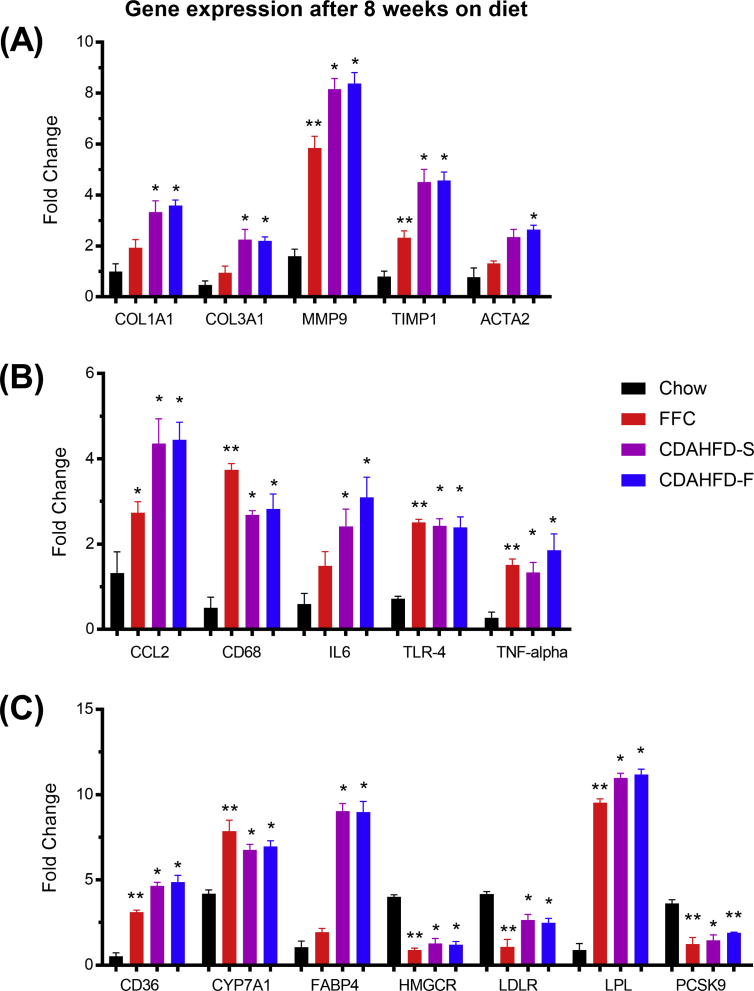
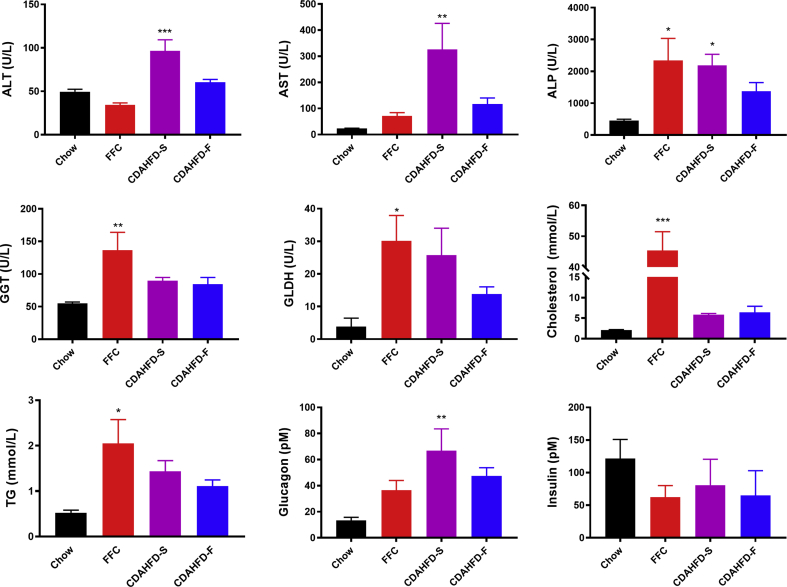
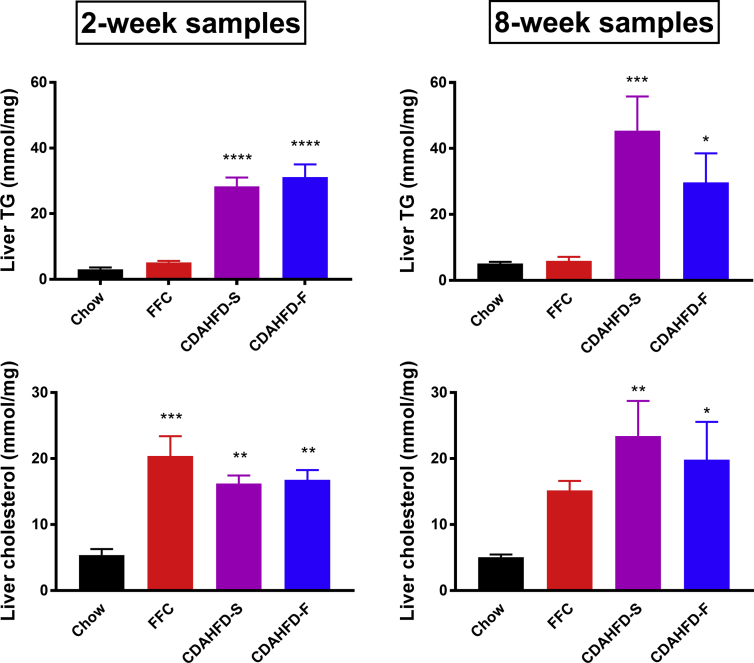
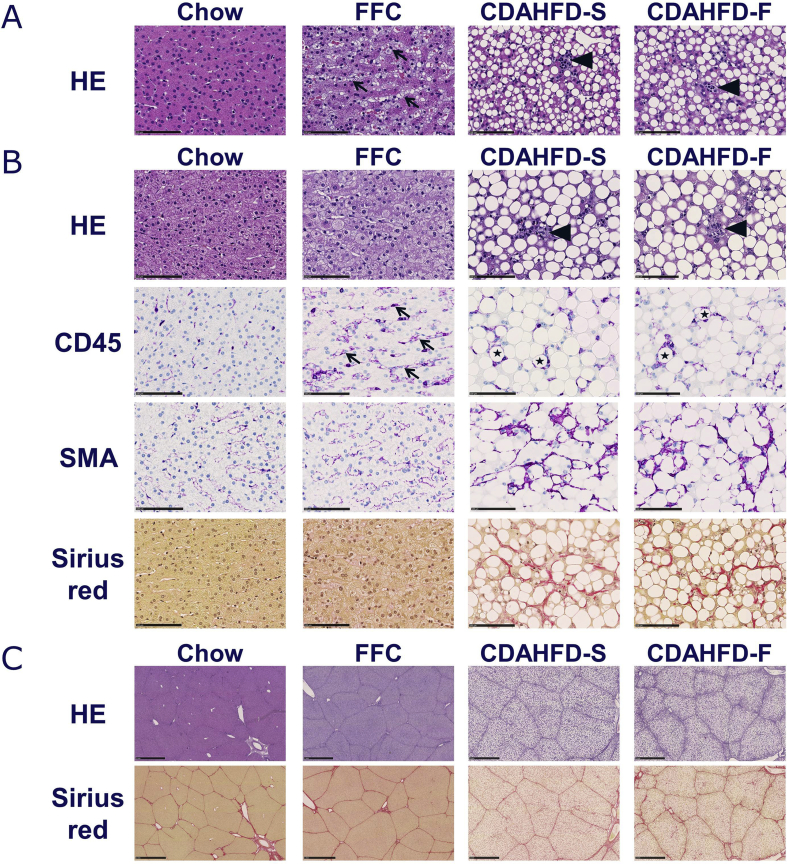
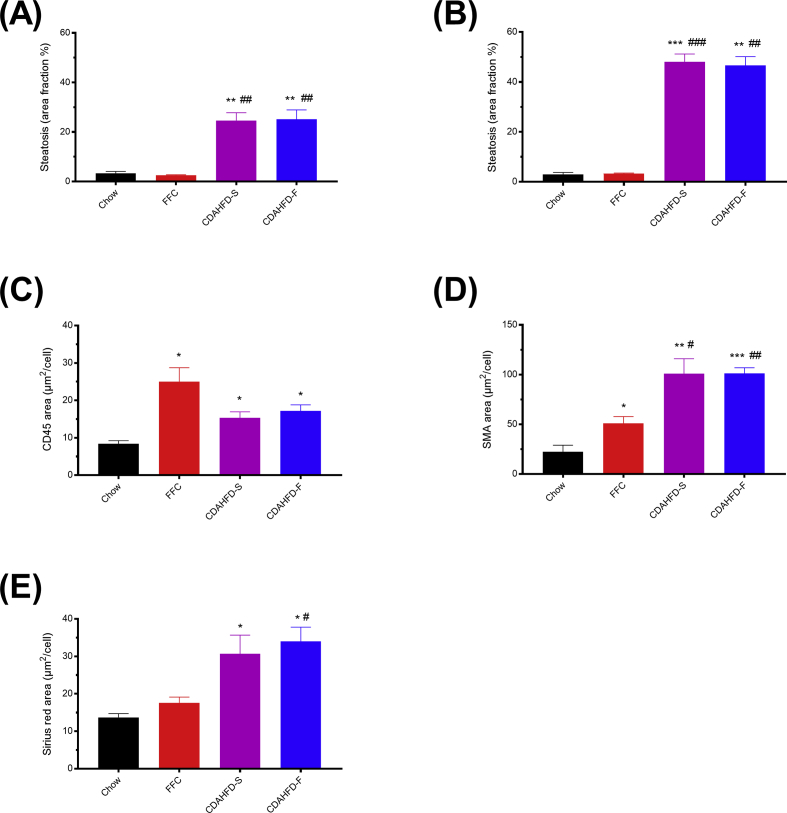
Compared with chow, the body weight was higher after FFC (9.8 ± 0.4 versus 8.5 ± 1.2 kg; mean ± SD) and less after CDAHFD-S (6.4 ± 0.8 kg) and CDAHFD-F (6.9 ± 0.8 kg). Liver weight per kg body weight was significantly increased in all 3 NASH groups (FFC 2.1 times; and both CDAHFD diets 3.1 times). Histologically, pronounced macrovesicular steatosis developed only in the CDAHFD groups. Inflammation was present in all three NASH groups. In the CDAHFD groups, inflammatory cells formed crown-like structures around steatotic hepatocytes. Sirius red staining revealed mild fibrosis in the two CDAHFD groups with the fibrotic potential being further supported by immunohistochemical staining for activated stellate cells and gene expression analyses. No noticeable differences were found between CDAHFD-S and CDAHFD-F.
Göttingen Minipigs fed CDAHFD developed pronounced steatosis with inflammation around steatotic hepatocytes and incipient fibrosis, thereby showing potential as a model for human NASH. Further studies are needed to investigate the period needed for marked fibrosis to develop.
由于生理特征与人类相似,小型猪非酒精性脂肪性肝炎(NASH)模型可能具有重要价值。然而,即使给猪喂食高脂肪、果糖和胆固醇(FFC)含量的饲料,它们也很少发生严重的肝脏脂肪变性。因此,在哥廷根小型猪中评估了胆碱缺乏、氨基酸定义的高脂肪饮食(CDAHFD)的潜力。
将去势雄性哥廷根小型猪分为两组,分别喂食普通饲料(n = 5)或三种NASH饮食之一:FFC(n = 5)、含蔗糖的CDAHFD(CDAHFD-S;n = 4)或含果糖的CDAHFD(CDAHFD-F;n = 4),持续8周。在2周后和实验结束时采集肝脏和血液样本。
与普通饲料组相比,FFC组猪的体重更高(9.8±0.4 vs 8.5±1.2 kg;平均值±标准差),而CDAHFD-S组(6.4±0.8 kg)和CDAHFD-F组(6.9±0.8 kg)的体重较低。所有3个NASH组每千克体重的肝脏重量均显著增加(FFC组增加2.1倍;两种CDAHFD饮食组均增加3.1倍)。组织学上,明显的大泡性脂肪变性仅在CDAHFD组中出现。所有三个NASH组均存在炎症。在CDAHFD组中,炎症细胞在脂肪变性的肝细胞周围形成冠状结构。天狼星红染色显示两个CDAHFD组有轻度纤维化,活化星状细胞的免疫组织化学染色和基因表达分析进一步支持了纤维化的可能性。CDAHFD-S组和CDAHFD-F组之间未发现明显差异。
喂食CDAHFD的哥廷根小型猪出现明显的脂肪变性,脂肪变性的肝细胞周围有炎症和早期纤维化,因此显示出作为人类NASH模型的潜力。需要进一步研究来调查显著纤维化发展所需的时间。