Department of Pathology, Kagoshima University Graduate School of Medical and Dental Sciences.
Department of Hygiene and Health Promotion Medicine, Kagoshima University Graduate School of Medical and Dental Sciences.
J Atheroscler Thromb. 2017 Nov 1;24(11):1150-1166. doi: 10.5551/jat.39909. Epub 2017 May 11.
We have recently established a novel swine model for studies of atherosclerosis using Microminipigs (µMPs) fed a high-fat/high-cholesterol diet (HcD). Using this swine model, we re-evaluated the effects of dietary cholic acid (CA) on serum lipid profile, atherosclerosis and hepatic injuries.
The µMPs were fed HcD supplemented with 0.7% CA (HcD+CA) for eight weeks, and the effect of CA on serum lipoprotein levels, expression of oxidative stress markers, adiposity and lesion formation in the aorta, liver, and other organs was investigated.
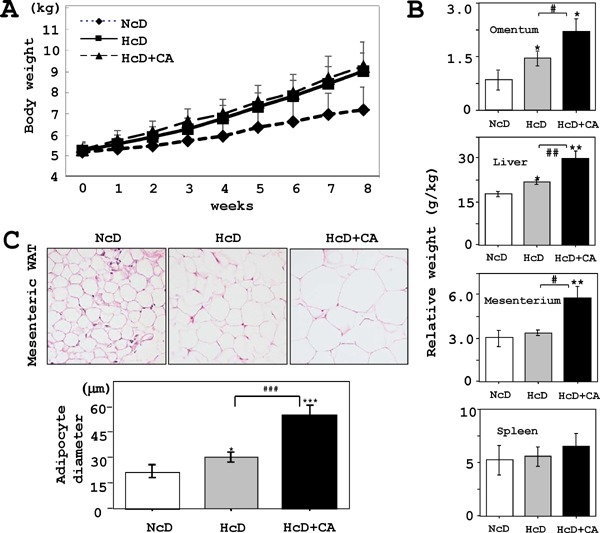
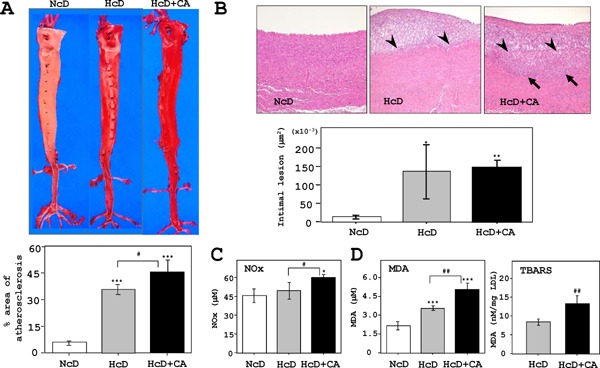
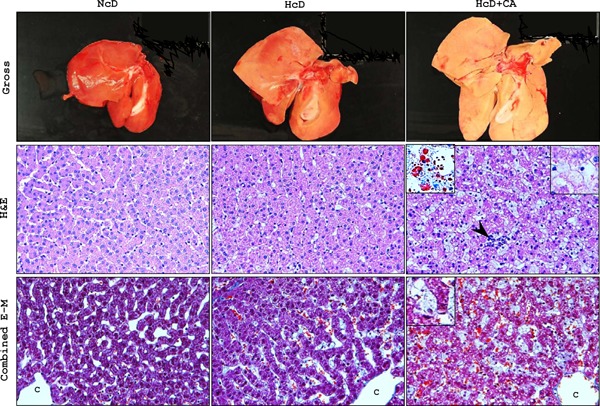
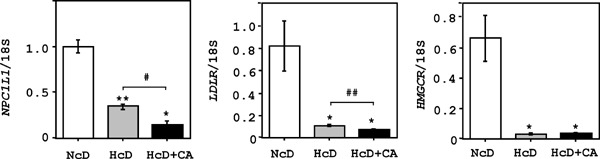
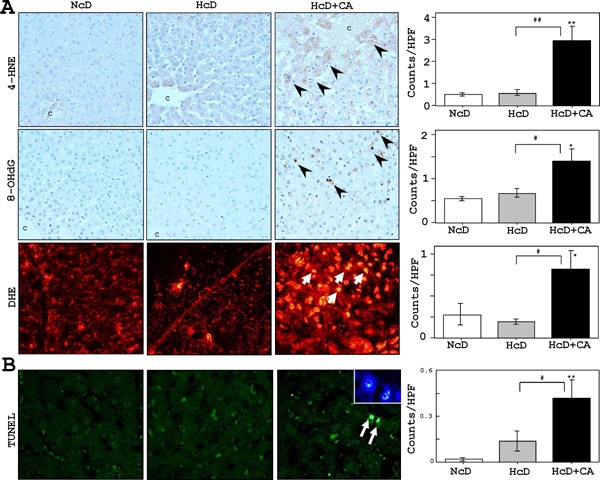
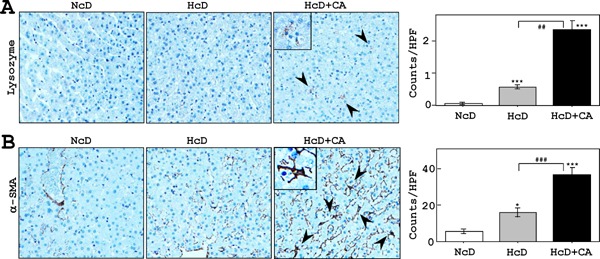
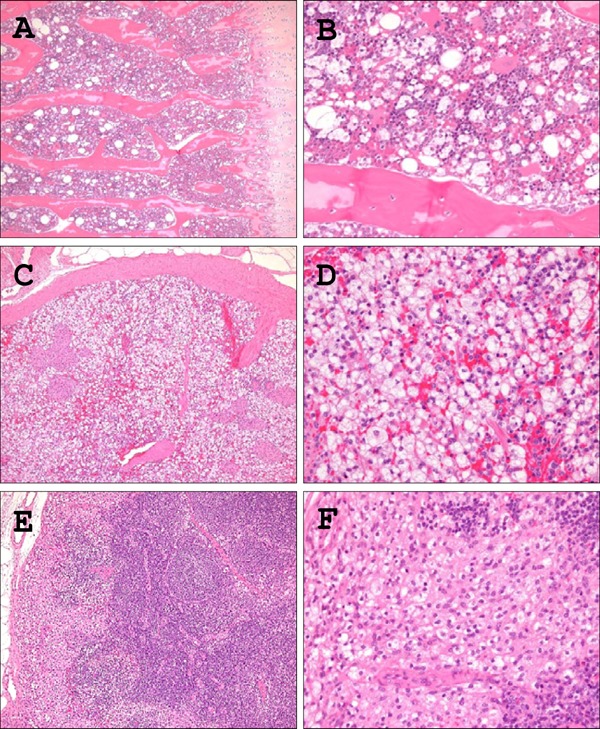
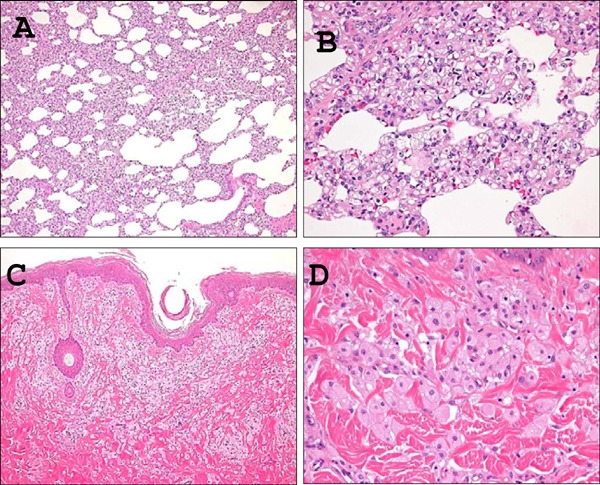
The HcD+CA-fed group exhibited more visceral adiposity, progression of atherosclerosis and higher serum levels of oxidative stress markers than the HcD-fed group, even though they showed similar serum lipid levels. The liver demonstrated increased lipid accumulation, higher expression of oxidative stress markers, accelerated activation of foamy Kupffer cells and stellate cells, and increased hepatocyte apoptosis, indicating non-alcoholic fatty liver disease (NAFLD). Intriguingly, foamy macrophage mobilization was observed in various organs, including the reticuloendothelial system, pulmonary capillary vessels and skin very often in HcD+CA-fed µMPs.
To our knowledge, this is the first large animal model, in which visceral obesity, NAFLD and atherosclerosis are concomitantly induced by dietary manipulation. These data suggest the detrimental effects of CA, potentially through local and systemic activation of oxidative stress-induced signaling to macrophage mobilization, on the acceleration of visceral adiposity, atherosclerosis and NAFLD.
我们最近建立了一种使用高脂高胆固醇饮食(HcD)喂养 Microminipigs(µMPs)的动脉粥样硬化新型猪模型。使用这种猪模型,我们重新评估了膳食胆酸(CA)对血清脂质谱、动脉粥样硬化和肝损伤的影响。
µMPs 喂食 HcD 补充 0.7%CA(HcD+CA)八周,研究 CA 对血清脂蛋白水平、氧化应激标志物表达、肥胖和主动脉、肝脏和其他器官病变形成的影响。
与 HcD 喂养组相比,HcD+CA 喂养组表现出更多的内脏肥胖、动脉粥样硬化进展和更高的血清氧化应激标志物水平,尽管它们表现出相似的血清脂质水平。肝脏表现出脂质积累增加、氧化应激标志物表达增加、泡沫 Kupffer 细胞和星状细胞加速激活以及肝细胞凋亡增加,表明非酒精性脂肪性肝病(NAFLD)。有趣的是,在 HcD+CA 喂养的 µMPs 中,各种器官包括网状内皮系统、肺毛细血管和皮肤中经常观察到泡沫巨噬细胞动员。
据我们所知,这是第一个通过饮食干预同时诱导内脏肥胖、NAFLD 和动脉粥样硬化的大型动物模型。这些数据表明 CA 的有害作用,可能通过局部和全身激活氧化应激诱导的信号转导导致巨噬细胞动员,加速内脏肥胖、动脉粥样硬化和 NAFLD。